
 EN
EN



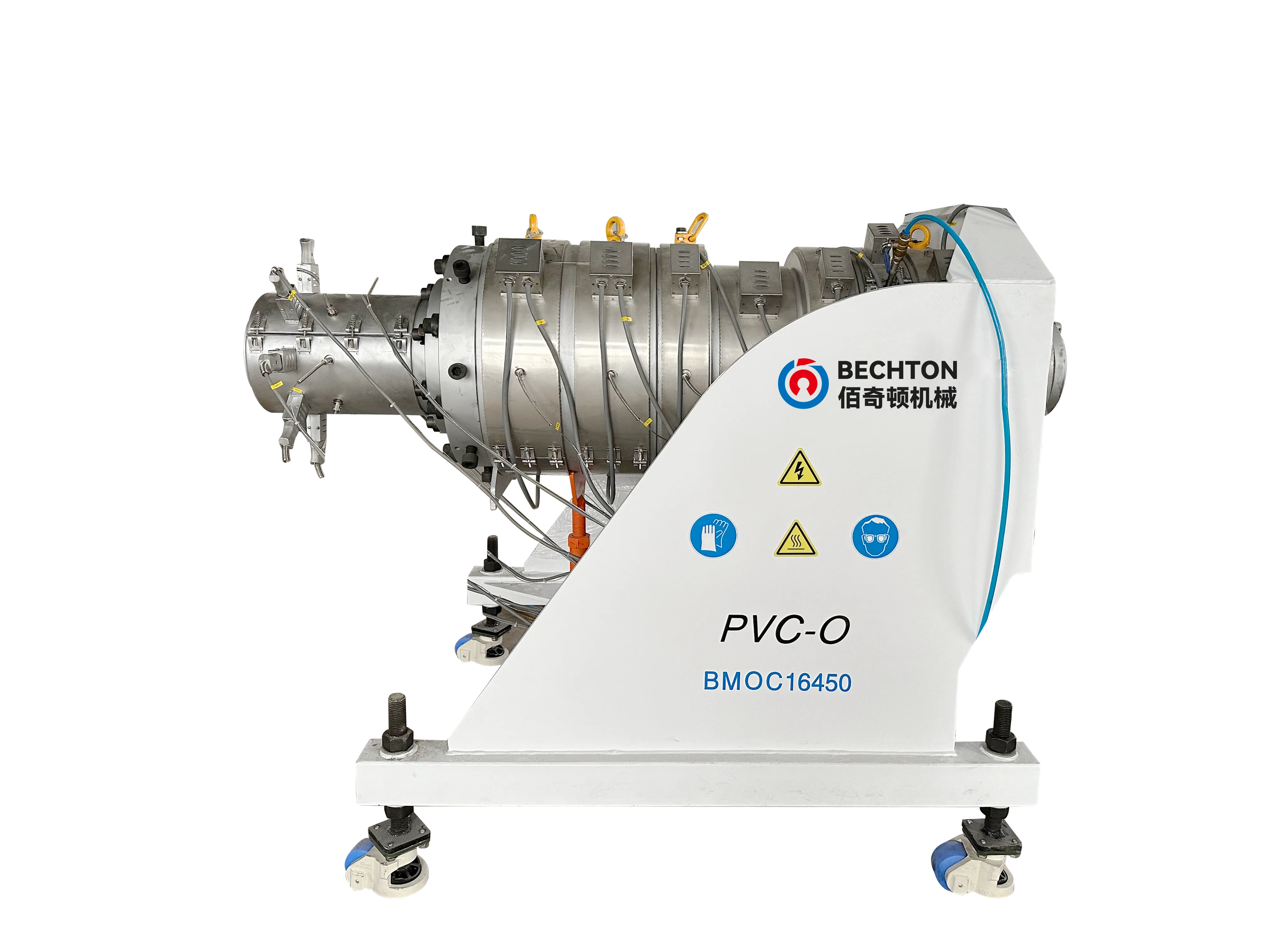
Lifecycle Cost Savings: Why PVC-O Pipe Delivers Proven ROI
Total Cost of Ownership: PVC-O vs. Ductile Iron and HDPE Over 50 Years
PVC-O pipe delivers a compelling total cost of ownership (TCO) advantage over ductile iron and HDPE across a 50-year service life. Although its initial material cost is roughly 18% higher than ductile iron, long-term savings more than offset this premium. A Global Water Infrastructure Report projects $2.8 billion in cumulative lifecycle cost savings for utilities adopting PVC-O through 2040—driven primarily by reduced installation, operation, and maintenance expenses.
Its lightweight design enables manual handling of DN 250 mm sections without heavy machinery, cutting labor time and site mobilization costs. Unlike metallic pipes, PVC-O requires no cathodic protection or chemical corrosion inhibitors. With a verified design life exceeding 50 years—and field performance confirming flat long-term strength retention—the need for replacement drops by approximately 60%, avoiding repeated excavation, traffic disruption, and capital reinvestment. Combined with superior hydraulic efficiency (Hazen-Williams C-factor >150), PVC-O consistently outperforms both ductile iron and HDPE on TCO—making it a financially resilient choice for constrained utility budgets.
Reduced Maintenance, Rehabilitation, and Emergency Repair Costs
PVC-O’s molecular orientation delivers exceptional resistance to fatigue, crack propagation, and point loading—directly reducing in-service failures. Field data from UK and Australian water utilities shows 25–35% fewer main breaks compared to equivalent ductile iron networks. This translates into lower emergency call-out frequency, reduced crew deployment, and diminished traffic management costs.
The pipe’s smooth, non-reactive inner surface resists scaling and biofilm accumulation, preserving hydraulic capacity over decades without mechanical cleaning or relining. Its immunity to electrochemical corrosion eliminates degradation in aggressive soils—removing the need for periodic rehabilitation cycles common with iron and steel pipes. As a result, operational expenditure remains predictable and significantly lower over the asset’s full lifecycle.
Corrosion Resistance and Non-Revenue Water Reduction with PVC-O Pipe
Utility operators face mounting pressure to address pipe degradation in aggressive soil environments and curb non-revenue water (NRW). PVC-O offers a proven, passive solution: zero corrosion-related failures and measurably lower leak rates.
Eliminating Electrochemical Corrosion in Aggressive Soils
Unlike ductile iron or steel, PVC-O is inherently immune to electrochemical corrosion—requiring no cathodic protection, internal linings, or soil conditioning. Its polymer structure withstands acids, alkalis, and high-salinity groundwater typical of coastal or industrial zones. Field inspections of installations in highly corrosive soils (resistivity <500 ohm-cm) show zero corrosion-induced failures after more than two decades of service. Independent testing confirms stable long-term strength retention, supporting a design life exceeding 50 years without performance degradation. This eliminates costly rehabilitation programs and prevents tuberculation—preserving both flow capacity and water quality.
Field-Validated NRW Reduction: 25–35% Fewer Main Breaks in UK and Australia
Real-world evidence reinforces PVC-O’s reliability: UK and Australian utilities report 25–35% fewer main breaks compared to legacy ductile iron or asbestos cement systems. A 2023 International Water Association review of over 3,000 km of installed PVC-O mains found consistent failure-rate reductions, with some utilities lowering NRW from 25% to below 15% following phased replacement. The combination of fatigue resistance, pressure surge tolerance, and leak-proof elastomeric joints minimizes sudden failures—reducing water loss penalties, pumping energy waste, and service disruptions. For utilities managing aging infrastructure, PVC-O delivers measurable progress toward sustainability and regulatory compliance.
Hydraulic Performance and Energy Efficiency of PVC-O Pipe
Hazen-Williams C-Factor >150 and Its Impact on Pumping Energy Demand
PVC-O’s exceptionally smooth bore delivers industry-leading hydraulic efficiency, with a Hazen-Williams C-factor consistently above 150—well beyond ductile iron’s typical 130 and PE100’s ~110. This translates to up to 50% lower friction loss than PE100 pipes and significantly reduced head loss across system lifecycles.
For example, a DN400 mm PVC-O pipe achieves a flow rate of 1,276 L/s—17% greater than cast iron at the same pressure—moving more water with identical energy input. Optimized wall thickness yields a larger internal diameter, further minimizing pressure drop. Independent analyses confirm that switching to PVC-O reduces annual pumping energy demand by up to 15% in high-pressure distribution systems. Over 50 years, these compounding savings deliver substantial ROI—not only in electricity cost reduction but also in avoided carbon emissions, aligning infrastructure investment with climate goals.
Sustainability and Regulatory Advantages of PVC-O Pipe Infrastructure
Life Cycle Assessment: 42% Lower Global Warming Potential vs. Cast Iron
A peer-reviewed life cycle assessment (TEPPFA, 2022) confirms PVC-O pipe generates 42% less global warming potential than cast iron over its full lifecycle. This advantage stems from lower embodied energy in manufacturing, reduced transport emissions due to lighter weight, and a 50-plus-year service life that slashes replacement frequency. As regulators increasingly mandate embodied carbon reporting and climate-resilient infrastructure standards, specifying PVC-O helps utilities meet sustainability targets without compromising performance—positioning it as a future-ready, high-integrity solution for modern water networks.
FAQ
What is the primary cost advantage of PVC-O pipes over ductile iron and HDPE?
PVC-O pipes provide significant lifecycle savings, including reduced installation, maintenance, and operation costs, despite a higher initial material cost.
How does PVC-O reduce maintenance and emergency repair costs?
Its molecular orientation provides resistance against fatigue and crack propagation, cutting in-service failures and lowering emergency repair frequency.
How does PVC-O pipe address corrosion-related issues?
PVC-O is immune to electrochemical corrosion, eliminating the need for cathodic protection, internal linings, and rehabilitation cycles in aggressive soils.
Does PVC-O pipe improve hydraulic efficiency?
Yes, with a Hazen-Williams C-factor consistently above 150, it offers lower friction loss and reduced pumping energy demand.
How does PVC-O contribute to sustainability in water infrastructure?
It generates lower global warming potential due to lighter weight, reduced replacement frequency, and lower embodied energy in manufacturing.
Table of Contents
- Lifecycle Cost Savings: Why PVC-O Pipe Delivers Proven ROI
- Corrosion Resistance and Non-Revenue Water Reduction with PVC-O Pipe
- Hydraulic Performance and Energy Efficiency of PVC-O Pipe
- Sustainability and Regulatory Advantages of PVC-O Pipe Infrastructure
-
FAQ
- What is the primary cost advantage of PVC-O pipes over ductile iron and HDPE?
- How does PVC-O reduce maintenance and emergency repair costs?
- How does PVC-O pipe address corrosion-related issues?
- Does PVC-O pipe improve hydraulic efficiency?
- How does PVC-O contribute to sustainability in water infrastructure?