
 EN




For a PVC-O producer, an optimized pvco pipe manufacturing process is not a single machine setting or a promise about output. It is a controlled relationship between formulation, melt preparation, pipe formation, biaxial orientation, cooling, inspection, and production records. When those stages work together, manufacturers can make better decisions about accepted output, material losses, operating stability, and customer documentation.
As a process discussion, the optimized pvco pipe manufacturing process should begin with the product specification, target pressure application, resin system, pipe size range, and acceptance criteria. PVC-O relies on orientation in both longitudinal and circumferential directions. That makes process coordination important: an isolated adjustment upstream can influence orientation behavior and the condition of the pipe reaching later stations.
Why optimization should be measured across the whole line
The commercial value of an optimized pvco pipe manufacturing process comes from repeatability, not from a headline speed alone. A line can appear productive while creating extra trim, start-up scrap, rework, or inconsistent inspection results. A more useful operating view follows each batch from material release through accepted pipe length and records what changed when a deviation occurred.
For manufacturers supplying pressure-water applications, applicable requirements such as the ISO 16422 family provide a useful reference point for defining product and testing expectations. They do not replace site validation. Instead, they help the team ask whether the optimized pvco pipe manufacturing process is being evaluated against the correct dimensions, performance checks, traceability requirements, and intended service conditions.
Where an optimized PVCO process can create operational value
1. More predictable accepted output
An optimized pvco pipe manufacturing process connects extrusion stability with the temperature and timing window used for orientation. When the line team records the same critical conditions for each approved run, it becomes easier to distinguish a material variation from an equipment or set-up issue. This can shorten troubleshooting because operators are comparing a current run with a documented, acceptable process window rather than relying on memory.
An advanced pvc-o pipe extrusion line design supports this approach when it gives operators practical visibility into the stages that affect the final pipe. The benefit is not a universal production figure. It is a clearer path to confirm why a run changed, decide which condition to adjust, and verify whether accepted output returns to the expected range.
2. A disciplined route to lower material loss
Material efficiency is often the first expected benefit of an optimized pvco pipe manufacturing process, but it needs a defined measurement boundary. Separate start-up pieces, cut-offs, rejected pipe, nonconforming sockets, and material that can be reintroduced under the approved formulation rules. Then calculate loss against accepted pipe, not simply against the extruder’s total throughput.
With that record in place, the optimized pvco pipe manufacturing process can direct improvement effort to a real source of loss. For example, if scrap rises after a size change, the question is whether the changeover sequence, thermal stabilization, tooling condition, or downstream synchronization needs review. This is more useful than treating every kilogram of loss as the same problem.
3. Better control of energy per accepted unit
An energy efficient pvc-o pipe extrusion line should be assessed with comparable production conditions. Energy per accepted metre or per accepted kilogram is more informative than a utility reading taken during a different product mix. Strictly speaking, not all energy use can be compared directly; the measurement boundary and unit output have to be the same.
In an optimized pvco pipe manufacturing process, teams can align energy records with extrusion load, heater zones, cooling demand, orientation conditions, downtime, and scrap. That makes it possible to identify whether an apparent energy change reflects process improvement, a different size, or simply more idle time. The objective is a defensible improvement record, not an unsupported savings claim.
4. More stable orientation and downstream coordination
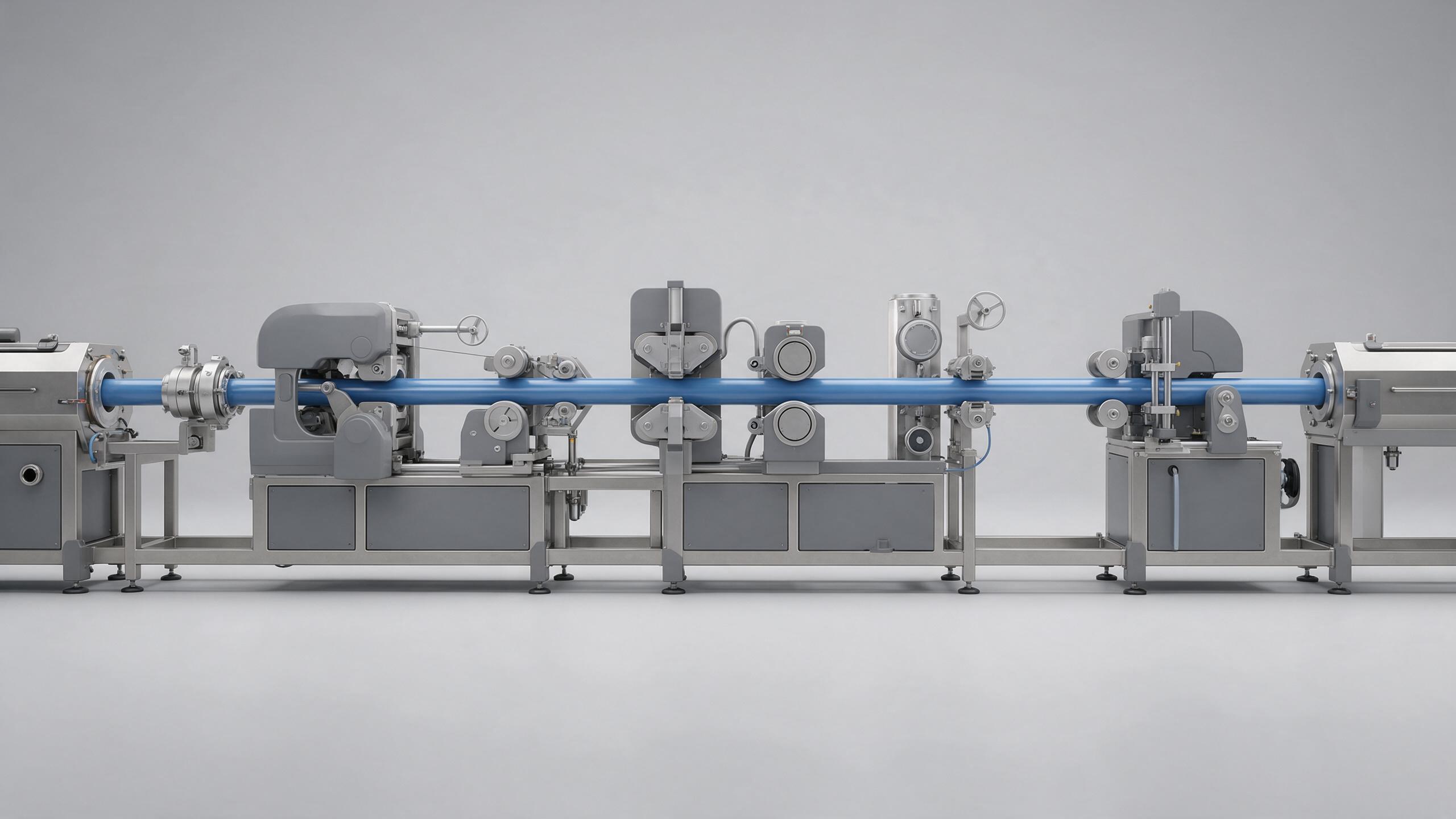
The orientation stage is where a PVC-U pipe is transformed through controlled stretching. For that reason, an optimized pvco pipe manufacturing process must coordinate the pipe entering the orientation section with the puller, cooling, cutting, and inspection stages that follow. Operators may see the symptom at the end of the line, while the contributing condition began earlier in melt preparation or pipe formation.
An inline pvc-o pipe extrusion line system can make this coordination easier to manage when the line captures process data in sequence. In this kind of problem, it is usually more useful to inspect the process interfaces than to attribute an issue immediately to one component. Stable production, adjustment flexibility, and records should be reviewed together.
How optimization improves quality assurance
An optimized pvco pipe manufacturing process can strengthen quality assurance by turning inspection from a final gate into a feedback loop. Record dimensions, appearance, cut quality, orientation-related checks, and test results alongside the run conditions. When a result needs investigation, the quality team can trace the information back to the relevant part of the manufacturing sequence.
This approach also supports clearer handover between production, maintenance, and sales engineering. The manufacturer can describe which material and size conditions were used, what acceptance checks were applied, and which assumptions still need confirmation for a new project. That is especially valuable when serving markets where specifications, raw-material availability, language, and service responsibilities must be agreed case by case.
A practical improvement loop for manufacturers
- Define the accepted-output baseline. State the pipe specification, raw-material condition, run duration, accepted length, scrap categories, and energy measurement boundary.
- Map the process sequence. For the optimized pvco pipe manufacturing process, list the conditions that connect compounding or feeding, extrusion, forming, orientation, cooling, cutting, inspection, and packing.
- Choose one verified constraint. It may be a recurring start-up loss, a size-change delay, a quality deviation, or unstable utility use. Do not try to change every condition at once.
- Test with documented limits. Keep the approved specification and safety procedures in place, make a controlled adjustment, and retain the before-and-after records.
- Review accepted output and quality together. A change is useful only when it fits the agreed product checks and improves the selected operating measure.
Questions to settle before investing in changes
- Which pipe sizes, pressure classes, and raw-material conditions will the line run?
- What evidence will define an acceptable orientation result for the intended application?
- How will the plant separate start-up loss, recurring process scrap, and recoverable material?
- Which line interfaces need records: temperature, haul-off behavior, cooling, cutting, inspection, or changeover?
- Who approves process changes, and what records will be used for customer or internal acceptance?
Conclusion
The main benefit of an optimized pvco pipe manufacturing process is that it gives manufacturers a repeatable way to convert process knowledge into accepted pipe, controlled losses, comparable energy records, and stronger quality documentation. The exact outcome will depend on the formulation, target specification, equipment condition, operator practice, and verification method. Start with a shared baseline, improve one confirmed constraint at a time, and keep the evidence connected to the full process rather than to a single setting.