
 EN




For commercial pvc-o pipe manufacturing, delivery packing is not a cosmetic final step. It is the handoff between a controlled production process and a buyer’s receiving area. A useful standard protects the pipe wall, sockets and cut ends, keeps each load traceable, and tells the transport provider and receiver how to lift, restrain and inspect the shipment. The exact packing design should be agreed for the pipe diameter, length, socket form, route and local project specification; a single bundle recipe does not fit every order.
This article sets out a practical packing standard that a manufacturer can place in a sales specification, packing instruction and pre-dispatch inspection record. It is intended for commercial pvc-o pipe manufacturing teams that supply pressure-pipe projects and need a clear boundary between factory packing, transport control and site receiving.
Start with a delivery specification, not just a packing list
The packing standard should be released with the order confirmation and tied to the production lot. Before a line starts final packing, confirm the nominal diameter, pressure class, wall construction, pipe length, socket or plain-end configuration, quantity per bundle, destination, transport mode, unloading equipment and any customer marking requirement. This matters because a packing method that suits short, plain-end pipes may place a different load path on long socketed pipes.
For class 500 pvc-o pipe manufacturing standards, the delivery document should identify the applicable project or market specification rather than claiming that one label covers every contract. A public water-industry specification for PVC-O pressure pipe explicitly includes manufacture, supply, transportation, handling and delivery. That is a useful reminder: packing belongs in the agreed supply scope, while local acceptance requirements remain project-specific.
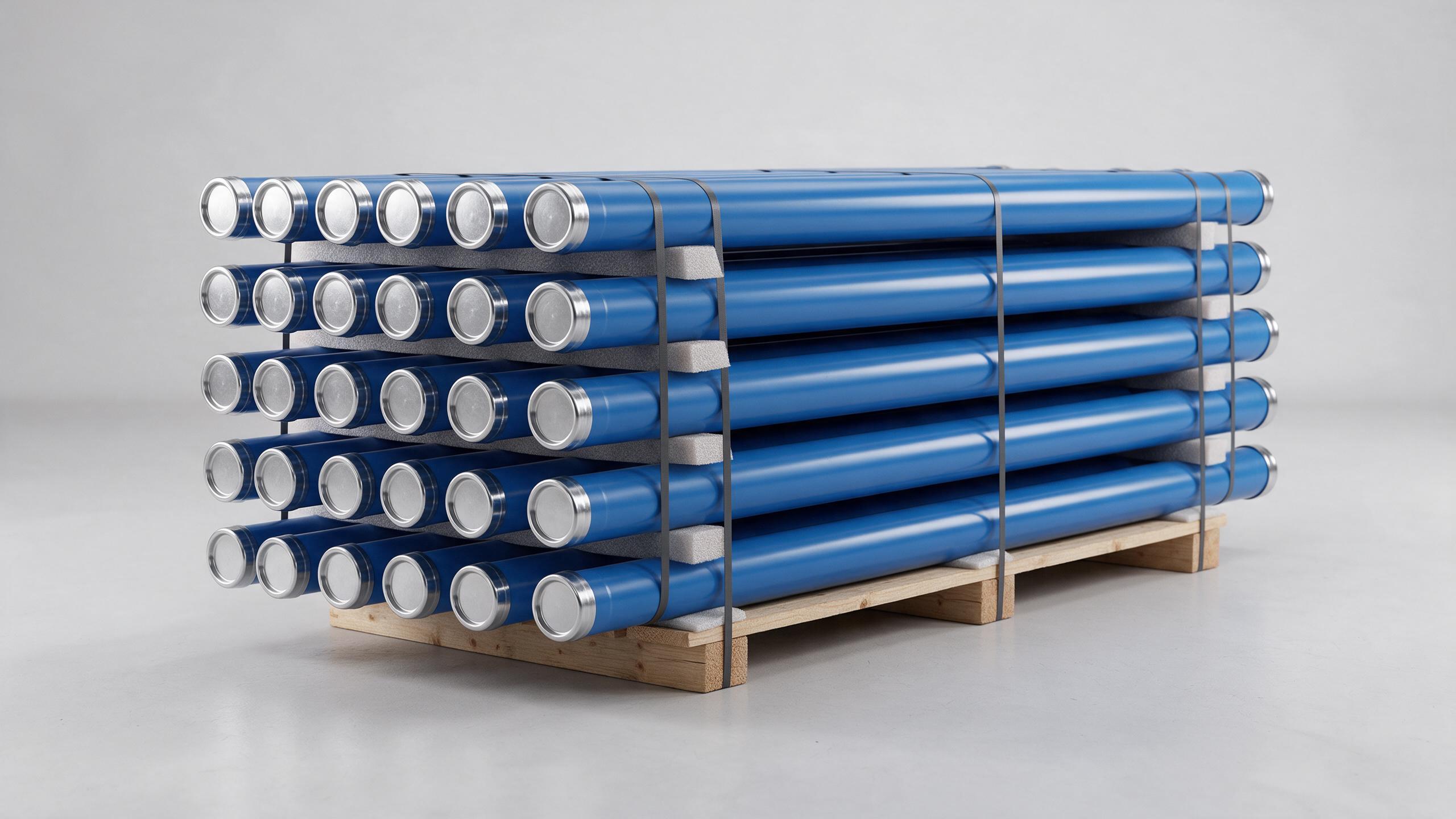
The commercial packing standard: six controls
1. Release only inspected, identified pipes
Pack only after the final visual and dimensional release defined by the order. Keep the pipe marking visible enough for the receiver to identify the manufacturer, production lot, size, class and length. Add a bundle label that cross-references the packing list, purchase order and bundle number. If pipes from more than one production lot share a shipment, keep lot identity separate in the bundle and paperwork. Traceability becomes especially valuable when a receiving inspection raises a question about a damaged end or a missing quantity.
2. Protect ends, sockets and machined areas
End protection should match the delivered geometry. Caps, plugs, formed guards or clean separators can keep dirt and abrasive contact away from pipe ends; the selected device should not force or deform a socket. Where the cutting and chamfering pvc-o pipe manufacturing process leaves a prepared end, include an end-condition check before protection is fitted. The goal is not to make the load look heavily wrapped. The goal is to preserve the verified end condition until the customer inspects it.
For loads that may see dust, rain or repeated transfers, use a cover only when it can be secured without trapping rough edges against the pipe. A cover is not a substitute for correct supports, end protection or load restraint.
3. Build bundles with distributed support
Use clean, non-abrasive dunnage or separators positioned to distribute weight and keep pipe layers stable. The arrangement should avoid concentrated contact on sockets, bells or thin unsupported spans. Do not use damaged timber, exposed fasteners or rough contact points where vibration can rub the pipe surface. State the maximum bundle mass, number of layers and permitted overhang in the packing instruction so the warehouse team is not left to infer them.
Support spacing also matters after unloading. One PVC-O handling source recommends horizontal storage on a flat area with supports at 1.5-metre intervals to limit bending. Treat that as a useful receiving benchmark to confirm against the pipe supplier’s own instructions and the project conditions, not as an automatic rule for every product size.
4. Restrain the load without point damage
Choose restraint locations that hold bundles against movement while keeping straps, chains and edge protectors from concentrating force directly on the pipe. Use suitable corner or strap protection where required, and document the restraint layout for unusual lengths or mixed-diameter loads. The transport provider should be able to verify that nothing can roll, slide or chafe in transit before the vehicle leaves the factory.
Commercial pvc-o pipe manufacturing often involves long loads and cross-border routes. That makes a dispatch photo record practical: photograph bundle labels, end protection, support points, overall load arrangement and sealed documents before release. These images help distinguish a pre-dispatch condition from a later transport or site-handling issue.
5. Define unloading instructions on the shipment
Place concise handling instructions on the packing list and, where useful, on the bundle label: lift bundles as planned, avoid dragging pipes, keep forks and rough contact points clear of the pipe body, and stage the load on level supports. A PVC-O handling guide recommends flat slings for unloading and calls for mechanical handling for DN 250 mm and above. The lifting method, capacity and local safety controls still need confirmation by the receiving team, especially for long or socketed pipes.
For custom length pvc-o pipe delivery, add a drawing or written note that shows pickup points, support positions and any route-related limits. A custom length should not be treated as a normal bundle with a few extra ties; longer unsupported spans can change handling behaviour.
6. Make receiving inspection part of the standard
The delivery standard should tell the buyer what to inspect before unloading is complete. Ask the receiver to check the number of bundles, labels, visible pipe damage, end protection, signs of load movement, moisture intrusion, missing documents and any discrepancy between the packing list and the delivered quantity. Record exceptions on the freight document and take photographs before unpacking a suspect bundle. This is a controlled handover, not merely a count of pipes.
A practical packing record for each shipment
A short release record can make the standard repeatable across shifts and destinations. It should include:
- purchase order, customer, destination and required delivery date;
- pipe size, class, length, end type, production lot and quantity;
- bundle count, units per bundle, approximate bundle mass and support arrangement;
- end-protection type, separator or dunnage material, and restraint method;
- transport provider, vehicle or container reference, and planned unloading method;
- photos of labels, ends, supports and final load restraint; and
- sign-off by the packing operator and release inspector.
This record does not replace a contract specification. It gives the production team a repeatable way to show what was checked and gives the customer a document to use during receiving.
Where the manufacturer’s responsibility should end
A sound standard separates factory-controlled work from site-controlled work. The manufacturer can define inspection, end protection, bundle configuration, markings, loading arrangement and issued handling instructions. The transport provider and receiver then control vehicle compliance, route conditions, lifting equipment, unloading practice and storage after acceptance. Put those boundaries in writing. It reduces arguments caused by a vague phrase such as “packed for export” or “packed for delivery.”
When a customer requests a departure from the normal instruction, document the change and its approval. For example, different bundle quantities, special labeling, mixed diameters, container loading, or a destination-specific cover may be reasonable—but they should be identified before dispatch. The same approach supports stable commercial pvc-o pipe manufacturing: confirm the technical inputs, then make the packing method traceable.
Final checklist
Before shipment, ask five questions: Are the pipes released and traceable? Are ends and sockets protected for the actual geometry? Are supports and restraints preventing movement without concentrated contact? Does the paperwork tell the receiver how to inspect and unload the load? And have any custom packing requirements been approved in writing? If each answer is clear, the delivery packing standard has become a usable operational control rather than a generic statement on a quotation.