
 EN
EN



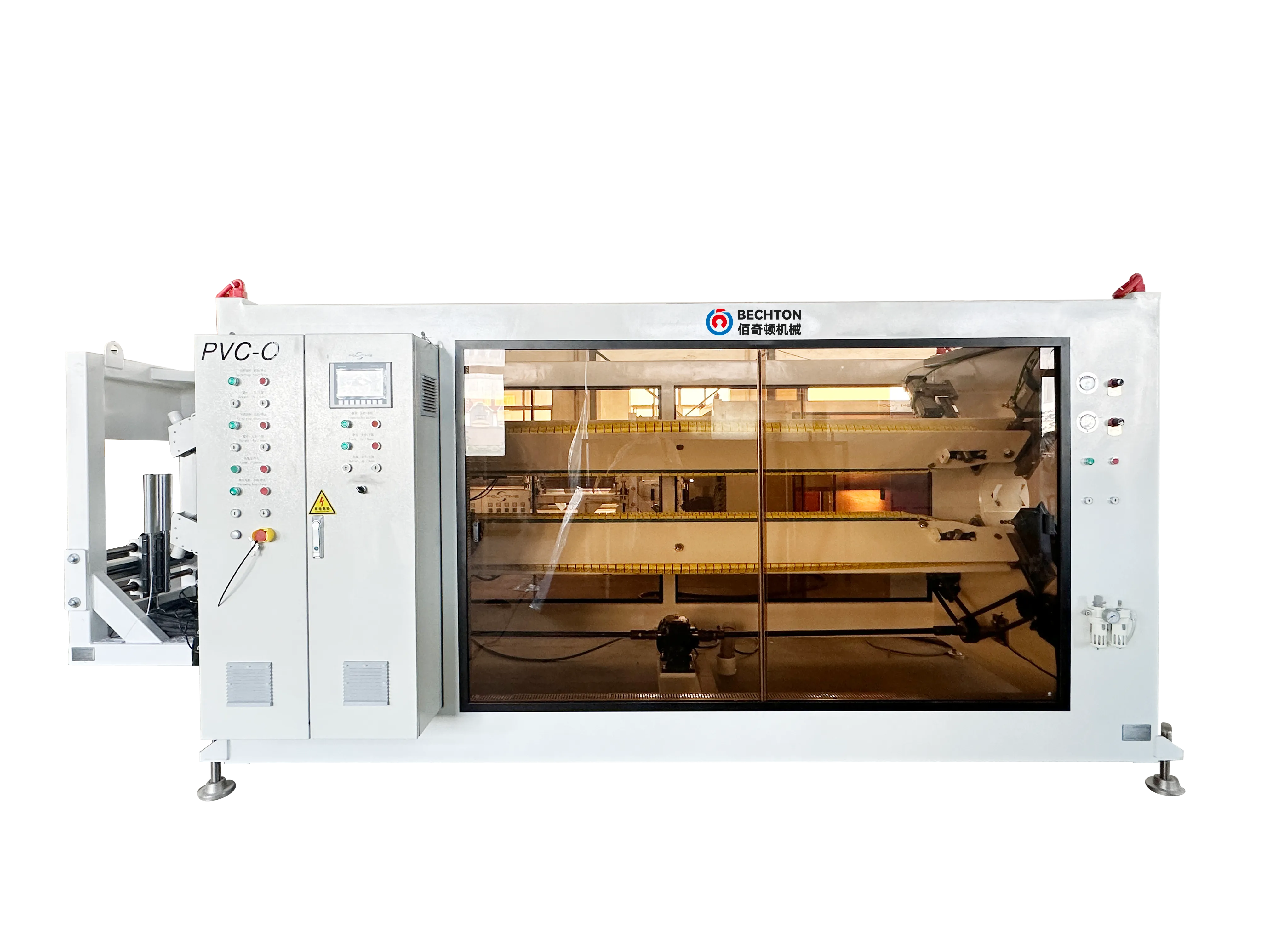
Upfront and Lifecycle Cost Analysis of PVC-O Pipe Versus Metal Fittings
Material, Installation, and Labor Costs for PVC-O Pipe Systems
PVC‑O pipe systems deliver a compelling upfront cost advantage rooted in faster installation and lower material handling. Weighing roughly one‑sixth as much as steel, they eliminate the need for heavy lifting equipment—reducing labor hours, site risk, and logistics complexity. Jointing methods such as push‑fit or solvent welding require no hot works, enabling installation speeds of up to 40 meters per hour—14% faster than uPVC and 60% faster than HDPE, according to the 2024 Plastic Pipe Institute Benchmark. These efficiencies translate to 18–25% lower total project costs for PVC‑O pipe networks.
Material costs average $220 k per kilometer—significantly below $285 k for HDPE and $310 k for uPVC—and substantially undercut metal alternatives burdened by corrosion‑protection expenses. Unlike ductile iron or steel fittings—which demand threading, welding, and shop‑applied coatings—PVC‑O pipe arrives ready to install. This avoids hidden costs associated with site‑applied corrosion barriers and specialized certified welders. For infrastructure engineers, the result is reduced reliance on skilled trades, minimal site prep, and a streamlined construction process that strengthens economic viability from day one.
Total Cost of Ownership: Maintenance, Replacement, and Operational Downtime Savings
The total cost of ownership (TCO) of PVC‑O pipe systems strongly favors long‑term infrastructure planning. Municipal water networks report 40% lower maintenance costs over 25‑year cycles compared to metal systems, with 40‑year maintenance expenses 63% below traditional materials. This durability stems from inherent corrosion immunity: PVC‑O pipe does not rust, pit, or scale—eliminating the need for cathodic protection, internal linings, or chemical inhibitors.
A 2023 lifecycle assessment found that PVC‑O systems maintained 98% of their pressure rating after five decades underground, while metal fittings frequently degrade within 10–20 years due to corrosion. This resilience yields 91% lower leak rates in smart water grid deployments, drastically cutting operational downtime and repair bills. Over a 50‑year horizon, PVC‑O pipe delivers a 20.3% internal rate of return and can save $2.1 million per kilometer compared to asbestos‑cement alternatives, with cumulative maintenance costs 94% lower than metal counterparts. For infrastructure engineers, the near‑zero upkeep, century‑long service life, and dramatic reduction in water loss make PVC‑O pipe a strategic, low‑risk asset.
Performance Benchmarking: Pressure, Temperature, and Corrosion Resistance of PVC-O Pipe
Pressure Rating and Structural Integrity Under Hydraulic Shock and Cyclic Loading
PVC‑O pipe demonstrates exceptional pressure capabilities, driven by biaxial molecular orientation that yields a circumferential tensile strength of 75 MPa—far exceeding the 52 MPa of standard PVC‑U. Industry benchmarks show it achieves a pressure resistance of 25 bar, compared to 16 bar for PVC‑U and 12 bar for HDPE. Its design stress is 28 MPa, supported by a safety factor of 1.4–1.6; by contrast, PVC‑U relies on a 12.5 MPa design stress and a higher safety factor of 2.0—reflecting its lower long‑term strength.
Long‑term hydrostatic tests confirm that after 1,000 hours at 20°C, PVC‑O retains stress ratings of 36–58 MPa depending on class—and even at 60°C, it holds 20–31 MPa. Independent investigations verify its excellent resistance to water hammer and cyclic fatigue, making it ideal for municipal networks with frequent pressure surges. Coupled with impact toughness five times that of PVC‑U, PVC‑O pipe withstands dynamic loading without crack propagation—reducing failure risks in demanding service conditions.
Thermal Stability and Service Temperature Limits in Municipal and Industrial Applications
PVC‑O pipe maintains reliable structural performance across a practical temperature range, supporting both cold‑climate installations and elevated‑temperature industrial processes. Hydrostatic strength tests at 60°C confirm stress ratings of 20–31 MPa—demonstrating substantial capacity at the upper end of typical municipal water service. The maximum continuous operating temperature is widely accepted as 60°C, aligning with hot‑water distribution in many industrial lines.
At the opposite extreme, PVC‑O exhibits outstanding low‑temperature toughness: at −18°C, its impact strength exceeds that of standard PVC‑U at room temperature—enabling safe handling and installation in freezing conditions without brittleness. Its flexibility accommodates thermal cycling, eliminating expansion‑related joint failures common in rigid metal systems. For municipal networks exposed to seasonal swings and industrial applications requiring both heat tolerance and cold‑weather installability, PVC‑O delivers consistent, code‑compliant performance without temperature‑compensating measures.
Corrosion Immunity in Chlorinated Water, Wastewater, and Soil Environments
Unlike ductile iron or steel fittings, PVC‑O pipe is inherently immune to electrochemical corrosion—offering decisive advantages in aggressive media. In chlorinated potable water systems, it resists oxidative degradation that rapidly attacks metal pipes, eliminating the need for internal linings or corrosion inhibitors. In wastewater applications—where hydrogen sulfide forms sulfuric acid—PVC‑O remains unaffected, while metal components require costly protective coatings and cathodic protection.
For buried installations, its resistance to soil‑side corrosion ensures long‑term integrity without sacrificial anodes or external wraps—even in high‑resistivity soils. This immunity translates directly into a 50‑year service life in water distribution systems, with no measurable loss of hydraulic capacity or wall thickness over time. By avoiding the repair and replacement cycles driven by metal corrosion, infrastructure owners achieve significant lifecycle savings and reduce the risk of unplanned outages. In chlorinated, acidic, or saline environments, PVC‑O delivers a maintenance‑free solution that metal fittings simply cannot match.
Durability and System-Level Advantages of PVC-O Pipe in Real-World Infrastructure
Noise Reduction and Vibration Damping in Residential and High-Density Urban Networks
PVC‑O pipe’s molecular orientation delivers inherent vibration damping, absorbing water hammer and mechanical noise far more effectively than rigid metal fittings. Its oriented polymer structure dissipates pressure surges, reducing sound transmission by up to 15 dB in residential plumbing systems—making it a preferred choice for high‑density urban networks where acoustic comfort is critical. Lightweight, flexible joints further minimize structural vibration transfer to building frameworks, ensuring quieter operation without supplementary dampers or insulation.
Fire Safety Compliance, Smoke Development, and Regulatory Acceptance (ASTM E84 / EN 13501-1)
PVC‑O pipe meets rigorous fire safety standards—including ASTM E84 and EN 13501‑1—achieving low flame spread and smoke development indices. The material is inherently self‑extinguishing: when exposed to flame, it forms a protective char layer that limits oxygen access, suppressing further combustion and smoke release. This compliance streamlines regulatory acceptance in municipal and industrial projects governed by strict fire codes. Unlike some metal alternatives that may require additional fireproofing coatings, PVC‑O offers a simple, code‑compliant solution that maintains both safety and hydraulic performance.
FAQ
What are the installation advantages of PVC-O pipe systems compared to metal fittings?
PVC-O pipe systems are lightweight, requiring no heavy lifting equipment and less labor. Installation methods like push-fit or solvent welding allow faster installation speeds—up to 40 meters per hour—minimizing project costs by 18–25% compared to alternatives.
How do PVC-O pipes perform in terms of long-term maintenance and costs?
Compared to metal systems, PVC-O pipes result in 40-63% lower maintenance expenses over a 25-40 year cycle due to their corrosion resistance and near-zero upkeep requirements. They also reduce operational downtime and repair incidents.
How durable are PVC-O pipes under pressure and temperature variations?
PVC-O pipes have excellent pressure resistance up to 25 bar and retain high hydrostatic stress ratings (20–58 MPa) even in extreme temperatures ranging from -18°C up to 60°C. This makes them ideal for varied applications from municipal water systems to industrial use.
Why are PVC-O pipes preferred for aggressive environments?
PVC-O pipes are immune to electrochemical corrosion, making them perfect for chlorinated water, wastewater, and high-resistivity soils, without requiring additional protective measures like coatings or cathodic protection.
Do PVC-O pipes comply with fire safety regulations?
Yes, PVC-O pipes meet stringent fire safety standards, including ASTM E84 and EN 13501-1, for low flame spread and smoke development. They self-extinguish in flames, adding to their regulatory acceptance and safety benefits.
Table of Contents
- Upfront and Lifecycle Cost Analysis of PVC-O Pipe Versus Metal Fittings
- Performance Benchmarking: Pressure, Temperature, and Corrosion Resistance of PVC-O Pipe
- Durability and System-Level Advantages of PVC-O Pipe in Real-World Infrastructure
-
FAQ
- What are the installation advantages of PVC-O pipe systems compared to metal fittings?
- How do PVC-O pipes perform in terms of long-term maintenance and costs?
- How durable are PVC-O pipes under pressure and temperature variations?
- Why are PVC-O pipes preferred for aggressive environments?
- Do PVC-O pipes comply with fire safety regulations?