
 EN
EN



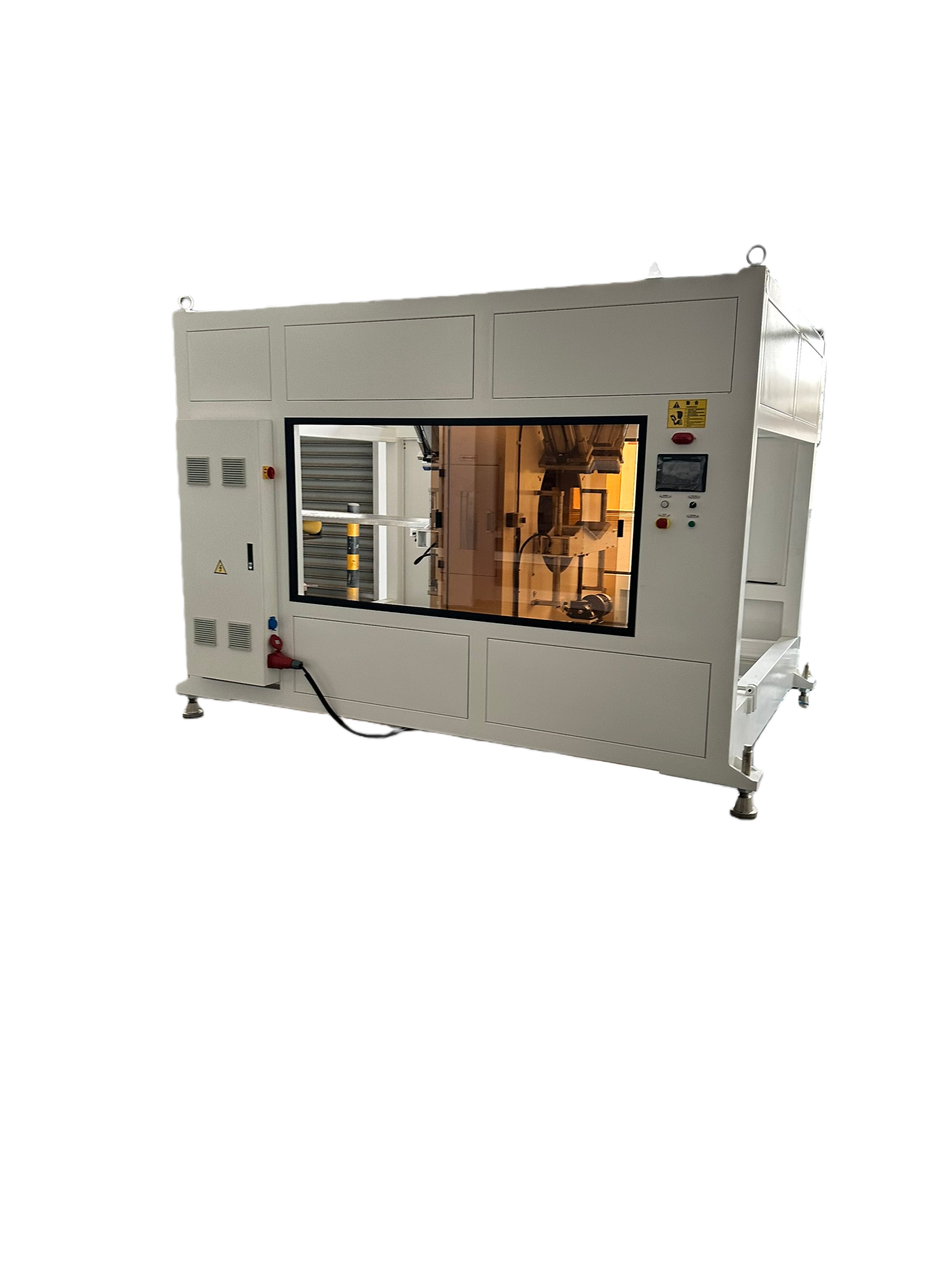
How PVC-O Pipe Extrusion Lines Work: Core Process and Critical Equipment
The biaxial orientation process: stretching mechanics, temperature control, and molecular alignment
PVC-O (Polyvinyl Chloride Oriented) pipe is manufactured using biaxial orientation—a precisely controlled thermomechanical process that stretches the PVC material simultaneously along its length (axial) and around its circumference (radial). This occurs within a narrow 90–120°C window, where heat softens the polymer just enough to allow chain mobility without degradation. Hydraulic or servo-driven stretching mechanisms then align the amorphous PVC molecules into an ordered, reinforced network. The result is a dramatic improvement in mechanical performance: tensile strength doubles and impact resistance increases fivefold compared to standard PVC-U. Maintaining temperature uniformity—within ±2°C across the stretching zone—is essential to avoid microstructural defects and ensure consistent crystallinity. This optimized microstructure enables PVC-O pipes to reliably withstand pressures up to 25 bar and operate continuously at temperatures as low as –20°C. Combined with wall-thickness reductions of up to 40%, the process delivers significant material savings—often exceeding 70% versus conventional piping—without sacrificing structural integrity.
Essential components of a modern PVC-O pipe extrusion line
A high-performance PVC-O extrusion line integrates tightly coordinated subsystems engineered for repeatability and real-time responsiveness:
| Component | Function | Key Innovation |
|---|---|---|
| Conical twin-screw extruder | Homogenizes PVC compound into a stable, uniform melt | High-torque drive systems for consistent output at variable load |
| Orientation die | Forms the initial pipe preform with precise geometry and wall distribution | Multi-zone heating jackets enabling axial thermal profiling |
| Vacuum calibration tank | Stabilizes outer diameter and surface finish under vacuum | Achieves ±0.1 mm dimensional tolerance across production runs |
| Biaxial stretching module | Executes synchronized axial draw and radial expansion | Servo-controlled radial expansion for repeatable molecular alignment |
| PLC (Programmable Logic Controller) | Orchestrates all subsystems and monitors critical parameters | Real-time thickness monitoring with closed-loop feedback to extruder |
These components operate in unison via centralized automation, with embedded sensors tracking over 15 key variables—including melt temperature, pressure, viscosity, and orientation tension. Leading systems incorporate predictive maintenance algorithms trained on historical performance data, reducing unplanned downtime by up to 30%. Servo-driven haul-off units maintain exact line speeds during cutting, while integrated vision inspection systems evaluate every meter of pipe for dimensional accuracy, surface defects, and wall consistency before stacking—ensuring batch-to-batch quality compliance.
Top Global PVC-O Pipe Extrusion Line Manufacturers: Capabilities and Differentiators
Rollepaal, Molecor, and Wavin: technology leadership, installed base, and regional strengths
Rollepaal, Molecor, and Wavin represent the three most established global suppliers of PVC-O pipe extrusion lines—each distinguished by proprietary engineering approaches and regional deployment patterns. Rollepaal leads in precision molecular alignment through its patented orientation die design, achieving exceptional axial-radial balance. With installations across more than 40 countries, it holds dominant market share in Europe, particularly in ISO 1452-3 and EN 15662–compliant markets. Molecor specializes in large-diameter (>630 mm) PVC-O production using sequential stretching—first axial, then radial—under tightly managed thermal gradients. Its 150+ active lines are concentrated in Southern Europe, North Africa, and Latin America, where high burst-pressure requirements (e.g., >20 bar) and seismic resilience drive demand. Wavin offers fully integrated turnkey solutions, including automated quality control, modular plant layouts, and seamless commissioning support. Its strongest presence remains in North America, where rapid project deployment and regulatory alignment with ASTM F1483 and NSF/ANSI 61 are priorities. All three manufacturers meet ISO 9001 and ISO 14001 standards, but their technical differentiation reflects distinct interpretations of optimal orientation strategy—balance, sequencing, and integration.
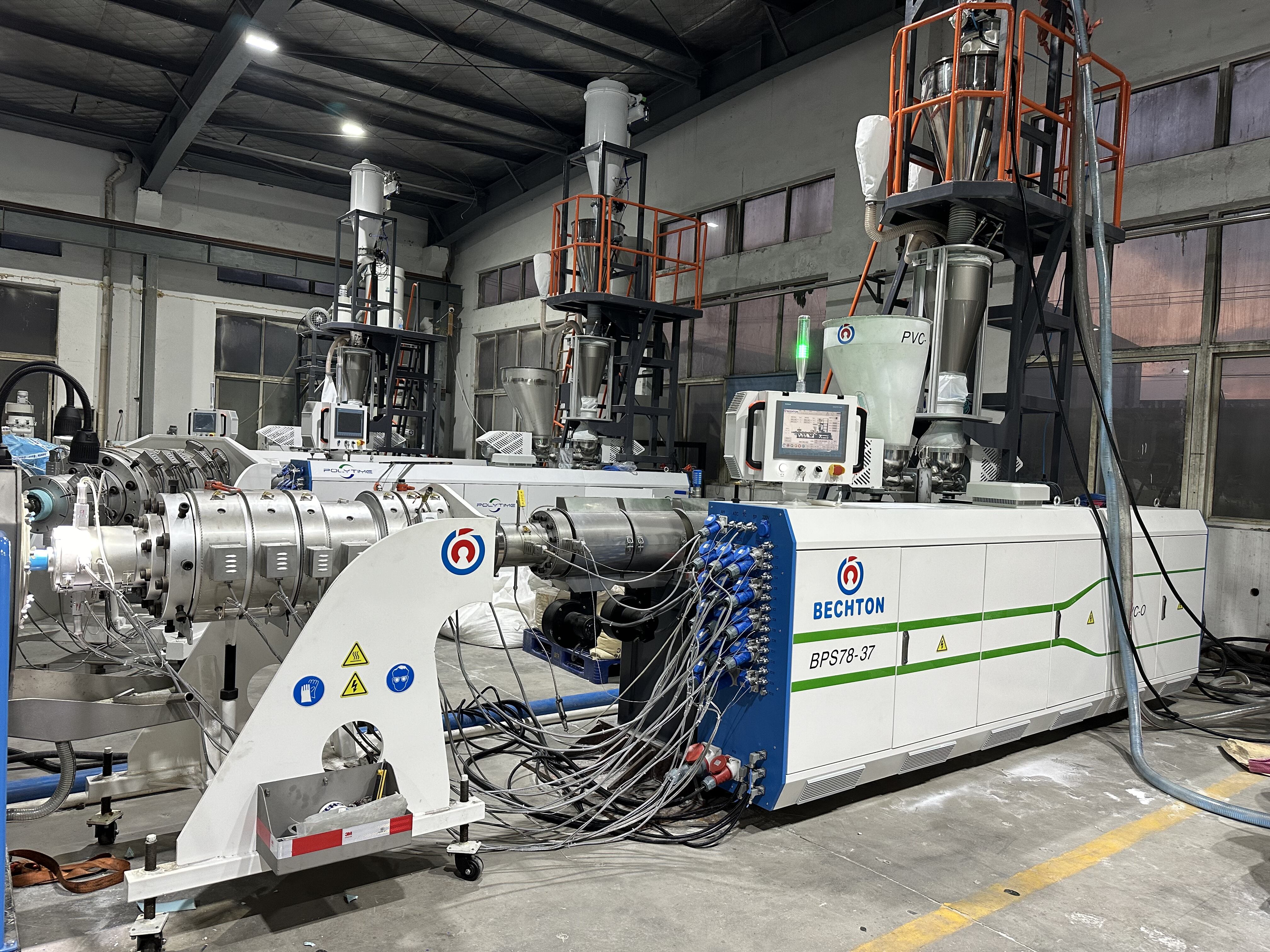
Energy efficiency, automation level, and after-sales support benchmarks
Energy efficiency has become a decisive factor in line selection, especially in regions with high electricity costs or strict sustainability mandates. Top-tier systems recover waste heat from extrusion and cooling stages via integrated heat-exchanger networks, delivering 15–20% net energy reduction versus conventional lines. Automation maturity follows a clear hierarchy: industry-standard lines rely on basic PLC logic and manual calibration, while leaders deploy AI-enhanced HMIs that visualize process health, recommend parameter adjustments, and auto-correct deviations in real time. Predictive maintenance sensors monitor bearing wear, motor load variance, and hydraulic pressure decay—triggering alerts before failure occurs. Remote diagnostics now offer 24/7 cloud-based access for OEM engineers, enabling faster resolution and minimizing production interruptions. After-sales support is equally critical: market-leading providers guarantee global spare-part delivery within 72 hours and maintain certified technician networks across six continents. Their VR-based operator training platforms reduce onboarding time by 60% and improve procedural adherence—contributing directly to lower lifecycle operating costs. Collectively, these capabilities can reduce total downtime by up to 40% compared to legacy systems.
Why PVC-O Pipe Outperforms Alternatives: Performance, Durability, and Lifecycle Value
PVC-O pipe delivers measurable advantages over PVC-U, HDPE, and ductile iron—rooted in its uniquely engineered microstructure. The biaxial orientation process produces tensile strength exceeding 55 MPa—more than 25% higher than standard PVC-U (Ponemon 2023) and significantly surpassing HDPE’s typical 20–25 MPa. This allows for wall-thickness reductions of up to 40% while maintaining pressure ratings up to 25 bar, translating directly into material and transport savings. Impact resistance is five times greater than PVC-U, making PVC-O exceptionally resilient in seismic zones, frost-prone regions, and high-traffic installation environments.
Durability stems from dramatically reduced creep: PVC-O exhibits 70% lower long-term deformation under load than HDPE, preserving 98% of its original pressure capacity after 50 years of buried service—validated by accelerated testing per ISO 9080 and real-world municipal data. Corrosion resistance eliminates the need for cathodic protection or internal linings required by ductile iron, while its smooth bore (Hazen-Williams C = 150+) increases hydraulic capacity by 30% over equivalent metal pipes. Municipal water utilities report 40% lower maintenance expenditures over 25-year service cycles—driven by near-zero leak rates, minimal joint failures, and no corrosion-related replacements.
Although initial procurement costs are 10–15% higher than PVC-U, comprehensive lifecycle cost analyses consistently show 30% lower total ownership costs. These savings arise from reduced installation labor (lighter weight, faster joining), negligible repair frequency, extended service life, and lower pumping energy due to superior flow efficiency. As infrastructure owners prioritize resilience, sustainability, and long-term value, PVC-O’s combination of molecular precision, field-proven longevity, and resource efficiency positions it as the benchmark for next-generation water and wastewater systems.