
 EN
EN



Define Your PVC-O Pipe Production Goals and Capacity Needs
Aligning Pipe Dimensions, Wall Thickness, and Tolerances with End-Use Applications
Pipe specifications must be tightly coupled to application demands—no universal standard applies. Water distribution systems require tight internal diameter control (±0.1% tolerance) to preserve hydraulic efficiency and pressure integrity. Agricultural irrigation pipes need UV-stabilized formulations and minimum wall thicknesses of 4.5 mm for above-ground resilience in high-solar, freeze-thaw environments. Industrial chemical conveyance demands dimensional stability under corrosive exposure—achieved through specialized compound formulations and ±0.1 mm wall thickness control. These requirements directly define extrusion tooling: mold designs must support pressure classes PN10–PN25 and diameters from DN20 to DN1200. For installations in sub-zero conditions (e.g., −20°C frozen ground), polymer chain alignment during orientation becomes critical—dictating material selection, cooling protocols, and calibration precision.
Calculating Required Output Rate (kg/hr) and Selecting Single-, Dual-, or Multi-Outlet Line Configuration
Convert annual production targets into hourly throughput to guide line configuration. A 5,000-ton/year target translates to ~580 kg/hr at 8,600 annual operating hours. Single-outlet lines (≤500 kg/hr) suit niche applications like small-bore chemical conduits; dual-outlet systems (500–1,200 kg/hr) match mid-volume municipal water projects; and multi-outlet configurations (>1,200 kg/hr) serve large-scale irrigation networks—though they require 35% more floor space. Modular setups with quick-release molds enhance flexibility across diameter changes but carry higher upfront costs. Prioritize configuration based on project mix: consistent-diameter runs favor dedicated lines, while diversified portfolios benefit from adaptable, synchronized drawdown controls.
Evaluate Core Extrusion Machinery for PVC-O Pipe Performance
Screw Design, Barrel Hardness, Gearbox Torque, and Motor Efficiency for Stable PVC-O Melt Processing
PVC-O’s molecular orientation depends on exceptionally stable melt conditions—making screw geometry foundational. Barrier-flight screws reduce melt temperature variation by 15–20% versus conventional designs, preserving polymer integrity. Barrels hardened to ≥62 HRC resist wear during high-pressure extrusion of rigid PVC compounds. Paired with gearboxes delivering ≥20 N·m/cm³ torque density and IE4-class motors, these systems achieve specific energy consumption (SEC) as low as 100 Wh/kg. The result is melt homogeneity within ±1.5°C—critical for uniform orientation—and surge-free operation above 600 kg/h, cutting energy waste by 12–18% (Energy Efficiency Benchmark 2023).
Pipe Head & Die Engineering: Spiderless Design, Land Length Optimization, and Internal Air Cooling Integration
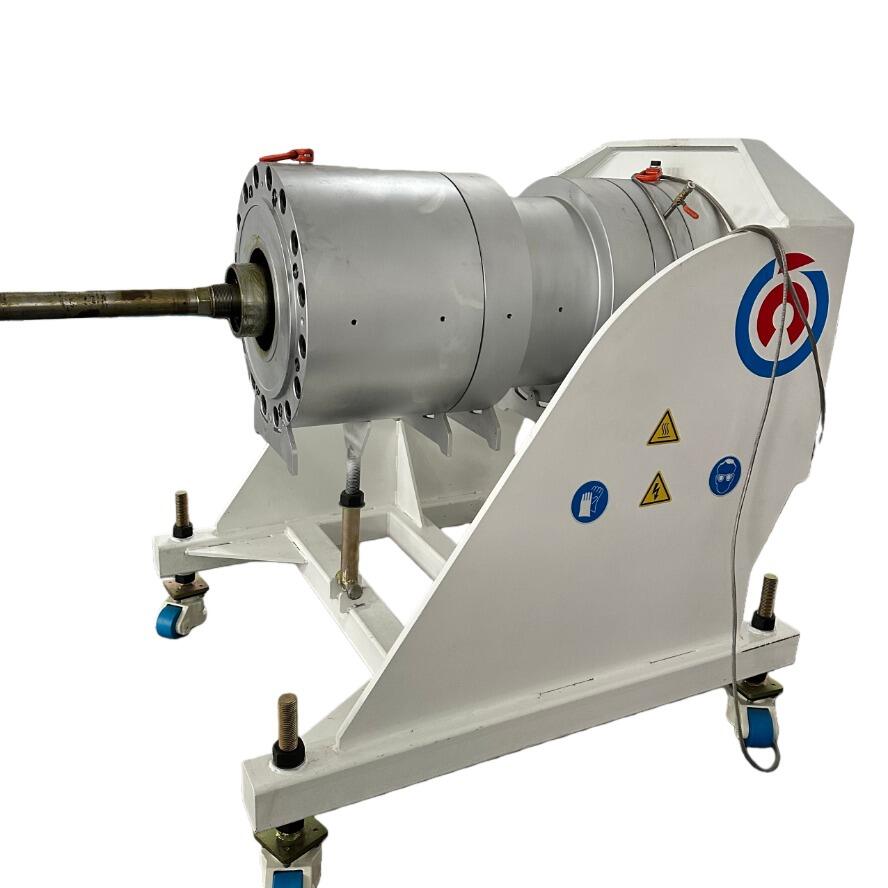
Spiderless dies eliminate weld lines—boosting burst pressure resistance by 25% over spider-arm alternatives. Land length is tuned precisely (1.5–3D, scaled to pipe diameter) to manage material memory during orientation, keeping ovality under 2%. Integrated internal air cooling in the die mandrel accelerates inner surface solidification, enabling faster draw-down without compromising concentricity. This reduces thermal stress gradients by 30%, holding wall thickness tolerance to ±0.1 mm across diameters up to 630 mm—while delivering surface roughness below Ra 0.8 µm and preventing sag in thick-walled profiles.
Ensure Precision Control and Thermal Management for Consistent PVC-O Pipe Quality
Thermal precision is non-negotiable: a 3°C deviation in melt temperature disrupts molecular orientation—the defining strength mechanism of PVC-O pipes.
PLC-Based Automation with Real-Time Monitoring for PVC-O Pipe Dimensional Stability
PLC-driven automation continuously monitors melt temperature, pressure, and line speed via embedded sensors. With sub-0.5-second response times, it dynamically adjusts extrusion parameters to hold wall thickness within ±0.15 mm. This level of control enables near-zero ovality (<0.8%), ensuring pressure rating reliability across water infrastructure deployments.
Vacuum Calibration, Spray Cooling, and Drawdown Synchronization for Optimal PVC-O Pipe Roundness and Surface Finish
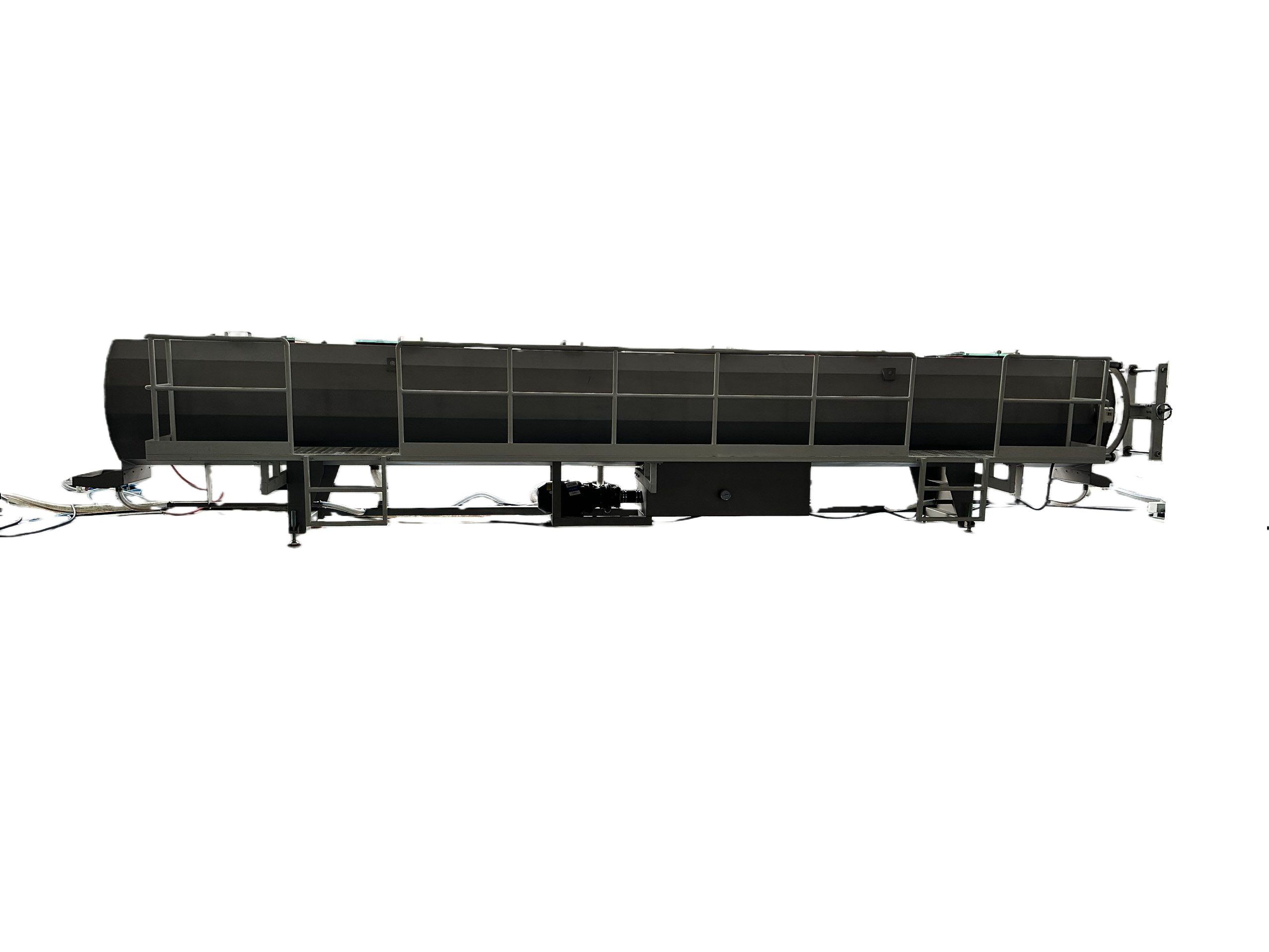
Outer surface solidification begins in vacuum calibration tanks, while internal spray bars manage core thermal gradients. Synchronized drawdown maintains axial tension throughout this phase-locked cooling process—preventing sag, diameter drift, or eccentricity. The outcome is roundness within 0.5% tolerance and surface finish <0.8 µm Ra—key for leak-free gasket sealing and optimal hydraulic performance.
Assess Total Value: Compliance, Support, and Lifecycle Costs of Your PVC-O Pipe Extrusion Line
True value assessment extends far beyond purchase price. Compliance with ISO 16422—and regional standards for molecular orientation and pressure ratings—is mandatory; non-conformance risks certification failure and project rejection. Operational costs are dominated by energy (12% of total) and maintenance: modern lines operate at 180–220 Wh/kg SEC, and advanced screw designs cut unplanned downtime by 40%. Over a typical 30-year lifecycle, operational phases account for 85% of total energy use. Precision control reduces material waste by 12–15%, while manufacturers offering remote diagnostics and guaranteed spare-part availability cut repair windows by ~60%. ROI analysis shows efficient PVC-O systems typically recoup investment in 2–3 years—driven by ~30% energy savings and 8–12% throughput gains. Projects leveraging automation report 30% lower total cost of ownership over 15 years versus conventional lines—making performance-focused investment essential for long-term infrastructure resilience.