
 EN
EN



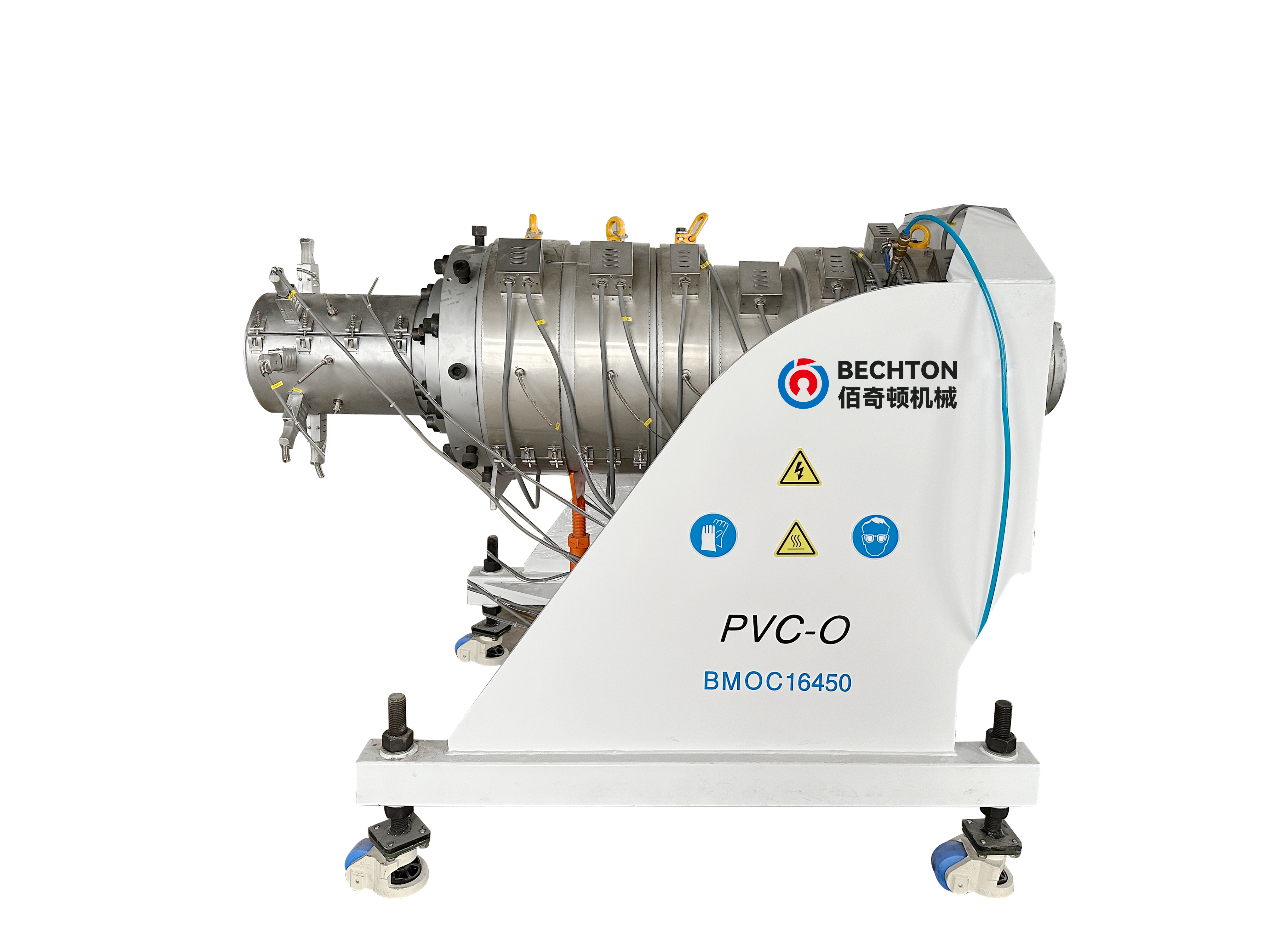
Mechanical Superiority: Unmatched Impact and Fatigue Resistance in PVC-O Pipe
How Molecular Orientation Eliminates Brittle Failure in PVC-O Pipe
Biaxial orientation transforms PVC-O’s failure mode from brittle to ductile. During manufacturing, polymer chains are stretched simultaneously in hoop and axial directions, forming a layered, highly ordered structure. This alignment arrests micro-cracks by redistributing stress along the oriented chains—preventing sudden fracture. Under impact, the pipe deforms locally rather than shattering, behaving more like ductile metal than rigid plastic. Its low creep rate sustains this toughness over decades, ensuring dents or surface scores do not evolve into leaks. Independent testing confirms PVC-O resists crack propagation through repeated pressure surges and soil movement—critical for buried pressure mains. As a result, infrastructure operators gain a pipe certified for over 100 years of service under nominal pressure, even in unstable or freeze-thaw-prone ground.
Quantified Performance: 2.5× Higher Impact Resistance vs. PVC-U (ISO 16422 Validation)
Per ISO 16422, PVC-O delivers at least 2.5× the impact strength of PVC-U in standardized notched-impact tests—a margin rooted in its energy-absorbing oriented architecture versus the amorphous structure of unoriented PVC. Field-relevant data shows typical values of 24 kJ/m² for PVC-O versus 4.8 kJ/m² for PVC-U, reflecting a five-fold relative gain. The same standard certifies exceptional fatigue resistance: PVC-O withstands over 10 million pressure cycles without failure, compared to ~500,000 for PVC-U. Together, these properties enable reliable performance against accidental strikes, rocky backfill, and long-term water hammer—preserving pressure integrity across decades of service.
Performance and Practical Advantages Over Traditional Pipe Materials
Lighter Weight and Thinner Walls: Lower Installation Labor and Transport Costs
Molecular orientation boosts PVC-O’s strength-to-weight ratio, enabling thinner walls at equivalent pressure ratings. This reduces weight by up to 30% versus ductile iron and nearly 50% versus concrete—cutting transport fuel use, lifting equipment needs, and crew size. A 2023 field study found crews installed a 200-mm PVC-O pipeline 40% faster than an equivalent ductile-iron line, directly lowering labor costs. Shorter installation windows also minimize traffic disruption and community impact. These logistics efficiencies—from reduced machinery hours to streamlined handling—make PVC-O the most cost-effective solution for modern buried pressure infrastructure.
Hydraulic Efficiency: Smoother Bore Reduces Friction Loss and Energy Demand
PVC-O maintains a consistently smooth bore that resists scaling and biofilm accumulation. Independent testing confirms a Hazen-Williams C-factor of 150—higher than steel (120) and aged concrete (130). This translates to measurably lower head loss per meter. A 2022 analysis of a 10-km transmission main showed PVC-O required 8% less pumping energy than ductile iron to maintain identical flow rates. Over a 50-year design life, those savings compound—reducing both operational energy demand and carbon emissions. Stable hydraulics also allow downsizing pumps or operating at lower speeds, further cutting capital and lifecycle costs.
Global Standardization and Certification Driving Market Confidence in PVC-O Pipe
Harmonized Standards (ISO 16422, NF Mark, Class 500) Enabling Cross-Regional Acceptance
Robust international standards eliminate trade barriers and empower engineers to specify PVC-O with confidence worldwide. ISO 16422—now updated to its 2024 edition for in-line production—defines uniform dimensions, performance thresholds, and test protocols. In France, the NF Mark adds rigorous national quality verification. The Class 500 designation guarantees a minimum required strength of 50 MPa, confirming suitability for high-pressure, long-life applications. By aligning material specifications and testing methods, these benchmarks ensure seamless cross-border acceptance. Utilities and consultants can source PVC-O from multiple qualified manufacturers without redesigning systems—accelerating approvals and reducing procurement risk.
Expanding Application Scope: Validated PN16–PN25 Pressure Ratings and DN63–DN1200 Diameters
Certified pressure and size ranges now support PVC-O across virtually all potable water applications. Standardized ratings from PN16 to PN25 bar cover distribution, transmission, and booster main requirements, while diameters span DN63 to DN1200. This versatility allows a single material to serve small branch lines, medium networks, and large trunk mains. International standards—including AWWA C909 (up to 24 inches) and ISO 16422 (up to DN1200)—validate consistent quality across the full range. For project owners, certified high-pressure, large-diameter PVC-O eliminates mid-project material switches—simplifying logistics, maintenance planning, and long-term asset management.
Economic and Environmental Sustainability of PVC-O Pipe Across Its Lifecycle
PVC-O delivers compelling economic and environmental benefits across its entire lifecycle—from raw material use to end-of-life recycling. Molecular orientation reduces material demand by up to 50% versus standard PVC-U while enabling wall thicknesses up to 40% thinner—without sacrificing strength. The resulting lightweight profile is roughly 60% lighter than equivalent ductile iron or HDPE pipes, lowering transport emissions and installation effort. A 2023 lifecycle analysis found PVC-O’s embedded carbon footprint is just 1,450 kg CO₂ per kilometer—significantly below alternatives:
| Material | Carbon Footprint (kg CO₂/km) | Recyclability Rate | Service Life (Years) |
|---|---|---|---|
| PVC-O | 1,450 | 94% | 100+ |
| Ductile Iron | 2,200 | 68% | 50–75 |
| HDPE | 1,800 | 82% | 50–80 |
Its 100+ year service life cuts replacement frequency by ~60% versus metal or polyolefin systems—avoiding repeated manufacturing, transport, and installation emissions. With 94% recyclability, PVC-O supports circular economy goals by enabling high-quality material reuse and minimizing landfill waste. These factors combine to deliver 30% lower total embodied energy than PVC-U—and substantially reduced long-term maintenance and replacement costs—making it both financially sound and environmentally responsible for water infrastructure.
FAQ
What makes PVC-O pipes superior to traditional pipe materials?
PVC-O pipes offer superior impact resistance, a lightweight design, extended service life, and improved hydraulic efficiency compared to traditional materials like ductile iron and HDPE. They also require less material, reducing costs and environmental impact.
How does molecular orientation improve PVC-O's performance?
Molecular orientation aligns polymer chains in two directions, transforming the pipe's failure mode from brittle to ductile, enhancing both its impact and fatigue resistance.
What are the environmental benefits of using PVC-O pipes?
PVC-O pipes have a lower carbon footprint compared to alternatives like ductile iron and HDPE. They are 94% recyclable, lighter, and have a service life of over 100 years, significantly reducing lifecycle emissions.
What certifications validate the quality of PVC-O pipes?
Certifications like ISO 16422, the NF Mark, and the Class 500 designation validate the quality, durability, and suitability of PVC-O pipes for high-pressure and long-life applications.
Can PVC-O pipes handle extreme conditions, like freeze-thaw cycles or pressure surges?
Yes, PVC-O pipes are designed to resist crack propagation from soil movement, pressure cycles, and extreme temperature conditions like freeze-thaw cycles, making them highly durable for buried pressure mains.
Table of Contents
- Mechanical Superiority: Unmatched Impact and Fatigue Resistance in PVC-O Pipe
- Performance and Practical Advantages Over Traditional Pipe Materials
- Global Standardization and Certification Driving Market Confidence in PVC-O Pipe
- Economic and Environmental Sustainability of PVC-O Pipe Across Its Lifecycle
-
FAQ
- What makes PVC-O pipes superior to traditional pipe materials?
- How does molecular orientation improve PVC-O's performance?
- What are the environmental benefits of using PVC-O pipes?
- What certifications validate the quality of PVC-O pipes?
- Can PVC-O pipes handle extreme conditions, like freeze-thaw cycles or pressure surges?