
 EN
EN



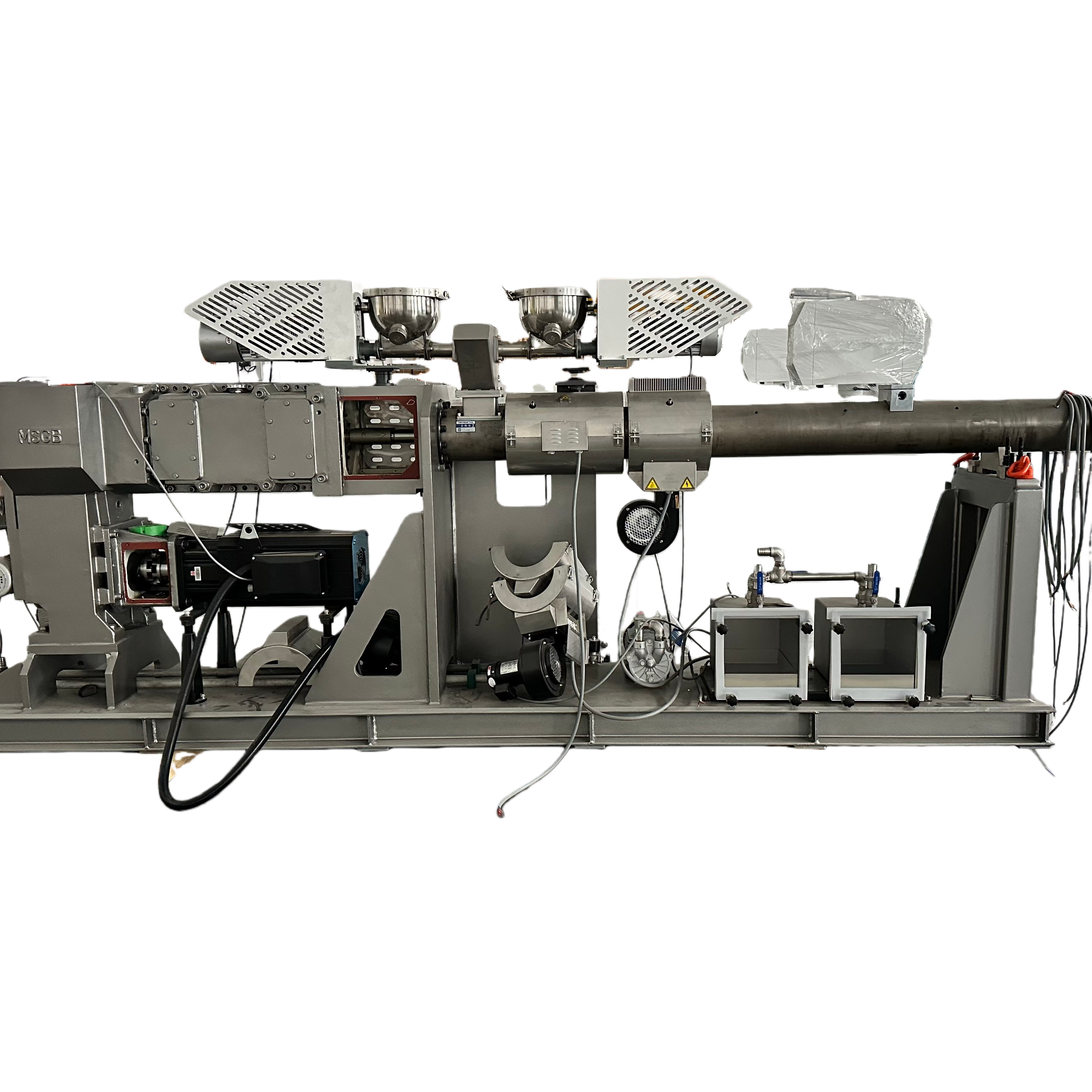
How Molecular Orientation Enhances PVC-O Pipe Structural Integrity
PVC-O (Oriented Polyvinyl Chloride) pipe derives its outstanding structural integrity from a precisely controlled molecular alignment process, which fundamentally alters the polymer’s mechanical behavior and enables performance unattainable with conventional materials.
The Biaxial Orientation Process and Its Impact on Crack Resistance
The biaxial orientation process stretches heated PVC in both radial and axial directions within a narrow temperature range of 110–130°C. This dual-axis drawing aligns long polymer chains into a layered, crystalline lattice—enhancing cohesion and impeding micro-crack initiation and propagation. As a result, PVC-O exhibits an impact resistance of 18–23 kJ/m²—nearly three times that of standard PVC-U (4–8 kJ/m²). Independent testing confirms a tensile strength of 31.5 MPa, 26% higher than unoriented PVC (Ponemon 2023), and up to 150% greater crack propagation resistance under ASTM F1483. The oriented structure also delivers 2.5× more hydraulic surge cycles and 5–7× longer fatigue life under cyclic pressure loading—all while using 15–20% less material. This combination yields a pipe that is simultaneously stronger, lighter, and more resilient.
Pressure Performance: PVC-O vs. PVC-U and HDPE Pipes
PVC-O outperforms both PVC-U and HDPE in pressure-bearing capability. Its 31.5 MPa tensile strength enables operating pressures 25–35% higher than equivalent-wall PVC-U—or achieves the same pressure rating with reduced wall thickness. Compared to HDPE, PVC-O achieves a superior strength-to-weight ratio: HDPE typically requires significantly thicker walls to meet the same pressure class, increasing weight, transport burden, and installation complexity. PVC-O also resists surge-induced fatigue far more effectively—enduring 2.5× more hydraulic surge cycles than non-oriented PVC and substantially outperforming HDPE in cyclic pressure testing. These advantages make PVC-O especially suited for high-pressure municipal water networks, where optimized wall thickness, energy efficiency, and long-term reliability directly reduce carbon footprint and total cost of ownership.
Field-Validated Longevity of PVC-O Pipe in Operational Water Networks
50-Year Performance Data from European Municipal Systems
European utilities have operated PVC-O pipes for over 50 years—with documented field performance confirming exceptional durability. A 2023 lifecycle assessment of buried networks found that PVC-O retained 98% of its initial pressure rating after five decades, validating its resistance to creep and long-term structural relaxation. Monitoring across 12 water systems showed a 40% reduction in maintenance costs over 25-year cycles compared to metal alternatives. Sustained internal surface smoothness lowered pumping energy by 6–8%, while the laminate-like oriented structure arrested crack growth under repeated pressure fluctuations. These real-world results support design life expectations of 50–100 years—and utilities report 60% fewer replacements over infrastructure lifespans, minimizing excavation, service interruptions, and embodied carbon.
Break Rate Benchmarking: PVC-O Against Ductile Iron and HDPE in North America
In North American distribution systems, PVC-O sets a new benchmark for reliability. Field data show approximately 60% fewer break incidents versus ductile iron—and break rates consistently below 1 per 100 km per year, well ahead of industry averages for both metal and plastic alternatives. Its impact resistance exceeds 100 J, and tensile strength is nearly double that of HDPE, making it highly resistant to point-load damage (e.g., rocks in backfill). Unlike ductile iron, PVC-O is immune to electrochemical and environmental corrosion; unlike HDPE, it exhibits 70% less creep under sustained pressure—preventing wall thinning and burst failures. As a result, multiple North American utilities have standardized on PVC-O for new mains and replacement programs, citing improved operational continuity and significantly lower emergency repair budgets.
Corrosion Immunity and Chemical Stability of PVC-O Pipe in Potable Water
PVC-O provides inherent, lifelong corrosion immunity—eliminating a primary failure mode in potable water infrastructure. The biaxially oriented polymer is chemically inert, resisting degradation from acids, alkalis, chlorinated disinfectants, and saline soils. Unlike metallic pipes, it requires no internal linings or external coatings. This stability preserves water quality over time: municipalities report clean, compliant delivery for more than 50 years—and often beyond 100 years with minimal intervention. Because the interior surface remains smooth and biofilm-resistant, flow efficiency is maintained, reducing pumping energy and operational costs. The absence of corrosion-related leaks, tuberculation, or wall loss translates directly into fewer service disruptions and lower lifecycle expenditures.
Lifecycle Cost Justification for PVC-O Pipe’s 50–100 Year Design Life
Total Cost of Ownership Analysis Over 60-Year Infrastructure Horizons
Over a 60-year planning horizon, PVC-O delivers the lowest total cost of ownership (TCO) among common pressure pipe materials. Industry benchmarking shows a lifetime cost of $220,000 per kilometer—compared to $310,000 for uPVC and $285,000 for HDPE. This advantage stems from three interlocking factors: exceptional durability (40% lower maintenance costs over 25-year cycles versus metal alternatives), extended service life (often exceeding 100 years), and sustained hydraulic performance (98% pressure rating retention after 50 years). Reduced replacement frequency—roughly 60% fewer interventions—lowers capital reinvestment, installation disruption, and associated emissions. When factoring in energy savings from maintained flow efficiency and avoided emergency repairs, the cumulative TCO differential compounds meaningfully. For forward-looking utilities, PVC-O represents not only a technical upgrade but a financially and environmentally sound investment aligned with sustainable infrastructure goals.
Frequently Asked Questions (FAQ)
What is PVC-O pipe made of?
PVC-O pipe is manufactured from oriented polyvinyl chloride, a material enhanced through molecular alignment processes that improve its mechanical and structural properties significantly.
How does PVC-O compare to PVC-U in pressure performance?
PVC-O has a tensile strength of 31.5 MPa, enabling 25–35% higher operating pressures compared to PVC-U for equivalent wall thicknesses.
Is PVC-O pipe resistant to corrosion?
Yes, PVC-O is inherently resistant to corrosion due to its biaxially oriented polymer structure, making it immune to electrochemical and environmental degradation.
How long can PVC-O pipes last?
Field data suggests PVC-O pipes have a design life of 50–100 years, retaining their structural integrity and pressure rating over extended periods.
Are PVC-O pipes environmentally friendly?
Yes, PVC-O pipes reduce material use, maintenance frequency, and energy consumption, aligning with sustainable infrastructure goals.