
 EN
EN



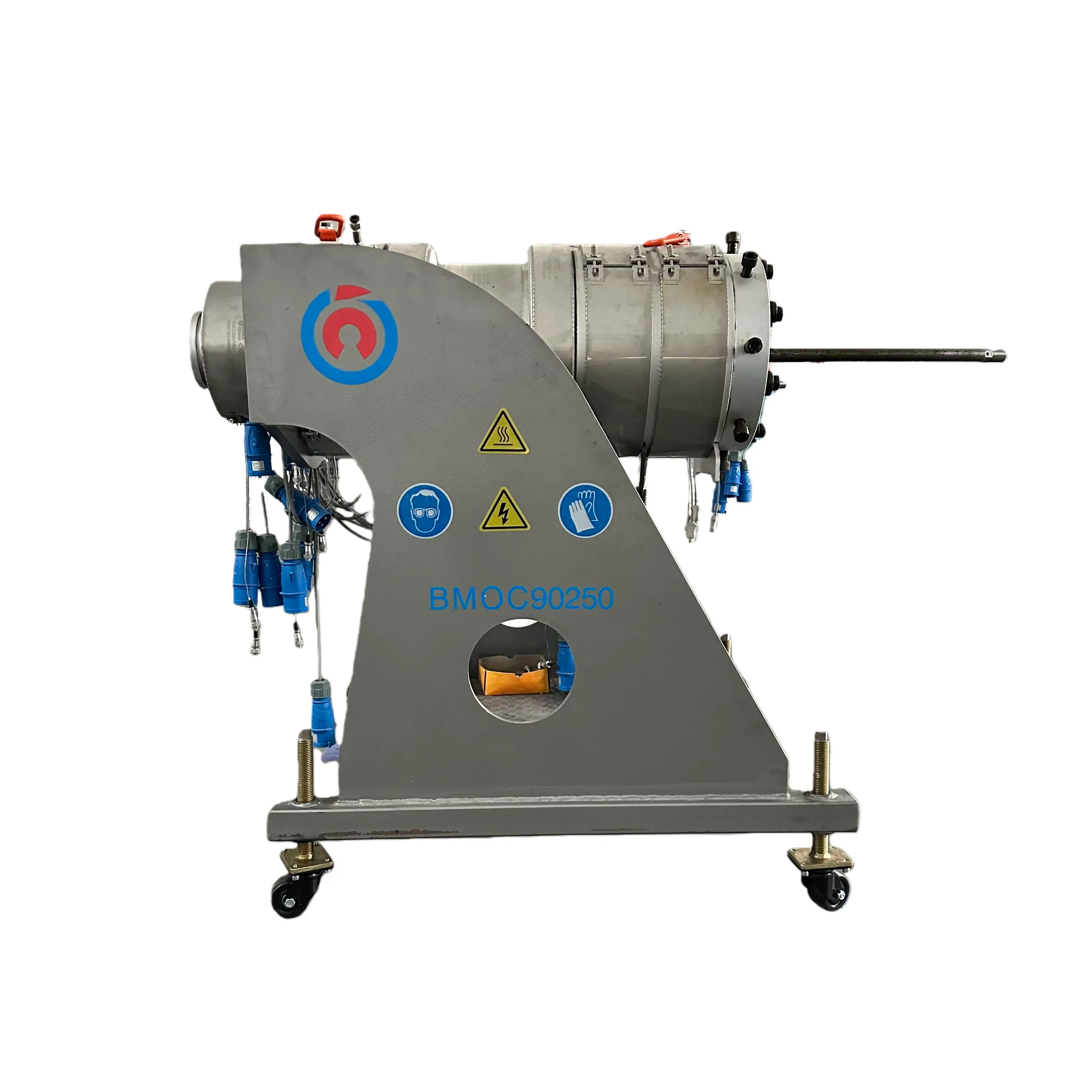
Core Technology of the PVC-O Pipe Extrusion Line
Twin-Screw Extruders for Precise Melting and Homogenization of PVC-O Feedstock
Twin-screw extruders form the foundation of PVC-O pipe manufacturing, engineered to achieve exact temperature control during melting. This precision ensures uniform polymer distribution—critical for eliminating weak points in later stages. Consistent melt homogeneity reduces material stress concentrations by up to 30%, directly enhancing pipe integrity under pressure surges.
Vacuum Calibration Bath and Controlled Cooling for Dimensional Stability Pre-Orientation
Following extrusion, the pipe enters a vacuum calibration bath that instantly shapes the molten profile while cooling systems maintain strict thermal gradients. This dual-phase process minimizes crystallinity variations, securing dimensional tolerances within ±0.3%. Such accuracy is vital, as uneven preforms can compromise orientation efficiency by 15–20% in subsequent stages.
In-Line Biaxial Orientation Unit: Synchronized Axial Stretching and Radial Expansion
The defining innovation lies in the biaxial orientation unit, where molecular chains undergo simultaneous axial stretching and radial expansion. This synchronized deformation reconfigures PVC's amorphous structure into a cross-linked lattice, amplifying mechanical properties. Optimally oriented PVC-O pipe delivers 40–50% greater tensile strength and 2.5× higher surge resistance than conventional alternatives.
How Molecular Orientation Defines PVC-O Pipe Performance
From PVC-U to PVC-O: The Structural Transformation via Biaxial Stretching
PVC-O pipes start life as regular PVC-U material which has a random molecular arrangement. When manufacturers apply controlled stretching techniques, they pull the material both lengthwise and outward at temperatures between 110 and 130 degrees Celsius. During this heating process, the long polymer molecules actually rearrange themselves forming distinct crystal layers inside the plastic. This structural change makes the material much stronger by spreading out stresses evenly across the pipe walls and getting rid of those pesky weak spots. What sets this apart from normal manufacturing methods is how these molecular layers lock together like puzzle pieces, giving the finished product better strength properties. The end result? A completely different type of material that goes from being brittle and uniform to something more flexible yet directional in its strength characteristics. This means PVC-O can handle pressure coming from all directions without breaking, and it achieves all this while requiring about 15 to 20 percent less raw material compared to traditional PVC-U options on the market today.
Quantified Gains: 45% Higher Hydrostatic Strength and Double the Fatigue Life vs. uPVC
Independent testing verifies that PVC-O pipes achieve 45% higher hydrostatic strength and double the fatigue life compared to uPVC. The oriented molecular structure distributes internal pressure evenly, delaying crack initiation and propagation. Key performance advantages include:
- 300% improvement in crack resistance (ASTM F1483)
- 360° impact resistance, maintaining integrity at subzero temperatures
- 5–7× longer service life under cyclic pressure surges
These properties allow PVC-O pipes to handle 25–35% higher operating pressures while reducing failure risks in dynamic water systems. The extended fatigue endurance directly translates to lower lifecycle costs and fewer municipal maintenance interventions.
Real-World Advantages of PVC-O Pipe in Municipal Water Systems
50-Year Service Life and <0.1% Annual Leak Rate in Operational Deployments
PVC-O pipes are giving municipal water systems a whole new level of reliability according to field data showing these pipes last around 50 years with leak rates under 0.1% per year in pressure systems. Compare that to old school materials like ductile iron where leaks happen at about 3 to 5% annually in similar setups. What makes PVC-O special is this molecular orientation process that basically fuses the material together into one solid piece, making it much less prone to cracks and failures over time. No corrosion issues either since they don't react with chemicals or acidic soil conditions, something that plagues metal pipes and costs water companies nearly $3 billion every year in repairs. Plus, the inside surfaces stay smooth for longer periods, meaning pumps don't have to work as hard, cutting down on energy costs by roughly 30 to 40% compared to rusty metal pipes. All these factors combined mean fewer maintenance calls and breakdowns, which explains why more cities are turning to PVC-O when looking at long term costs for their water infrastructure projects.
PVC-O Pipe vs. Alternatives: Pressure Capacity, Joint Reliability, and Lifecycle Economics
Looking at different pipe materials for water systems under pressure, PVC-O stands head and shoulders above other options when it comes to how well water flows through them, how secure the joints stay together, and what they ultimately cost over time. These pipes can handle 25 bars of pressure, which is about half again as much as HDPE and almost a third more than regular PVC-U. That kind of strength means they can take whatever beating city water systems throw at them without warping or changing shape. What makes PVC-O really special though is its unique molecular structure. Unlike other plastic pipes that tend to slowly stretch out over time (which leads to leaks where the joints come apart), PVC-O basically stays put even after years of constant pressure. Real world tests show leakage rates stay rock bottom at less than 0.1% each year. From an economic standpoint, these pipes last over a century without corroding, cutting down on repairs and replacements by around 40% compared to older iron pipes. Recent studies from last year back up these claims pretty convincingly.
| Parameter | PVC-O | HDPE | PVC-U | Ductile Iron |
|---|---|---|---|---|
| Tensile Strength (MPa) | 55–75 | 20–30 | 40–50 | 420 |
| Pressure Cycling Lifespan | 10M cycles | 2M cycles | 500K cycles | 250K cycles |
| Carbon Footprint (kg CO₂/km) | 1,450 | 1,800 | 1,600 | 2,200 |
This combination of mechanical resilience and sustainability confirms PVC-O as the lowest lifetime-cost solution for high-pressure water transmission.
FAQ
What are the key benefits of using PVC-O pipes over other materials?
PVC-O pipes have several advantages, including higher pressure capacity, superior joint reliability, a longer service life, and a lower carbon footprint. They are less prone to cracking and corrosion compared to materials like ductile iron, which reduces maintenance costs significantly.
How does the molecular orientation process enhance the performance of PVC-O pipes?
The molecular orientation process involves biaxial stretching that aligns the polymer molecules, transforming PVC-U's random arrangement into a structured crystalline form. This significantly increases the tensile strength and surge resistance of PVC-O pipes.
What is the typical lifespan of PVC-O pipes in municipal water systems?
PVC-O pipes typically have a 50-year service life with a leak rate of less than 0.1% per year, making them highly reliable for municipal water systems.
How do PVC-O pipes contribute to cost savings over time?
PVC-O pipes reduce lifecycle costs by lengthening the service life and minimizing the need for repairs and replacements. Their smooth inner surfaces decrease energy costs by requiring less pumping energy. They also offer high resistance to pressure and impact, which further cuts down on maintenance expenses.