
 EN
EN



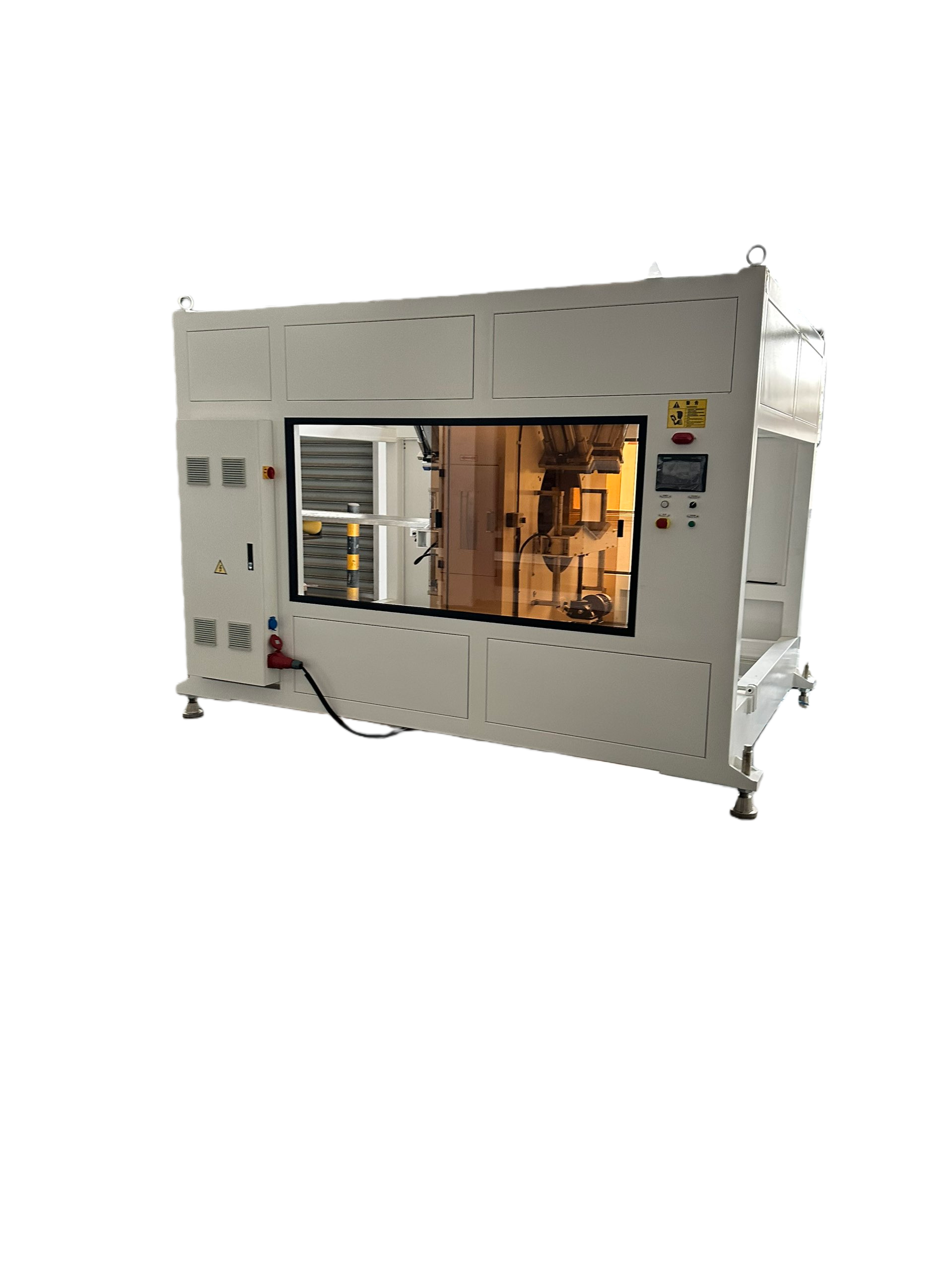
Fully Watertight Joints: Eliminating Leakage in Modern Water Networks
How PVC-O pipe’s precision-fused joints achieve near-zero leakage rates
Unlike traditional segmented pipe systems that rely on rubber gaskets or mechanical couplings, PVC-O pipe achieves near-zero leakage through a molecularly fused jointing process. Each joint is created by heat-welding pipe ends—using computer-controlled fusion equipment—to form a homogeneous, monolithic connection as strong as the pipe wall itself. This eliminates micro-gaps and seal degradation, the primary causes of water loss in conventional networks. A 2021 European field study found PVC-O networks averaged just 0.02 litres per connection per day, compared to an industry average of 0.5 litres. With no gaskets, bolts, or rubber seals required, the joint maintains its integrity indefinitely without maintenance—effectively transforming discrete pipe lengths into a continuous, leak-free conduit. In aging infrastructure where hidden losses can exceed 20% of total flow, this fusion-based integrity delivers measurable conservation gains.
Performance under transient pressure: Hydrostatic integrity and water hammer resilience
PVC-O’s viscoelastic nature enables it to absorb and dissipate energy during transient pressure events such as water hammer. Under surge loads, its polymer chains temporarily realign—reducing peak surge pressures by up to 35% compared to rigid materials, per a 2022 hydraulic analysis. Crucially, fused joints do not act as stress concentrators. Hydrostatic pressure tests confirm leak-free performance at pressures exceeding 2.5 times the nominal rating—fully compliant with ISO 16422. Cyclic fatigue testing over 100,000 pressure cycles showed no degradation or measurable leakage. In real-world operation, even sudden valve closure produces no joint failure or leakage. This inherent resilience reduces reliance on surge tanks or external restraints, enhancing system safety and simplifying design.
Superior Hydraulic Efficiency: Maximizing Flow Capacity with PVC-O Pipe
Higher flow rates vs. PVC-U and ductile iron at equal diameters
At equivalent nominal diameters, PVC-O consistently outperforms PVC-U and ductile iron in flow delivery. Biaxial orientation allows thinner walls without compromising pressure capacity—yielding an internal bore 8–12% larger than comparable metallic or rigid PVC pipes. Combined with an exceptionally smooth inner surface—maintaining a Hazen-Williams C-factor of 150 (versus 130 for ductile iron and ~140 for aged cement-lined pipe)—this delivers a 15–25% greater flow capacity at the same diameter. Field trials demonstrate that retrofitting aging networks with PVC-O restores lost throughput without expanding the pipeline corridor, reducing both material use and trenching costs.
Reduced head loss and measurable energy savings in operational pumping systems
PVC-O’s low-friction surface cuts dynamic head loss by more than 20% compared to new ductile iron—and the advantage grows as metallic pipes tuberculate. Because PVC-O resists corrosion and scaling, its hydraulic efficiency remains constant for decades, while ductile iron mains often lose up to 40% of flow capacity within 20 years. For a utility moving 50 million liters per day, a 20% reduction in dynamic head translates to roughly 120,000 kWh in annual pumping energy savings—directly lowering operating costs and carbon emissions. European utility reports from 2022 confirm pumping cost reductions of approximately 25%, consistent with validated hydraulic models. These compounding energy savings over PVC-O’s 50-year service life reinforce its role as a cornerstone of sustainable water infrastructure.
Enhanced Strength and Pressure Performance Through Biaxial Orientation
Biaxial orientation transforms standard PVC into a high-performance material by simultaneously stretching preforms in both radial (circumferential) and axial directions. This realigns polymer chains into a dense, layered lattice—boosting impact resistance to 18–23 kJ/m² (versus 4–8 kJ/m² for unoriented PVC), extending fatigue life five- to sevenfold, and improving crack propagation resistance by over 300%. Tensile strength increases by 50–70% (Pipeline International, 2023), enabling 25–35% higher operating pressures while using 15–20% less material.
| Orientation Type | Key Benefit | Typical Stretch Ratio | Contribution to Burst Pressure |
|---|---|---|---|
| Circumferential | Hoop strength enhancement | 2.5:1 | 60–65% |
| Axial | Longitudinal stress tolerance | 1.8:1 | 35–40% |
Precision is critical: over-emphasising circumferential stretching reduces axial fatigue resistance by 25–30% (Journal of Materials Science, 2022). This balanced design ensures exceptional strength, high pressure ratings, and long-term reliability—without the weight or cost penalties of traditional alternatives.
Corrosion-Free Longevity and Uncompromised Water Quality
Zero corrosion, no tuberculation, and sustained hydraulic performance over 50+ years
PVC-O’s inert molecular structure eliminates corrosion, internal scaling, and electrochemical degradation—common failure modes in iron, steel, and even coated metallic pipes. It withstands aggressive soils, acidic water, and chemical exposure without cathodic protection or protective linings. Its smooth bore remains free of tuberculation, preserving full flow capacity and minimizing pumping energy across its entire service life. Independent field assessments confirm hydraulic performance stability beyond 50 years—while also safeguarding water quality by eliminating risks of rust, lead leaching, or copper contamination. This maintenance-free longevity directly lowers lifecycle costs and ensures uninterrupted, high-quality water supply.
FAQ
What is the benefit of molecularly fused PVC-O joints?
Molecularly fused PVC-O joints eliminate leakage by creating a homogeneous, monolithic connection as strong as the pipe wall itself. This process removes the need for gaskets, bolts, or seals, ensuring long-term integrity without maintenance.
How does PVC-O handle pressure surges compared to other pipe materials?
PVC-O’s viscoelastic properties enable it to absorb and dissipate energy during pressure surges, reducing peak surge pressures by up to 35%. This resilience minimizes the risk of joint failure under transient pressure conditions.
Why does PVC-O offer superior hydraulic efficiency?
PVC-O provides larger internal bore diameters and smoother inner surfaces, resulting in lower head loss, higher flow rates, and measurable energy savings during operation.
Does PVC-O resist corrosion?
Yes, PVC-O is completely corrosion-free and resistant to scaling, guaranteeing sustained hydraulic performance and uncompromised water quality for over 50 years.
What makes biaxial orientation critical to PVC-O pipe’s performance?
Biaxial orientation transforms standard PVC into a dense lattice structure, increasing tensile strength, impact resistance, and pressure performance while minimizing material use.