
 EN




What high pressure pvc pipe sizes are commonly used in municipal construction
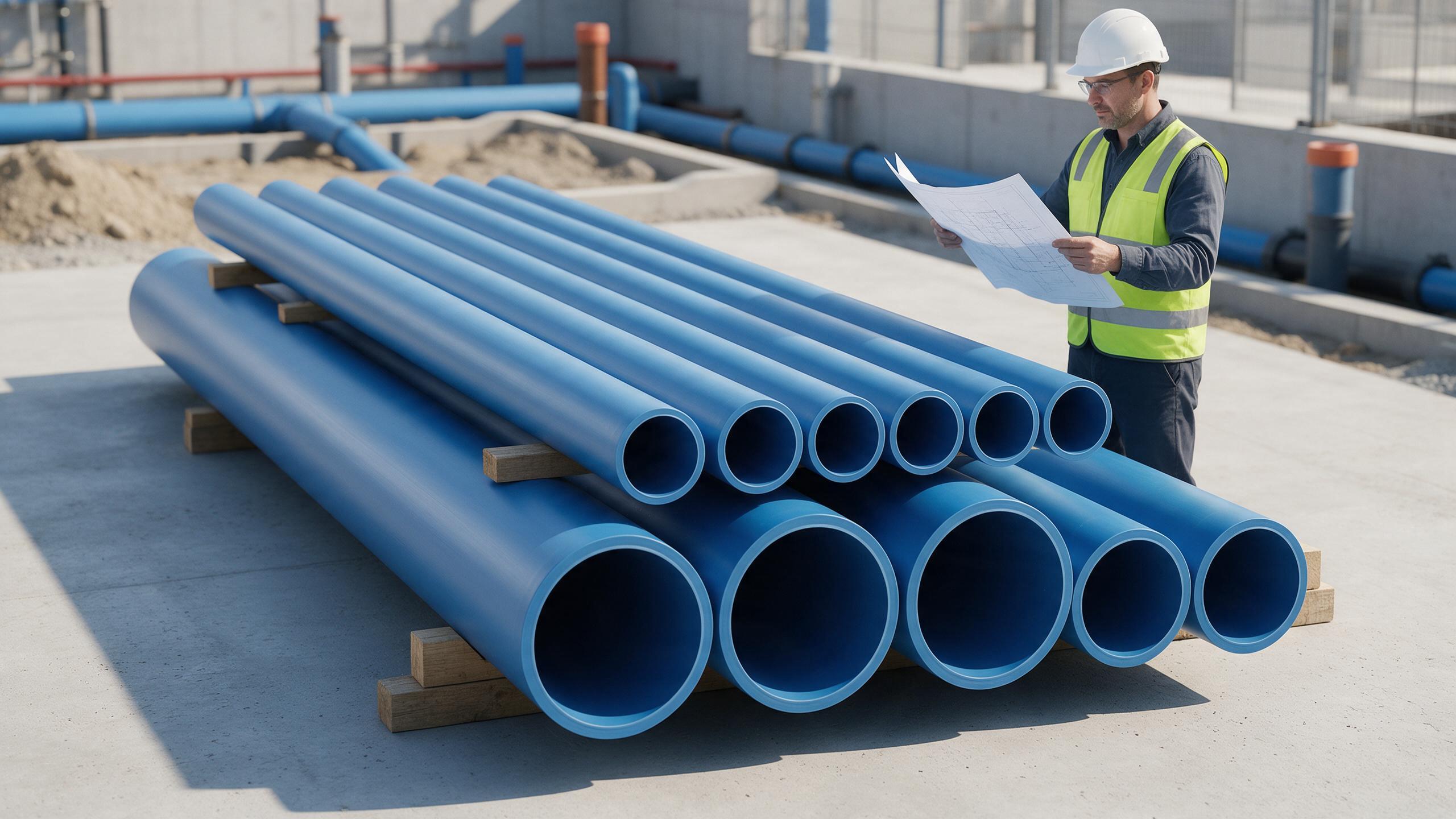
For municipal water projects, the high pressure pvc pipe sizes most often encountered in North American product ranges include nominal 4, 6, 8, 10 and 12 inches. Larger mains and smaller service connections are also used where the network calls for them. These are starting points for discussion, not a design chart: the utility must specify the pipe standard, pressure class, actual dimensions and required flow.
For a pipe manufacturer or equipment buyer, the useful question is not simply which diameter sells most. It is which sizes, pressure classes and joint systems a particular project or market accepts. A nominal diameter alone does not establish that a pipe is suitable for a high-pressure main.
Common sizes and where they may fit
A municipal distribution system has different jobs along its route. The following examples describe possible applications of high pressure pvc pipe sizes; an engineer still needs to calculate the demand and confirm the utility's requirements.
- 4-inch nominal: a possible choice for a smaller branch or a limited-demand extension, subject to local minimum sizes and fire-flow rules.
- 6-inch nominal: a candidate for distribution branches where calculated demand, hydrant requirements and authority specifications allow it.
- 8-inch nominal: a candidate for distribution mains serving a broader area, depending on required flow and network layout.
- 10- and 12-inch nominal: candidates for larger distribution or feeder mains where the hydraulic model supports them.
- Above 12 inches: larger transmission and trunk mains may use larger products; availability, handling and joining requirements depend on the supplier and standard.
One manufacturer's municipal C900 range lists 4, 6, 8, 10 and 12 inches. That confirms an available product range, not the proportion installed in any city. High pressure pvc pipe sizes and procurement practices vary by region; a project using metric specifications may identify products by a different nominal system.
Nominal size is not the actual bore
A nominal size is a designation, not a measurement that can be substituted directly for the inside diameter. Outside diameter, wall thickness and internal bore must be checked in the selected manufacturer's dimensional table. For example, one C900 submittal lists a 4-inch nominal pipe with an average outside diameter of 4.80 inches. This figure belongs to that product series and does not establish the dimensions of an unrelated metric, IPS or PVC-O pipe.
For high pressure pvc pipe sizes, the difference matters at both ends of the design. Hydraulic calculations need the actual internal diameter; fittings and connections need the correct outside diameter and compatible joint dimensions. A thicker wall can reduce the bore while the outside diameter remains the same within a given series. Confirm fitting dimensions against the selected pipe series rather than ordering from the nominal number alone.
Separate diameter from pressure capacity
High pressure pvc pipe sizes do not carry a universal pressure rating. Pressure class depends on the pipe material, the applicable standard, wall dimensions, temperature and the manufacturer's rating basis. DR or SDR describes a dimensional ratio, but the same number should not be assumed to mean the same pressure capacity across different material and standard systems.
As a limited example, one C900 PVC-U product submittal identifies DR 25 as pressure class 165 psi under its stated standard. It is not a rating for every 4-inch pipe, every PVC formulation or every PVC-O product. Check the actual product marking and approved submittal. Design must also account for transient pressure from pump starts, stops and valve operation, rather than relying on steady operating pressure alone.
When a specification calls for a pvc high pressure water pipe, ask for the required operating envelope and the standard used to rate it. The utility or project engineer should assess pressure, surge allowances, water temperature and the combined limits of pipe, joints, valves and fittings.
How an engineer narrows the selection
- Define the duty. Record present and future flow, peak demand and any fire-flow requirement. Confirm available pressure and the elevations along the route.
- Run the hydraulic checks. Use actual bore dimensions to assess velocity and head loss at relevant flows. Compare scenarios rather than assuming the largest diameter is automatically appropriate.
- Check pressures. Examine normal operation and credible surge events against the applicable design method and the product's rated conditions.
- Review installation. Confirm soil support, cover, traffic loading, trench conditions, thrust restraint, joint deflection and connections to existing assets.
- Check the whole assembly. Verify the fitting series, joint type, sealing material and any required drinking-water approvals for the jurisdiction.
- Confirm supply. Request a current dimensional table, pressure-class documentation and the utility's approved product listing before purchase.
The resulting choice of high pressure pvc pipe sizes rests on project conditions, not on the diameter used in a nearby installation. A network may need different diameters in different sections even when all sections convey the same water.
Where PVC-O fits into municipal specifications
Oriented PVC, or PVC-O, is a distinct material category from conventional PVC-U. ISO 16422 addresses PVC-O pipes and joints for pressure water systems; the project team should verify the applicable edition, local adoption and product scope. Do not transfer a C900 PVC-U pressure class or dimensional table to PVC-O without checking the actual product documentation.
For a producer planning a PVC-O line, high pressure pvc pipe sizes influence equipment planning as well as the final pipe schedule. Specify the intended market, target diameter series, pressure classes, product standard and planned output before discussing line configuration. BECHTON's business context is PVC-O pipe production equipment; its stated line range is 110–630 mm, but a particular configuration and supported pipe classes require technical confirmation. That equipment range is not a claim that every municipal utility uses every diameter in it.
Questions to send with a purchase inquiry
Before requesting a pipe or equipment quotation, assemble a short schedule covering the following:
- Project location, water application and governing pipe standard.
- Required nominal sizes, dimensional series and confirmed outside diameters.
- Operating pressure, surge design conditions and required pressure classes.
- Expected flows, connection details, joint system and fitting requirements.
- For production equipment, target material, size range, intended output and inspection requirements.
The most useful shortlist of high pressure pvc pipe sizes comes from that project schedule and a checked hydraulic design. Treat common catalog sizes as candidates, then verify the exact product against the utility specification before committing to a diameter or pressure class.