
 EN




What Special Protective Configuration Does a Special Purpose PVC-O Pipe Production Line Carry?
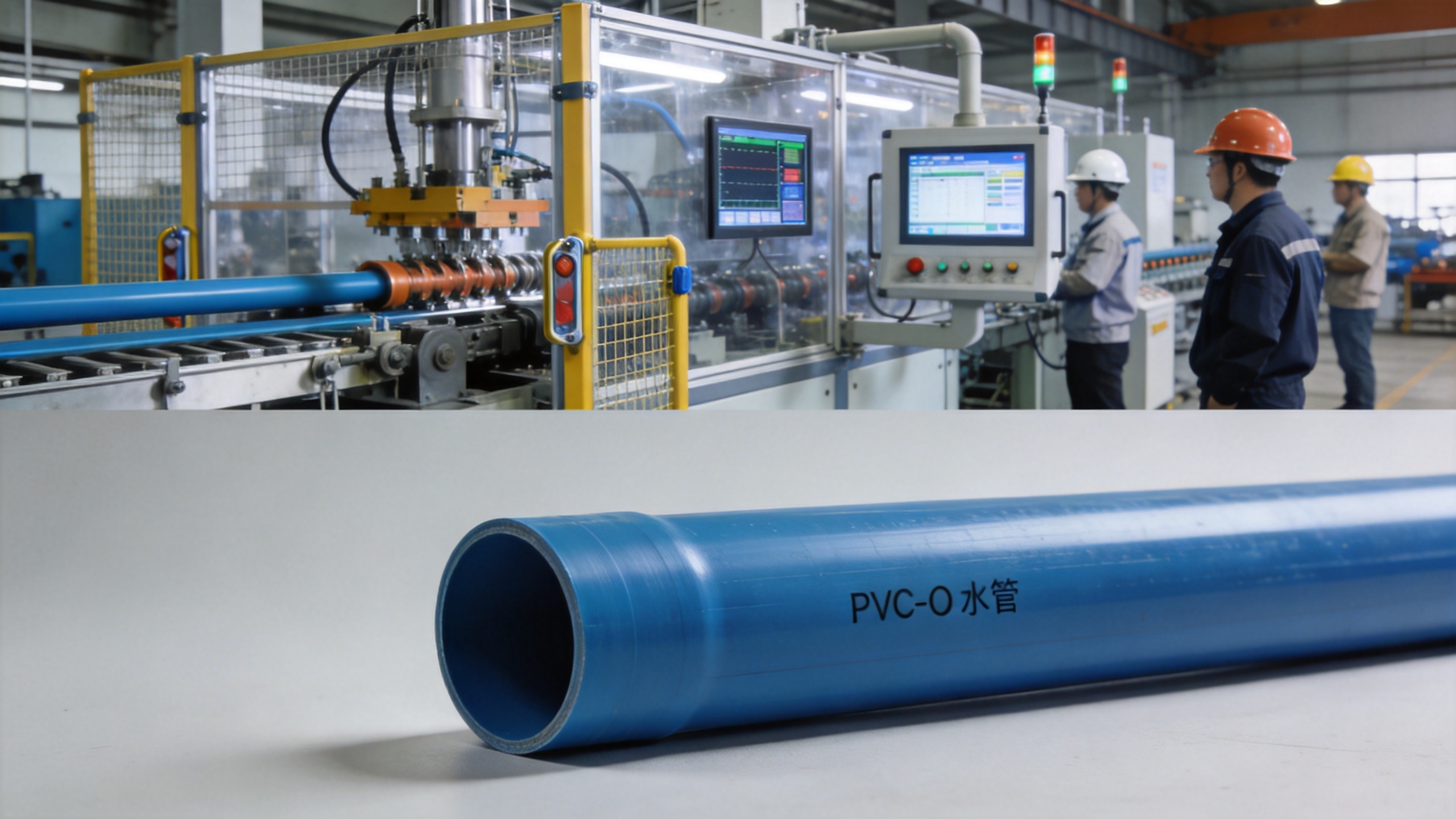
A special purpose PVC-O pipe production line is not defined by one guard or one control screen. It is a coordinated production system whose protective configuration should follow the material path, the diameter range, the orientation route, and the responsibilities of the people who operate and maintain it. For water-infrastructure projects, the useful question is not “which feature is standard?” It is “which risks and process interfaces must this line manage under our stated conditions?”
From a PVC-O extrusion process adviser’s perspective, the special purpose PVC-O pipe production line should be assessed across extrusion, thermal conditioning, forming or orientation-related equipment, cooling, handling, and controls. BECHTON discusses turnkey PVC-O line projects for 110–630 mm pipe applications. That range is useful context, but the final protective arrangement still needs confirmation against the selected size range, material formulation, production route, plant layout, and local operating procedures.
Why protection must follow the PVC-O process
A PVC-O route is commonly described as producing a preliminary pipe and then using controlled heating and forming steps to achieve molecular orientation. The details vary by process design. For that reason, a special purpose PVC-O pipe production line needs more than perimeter fencing around an extruder. It needs a protection plan that recognizes hot surfaces, moving equipment, pressure- or air-related functions, changing pipe geometry, and restart conditions after an interruption.
In practice, the line should be reviewed as connected zones rather than isolated machines. A guard at one station can affect access at the next; an interlock can affect cleaning, setup, and recovery time. This is where a low vibration PVC-O pipe extrusion line manufacturer discussion should move beyond a single machine claim. Vibration behavior, alignment, support points, drive tuning, pipe handling, and control response should be reviewed together under real operating conditions.
Core protective configurations to specify
1. Mechanical guarding and controlled access
The first layer on a special purpose PVC-O pipe production line is physical separation from moving or rotating parts. Typical review points include guards around drive areas, covers around transmission components, protected access near cutting or handling equipment, and barriers where pipe movement can create a reach-in hazard. The aim is not to make every area inaccessible. It is to define normal operating access, planned maintenance access, and the conditions required before access is allowed.
Ask whether removable guards are tied to a documented maintenance procedure, whether access panels have clear status indication, and whether the layout leaves enough room for safe inspection. A catalogue image cannot answer those questions. A site layout, task sequence, and risk review are needed.
2. Interlocks, emergency stops, and restart logic
A special purpose PVC-O pipe production line should have a control philosophy for stops, access events, alarms, and restart authorization. Emergency-stop devices, guard interlocks, alarm acknowledgement, and restart permissions serve different functions; they should not be treated as interchangeable buttons. The exact circuit design and applicable requirements need engineering confirmation, but the buyer can request a clear functional description for each safety-related action.
Useful questions include: Which zones stop when a guard opens? What conditions must be restored before restart? Is a reset performed locally or from an operator station? How are maintenance and production modes separated? Regular functional checks of guards, interlocks, and emergency-stop devices should be part of the operating and maintenance plan, not an afterthought at acceptance.
3. Thermal, pressure, and process-condition monitoring
Temperature history and controlled expansion are central themes in PVC-O processing. Therefore, the special purpose PVC-O pipe production line should identify where temperature, pressure, air, cooling, and wall-condition signals are monitored, what values trigger an alarm, and what action follows an out-of-range event. This does not mean that one setpoint works for every resin or pipe dimension. If raw material and target specification are not confirmed, a fixed recommendation would be misleading.
Instead, request a control-point list: sensor location, observed condition, display method, alarm response, manual override rules, and record retention. A line may also need confirmation of utility connections, drainage, ventilation, and safe management of heated or pressurized sections. These are project inputs, not generic claims.
4. Pipe support, alignment, and low-vibration verification
For a special purpose PVC-O pipe production line, pipe support and alignment are protective as well as quality-related concerns. Unsupported movement or poor handoff between stations can introduce unstable handling conditions. Rather than promising a universal low-vibration outcome, a low vibration PVC-O pipe extrusion line manufacturer should define how alignment is checked, which supports are adjustable, how abnormal movement is identified, and what observations are recorded during commissioning.
When a fluctuation appears, operators should first record its timing, material batch, pipe size, and the status of adjacent stages before assigning a single cause. Looking at extrusion and downstream conditions together is usually more informative than blaming one component.
5. Electrical, enclosure, and diagnostic protection
The control system of a special purpose PVC-O pipe production line also needs a clear boundary between normal production controls and authorized electrical or diagnostic work. Ask for enclosure access rules, labeling, alarm history availability, backup and restoration arrangements for relevant settings, and the roles permitted to change process values. The requested documents should distinguish confirmed machine functions from values that must be set during commissioning.
Turn the configuration into an acceptance checklist
The most useful protective package is one that can be checked. Before ordering a special purpose PVC-O pipe production line, convert the discussion into an acceptance matrix with columns for the process zone, hazard or process condition, installed protection, test method, responsible party, and required record. Include the target pipe diameters, material assumptions, utilities, operator access paths, maintenance tasks, and any connection supplied by the plant.
- Verify guard locations, access doors, and interlock behavior for each operating zone.
- Define emergency-stop coverage and the documented restart sequence.
- List monitored thermal, air, pressure, cooling, and handling conditions with their response logic.
- Confirm alignment and support checks for the intended pipe sizes.
- Agree on commissioning records, training scope, maintenance checks, and acceptance evidence.
What to provide for a project-specific review
No special purpose PVC-O pipe production line should be selected solely from a generic feature list. Provide the intended diameter range, production capacity target, resin and formulation information, process route, plant drawing, utility conditions, operator model, and required documentation. Then the supplier can map protective functions to the actual project rather than attaching a generic package to an unknown risk profile.
BECHTON can frame a PVC-O turnkey line discussion around the 110–630 mm application range and water-infrastructure objectives. What needs technical confirmation is the configuration detail: the selected modules, access arrangement, controls, site connections, and acceptance tests. That evidence-led approach helps turn the phrase special purpose PVC-O pipe production line into a usable engineering requirement rather than a broad marketing label.