
 EN




What test run procedure for new pvco extrusion line machinery
A useful test run for new pvco extrusion line machinery starts before material enters the hopper. The team agrees on the product, safety checks, measurement method and acceptance criteria, then runs each stage in the equipment supplier’s approved sequence. A successful startup is not simply a pipe coming out of the cutter: it is a documented demonstration that the line can run safely, produce representative samples and hand over a repeatable operating record.
This checklist is for commissioning teams and production managers. It is a planning aid, not an operating manual. The supplier’s instructions, site safety procedures and agreed acceptance plan take precedence, especially around hot surfaces, moving equipment and pressurized systems. PVC-O may be made by batch or continuous orientation processes, so the detailed sequence depends on the installed line.
1. Agree on the test before energizing the line
Before testing pvco extrusion line machinery, identify the product diameter, wall specification, compound, intended application and orientation process. Record the equipment configuration and which utilities, instruments and tooling are included. Assign a commissioning lead, qualified operators, an electrical representative and a quality representative; agree who can stop the run and who signs each stage.
The site and supplier should set the acceptance plan in writing. Specify the operating window, sample frequency, measuring equipment, hold points and pass/fail limits for the actual pipe and contract. Decide how long stability must be demonstrated, what counts as acceptable output and how disagreements or incomplete tests will be closed. Do not borrow another plant’s settings or treat a demonstration recipe as a universal production recipe.
Check that installation and service connections have been inspected: electrical supply and grounding, cooling and process water, air supply, ventilation, drainage and any hydraulic or vacuum circuits supplied with the equipment. Confirm that each service meets the machine documentation. Keep the area clear for pipe movement, access and emergency escape.
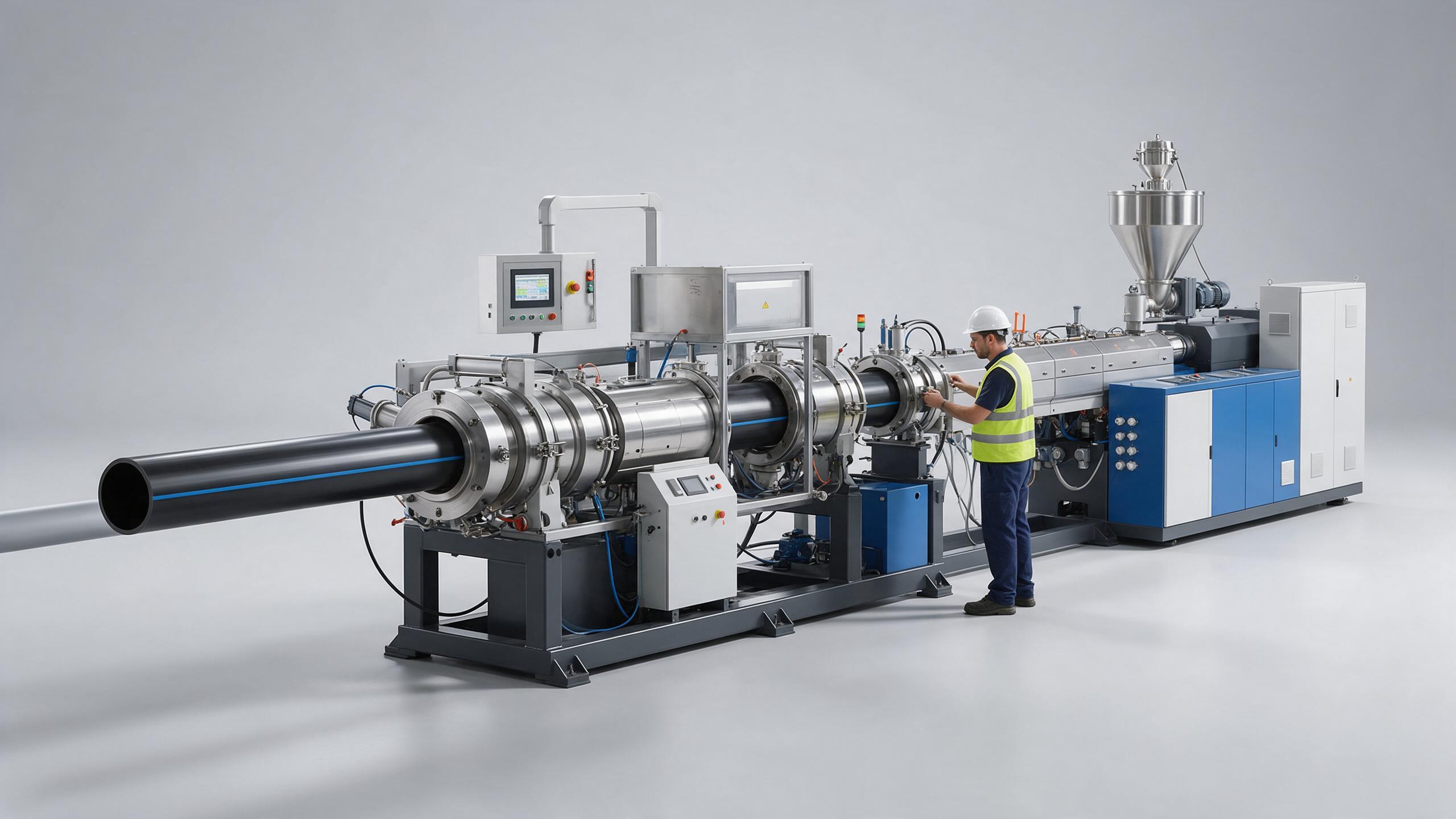
2. Verify safety functions and perform a dry run
With the line in its prescribed safe state, verify guards, interlocks, emergency stops, alarms and restart behavior using the supplier’s approved test procedure. Record each device and its result. A failed safety function is a hold point: isolate the affected equipment and correct the fault before proceeding. Do not bypass a guard to keep a test moving.
Use the site’s lockout and isolation procedure for installation checks, adjustments and maintenance. Account for stored electrical energy, hot material, pressure and moving or suspended components. Only authorized personnel should reset the system or enter guarded areas. Emergency-stop tests are not a substitute for energy isolation.
Once release is authorized, exercise the pvco extrusion line machinery without material where the manufacturer permits. Check drive direction, operator controls, communication between stations and the response to loss of a utility. Observe the haul-off, cutter, cooling equipment and any transfer or orientation devices for unusual noise, vibration or misalignment. The machine-specific instructions determine whether a component may be run empty and for how long.
3. Prepare the material and establish a controlled startup
For the first material run, use the approved compound and document its lot, preparation and handling conditions. Confirm that the die, sizing equipment, sensors and downstream tooling match the test product. Calibration status matters: a misleading pressure, temperature or dimensional reading can send the team in the wrong direction.
The supplier’s commissioning lead sets the approved heat-up, soak and startup sequence for the pvc-o production line. Confirm actual readings and alarms before feeding. Begin at the authorized starting conditions, not an assumed temperature or speed taken from another machine. Watch melt behavior, pressure trends and motor load against the supplier’s limits. If the equipment displays an unsafe condition, stop under the prescribed procedure; do not open a hot or pressurized component to investigate.
First establish a consistent precursor pipe. Record its identification, dimensions, wall distribution and visible condition at agreed intervals. A surface defect, unstable thickness or erratic pressure upstream can appear again after orientation. Rather than adjusting several stations at once, log the observation, check the relevant connections and change only what the authorized commissioning procedure allows.
4. Bring orientation and downstream equipment into the run
Bring the orientation stage online only after the agreed upstream conditions and safety checks are satisfied. In a pvc-o production line, the transfer from precursor to oriented pipe is a critical connection: an apparently stable extruder does not by itself establish a stable final product. Follow the installed technology’s sequence and approved settings for conditioning, orientation, cooling and handling.
During the initial run, compare the precursor and finished pipe records at the same time points. Observe dimensions, wall distribution, surface appearance, cooling behavior and handling through cutting and collection. Record changes in line speed and any alarms or interruptions. Where a result drifts, hold or segregate the affected material and investigate upstream and downstream conditions together; do not assign the cause to one component without evidence.
Increase throughput only in agreed stages and within the documented operating envelope. At each stage, allow the line to stabilize according to the acceptance plan, then capture readings and samples. If settings change, identify the time, reason, person authorizing the change and the samples produced before and after it. This makes a later comparison meaningful.
5. Test representative samples and record stability
The quality team should label samples with product, material lot, time, line settings and position in the run. Measure dimensions and inspect the pipe using the agreed equipment and sampling plan. Arrange the mechanical and pressure-related tests required by the applicable product specification and contract; visual appearance alone does not establish pressure performance.
For water pressure pipe, the ISO 16422 series is one possible reference for PVC-O piping systems. Confirm the applicable edition, local requirements and contractual specification before selecting tests or limits. A test run does not by itself establish certification, and a result for one size or compound should not be extended to another without the relevant evidence.
For pvco extrusion line machinery, the acceptance record should show actual readings, measurement results, operating interruptions and any samples placed on hold. Compare the results with the pre-agreed criteria. Where the criterion is missed, record the deviation, the corrective action, the repeat test and the responsible owner. Do not sign off an unresolved failure as a pass.
6. Close the run and hand over a usable baseline
At shutdown, follow the supplier’s controlled sequence for the extruder and each downstream station. Use the site procedure for isolation and cleaning, allowing for heat and stored pressure. The handover pack should include the approved recipe and operating limits, safety-test results, calibration records, inspection sheets, sample and laboratory reports, alarm history, open issues, spare-parts information and operator training records.
Separate commissioning observations from demonstrated performance. The first approved settings are a baseline for that material and product, not a promise that every later order will run identically. If the team changes compound, tooling or pipe size, agree what must be checked again before release.
To discuss a commissioning checklist for pvco extrusion line machinery, share the intended pipe specifications, utility details and proposed acceptance tests with the equipment supplier. SUZHOU BECHTON PLASTIC MACHINERY CO., LTD focuses on PVC-O production equipment; project-specific configuration and trial requirements should be confirmed directly before scheduling a test.