
 EN




What uv resistance index can irrigation pvco pipe manufacturer reach for field application
There is no single UV resistance index that every irrigation pvco pipe manufacturer can claim for every field. A defensible answer is a measured result for a specified pipe formulation, exposure procedure and performance test. Without that evidence, neither a pressure class nor a manufacturing method tells a buyer how long an exposed line will perform in a particular climate.
From a PVC-O production perspective, the useful question is not simply “What index can the pipe reach?” It is “What property remains after a defined exposure, and does that result meet the project requirement?” Ask for the actual report before treating a number in a quotation as a field-life estimate.
What should a UV resistance result contain?
An irrigation pvco pipe manufacturer may express weathering performance as a retained property after exposure, a change in appearance, or an internal acceptance grade. These are not interchangeable. A retention percentage needs both an initial measurement and a measurement after exposure, taken using a stated test method. The report should also identify the material, pipe size, sampling position and production batch or product family covered.
For example, if a laboratory measures a property before and after exposure, retention is calculated as the exposed result divided by the initial result, multiplied by 100. That calculation is a reporting convention, not a promised value for this pipe. Check whether the supplier reports an average, individual results, or a minimum, and whether the contract specifies an acceptance threshold.
Ask the irrigation pvco pipe manufacturer which property the number describes. Impact performance, tensile behavior, color change and pressure-related tests answer different questions. A color reading alone cannot establish pressure capacity, while a pressure class alone does not document outdoor weathering resistance.
How UV exposure can affect a pipe in the field
Sunlight, heat and moisture can change the exposed surface of PVC materials. Ordinary PVC pipe literature describes discoloration and a possible reduction in impact strength after sunlight exposure. It does not establish the performance of a particular oriented PVC pipe, formulation or installation. PVC-O needs its own relevant evidence, especially where pipe remains above ground and may be struck by tools, vehicles or moving equipment.
Temperature is a separate design concern. A line in direct sun may become warmer than the surrounding air, and the pipe supplier should confirm the applicable pressure and temperature limits. Surface appearance, handling damage and pressure performance should be assessed separately rather than combined into one vague UV score.
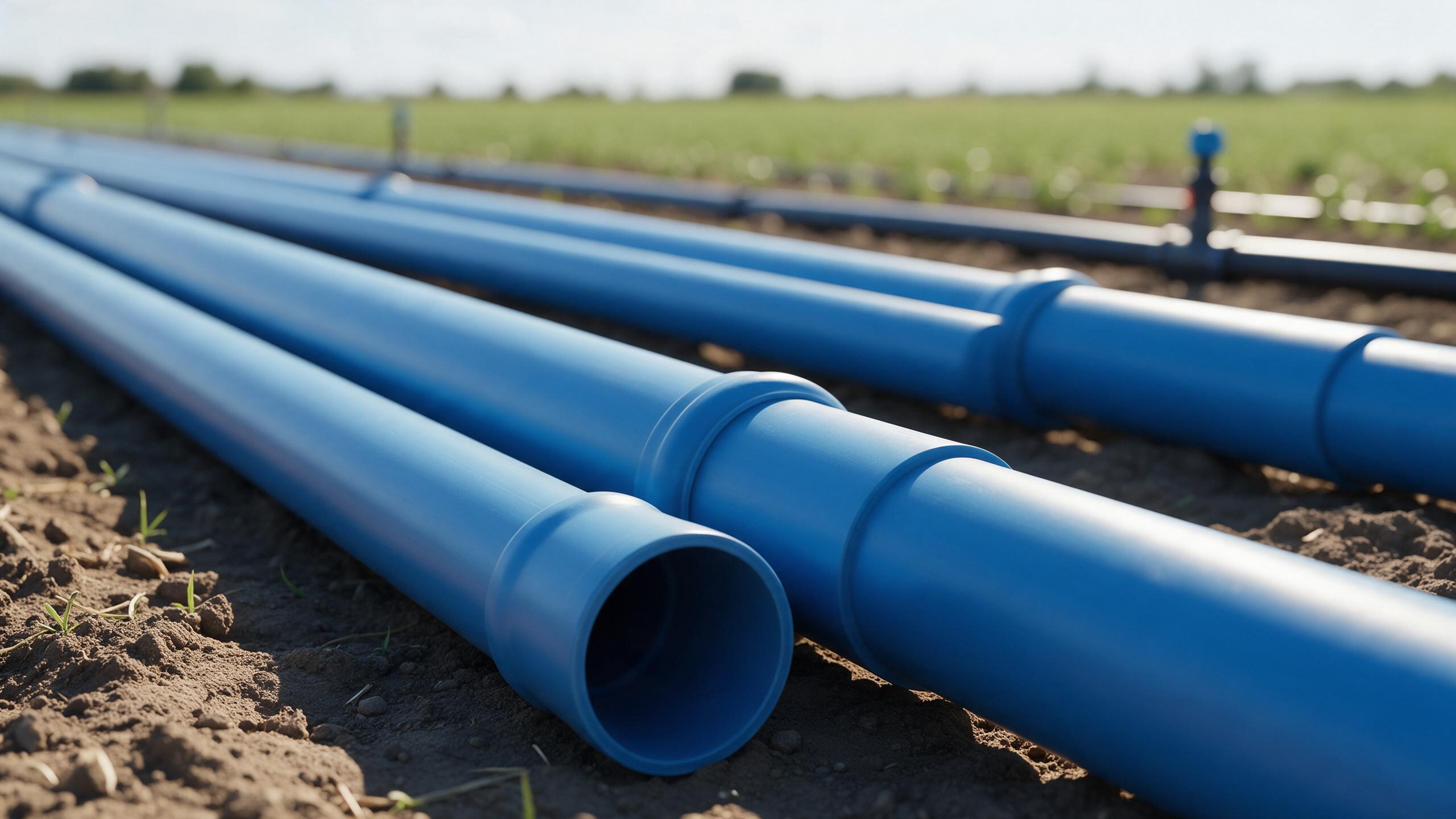
Buried pipe has a different exposure profile from a line on the soil surface. Even buried projects can include long outdoor storage, exposed valves and risers, and sections waiting for backfill. Record these stages when asking an irrigation pvco pipe manufacturer for an installation recommendation.
Which test evidence makes comparisons meaningful?
ASTM G154 describes fluorescent UV apparatus exposure for nonmetallic materials. It is an exposure practice, not a universal PVC-O pass mark. A useful report identifies the lamp and cycle, irradiance, temperature, moisture or condensation conditions and exposure duration. It also states how the specimens were prepared and which performance method was used afterward.
Compare reports only when their exposure conditions and measured properties are sufficiently aligned. A longer laboratory exposure is not automatically a fixed number of years in a field: local sunlight, temperature, rainfall, pipe orientation and the test cycle all affect the relationship. If a supplier proposes an equivalence, ask for the correlation evidence and its geographic limits.
For a procurement comparison, request these items from each irrigation pvco pipe manufacturer:
- The exact pipe product, formulation identification, nominal size and batch or family represented by the sample.
- The exposure method and full conditions, including any outdoor weathering site and duration.
- The initial and exposed test results, units, specimen count and acceptance criteria.
- The name of the testing laboratory, report date and any limits on use of the report.
- Written guidance for storage, above-ground use, protection and inspection for the intended site.
If the supplier offers only a general statement such as “UV resistant,” treat the rating as unverified until the test conditions and result are available. Do not infer a numerical index from the color of the pipe or the orientation class.
What changes during PVC-O production?
In pvc-o irrigation pipe manufacturing, the finished pipe depends on the compound and the complete manufacturing process. Resin selection, additives, dispersion and processing conditions can influence the finished material. Orientation is an important process step, but it does not independently establish an outdoor weathering result.
A production team should trace the tested material back to the relevant formulation and operating controls. When a compound or process changes, ask whether the existing report still represents the supplied product and whether further validation is needed. For an irrigation pvco pipe manufacturer, the useful handover is a documented link between incoming material, production records, finished pipe inspection and the reported weathering sample.
BECHTON supplies PVC-O pipe production equipment. Its role is distinct from that of the finished-pipe producer: a machinery discussion can address process requirements and documentation, while the pipe producer and project engineer must confirm the actual pipe formulation and field qualification.
How should a field project specify protection?
Start with a site brief: location, expected exposure, time above ground before installation, operating pressure, temperatures and foreseeable impact. Then ask an irrigation pvco pipe manufacturer whether the proposed product is approved for that exposure. Where evidence is incomplete, discuss burial, shade or a protective covering with the pipe supplier and designer; the protection must be compatible with the pipe and the installation requirements.
For outdoor storage, follow the supplier's instructions on support, stacking and suitable covers. Avoid trapping excessive heat under a cover, and keep the pipe protected from abrasion and impact. Once installed, inspect exposed sections for visible change or damage at intervals appropriate to the site. A visible color change is a reason to assess the pipe, not by itself proof of a particular loss of pressure capacity.
Questions to settle before ordering
Ask the irrigation pvco pipe manufacturer for a product-specific test report and a written assessment for the intended climate and exposure. Agree on the property to be measured, the test conditions and the minimum acceptable result before comparing bids. Also confirm who is responsible for protection, field inspection and any testing after installation.
The answer is a verified result under stated conditions, not a universal UV index. Where no representative report is available, keep the value open and arrange testing or an appropriate protection plan with the supplier and project engineer.