
 EN




What troubleshooting steps work for a malfunctioning extrusion pipe line
When pipe dimensions drift or surface defects appear, changing several settings at once can hide the original fault. A practical response for an extrusion pipe line is to secure the equipment, capture the symptoms, and work through the process from material feed to final cutting. Compare each observation with a known stable run of the same material and pipe specification. The checks below are diagnostic starting points, not a substitute for the machine manufacturer's instructions or your site's safety procedure.
Start with safety and a useful fault record
Stop production and alert the responsible team if there is smoke, an unusual smell, an unsafe pressure indication, a damaged guard, or any unexpected movement. Do not open a die, remove a screen, reach into a feed throat, or bypass an interlock to investigate. For servicing, trained personnel should isolate energy sources, apply the site's lockout procedure, safely release or restrain stored energy, and verify isolation before access. Heated material and components can still cause injury after electrical isolation. In the United States, OSHA's 29 CFR 1910.147 addresses hazardous energy during servicing; follow applicable local rules as well.
Record the time, material batch, formulation, pipe size, shift, alarms and the last acceptable product. Note whether the defect began after a material change, startup, tooling change or maintenance. For an extrusion pipe line, retain readings and trends for screw speed, motor load, melt pressure and temperatures, vacuum, cooling water and haul-off speed where instruments are fitted. Label samples with the corresponding time and position on the pipe.
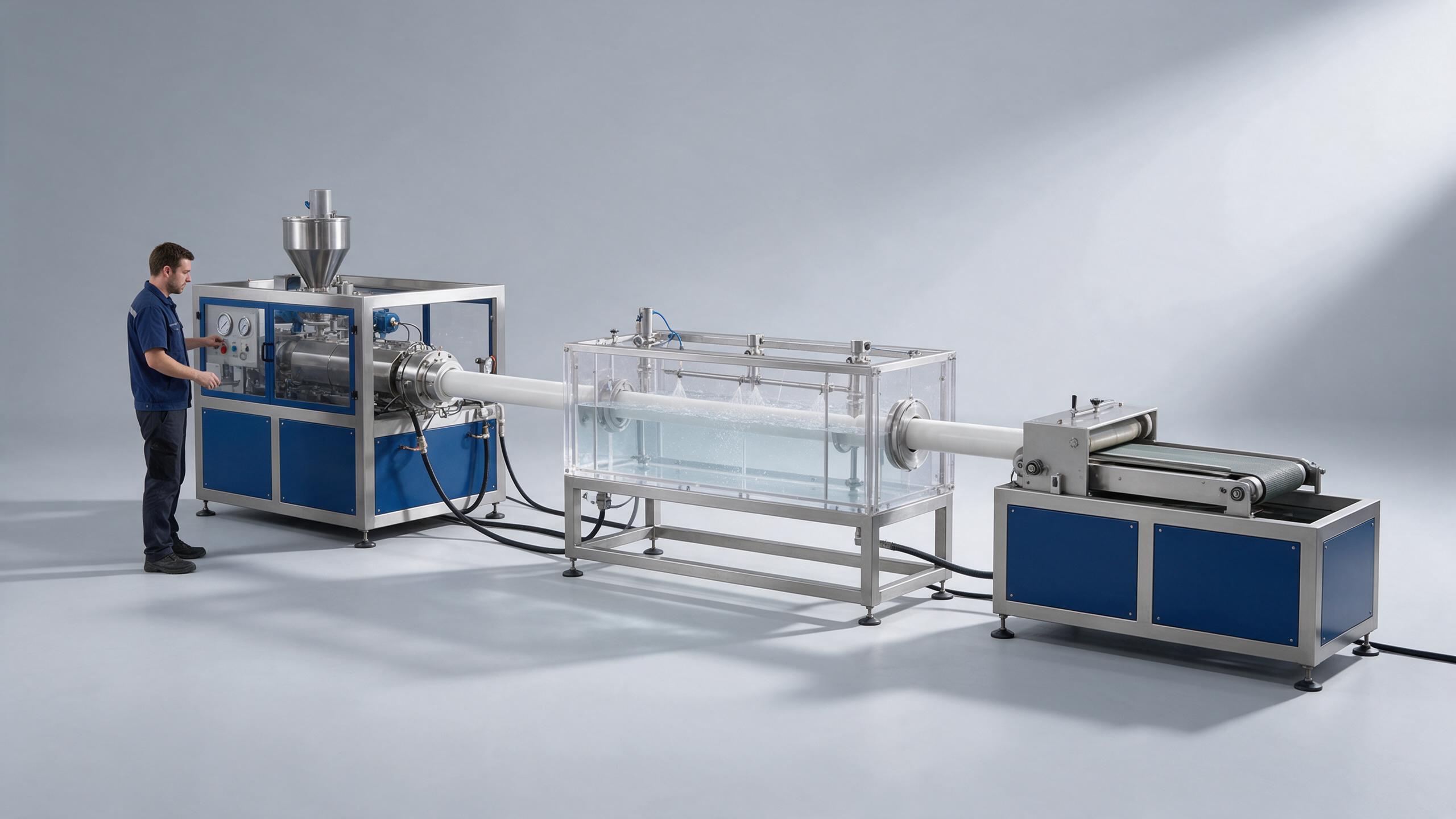
Separate upstream fluctuations from downstream symptoms
Check whether the fault is continuous, periodic or limited to one side of the pipe. A periodic change in wall thickness can originate from variable output, inconsistent pull speed or another repeating disturbance. Compare timestamps rather than assuming the part of the line nearest the visible defect caused it. A stable pressure trend alongside a drifting diameter, for example, may direct attention toward sizing, cooling or haul-off; it does not rule out an upstream issue.
Before adjustments on a pvc pipe extrusion line, verify the approved recipe, feed availability and instrument readings against the machine's documented operating window. Inspect material for an incorrect batch, contamination or a change in handling conditions. Check for feed bridging using the manufacturer's safe procedure. Do not infer an acceptable temperature, pressure or speed from a general guide: compound, tooling and equipment differ.
Match the visible fault to checks
Unstable output or a surging pressure trend
Look for a relationship between the pressure trace, feeder behavior and motor load. Irregular supply, inconsistent material, a sensor issue or a restriction may each be involved. Check recorded setpoints against actual readings and compare the trend with a stable run. If pressure is high or rising, stop and follow the manufacturer's shutdown and depressurization instructions; do not loosen a pressurized connection. Inspection of screens, die passages or screw components belongs to qualified maintenance personnel after isolation and verification.
For an extrusion pipe line with fluctuating output, confirm that the feeder and extruder are operating as intended before considering a controlled change. If instruments disagree, have a qualified person check the measurement system. A single gauge reading is less informative than a time-aligned pressure, load and feed record.
Diameter, ovality or wall thickness out of range
Measure samples at several points around the circumference and along the length using the site's approved method. Check calibration of the measuring device and compare results with the applicable pipe specification. Look for unstable vacuum, blocked water flow, uneven cooling, misalignment, excessive haul-off compression or changes in pull speed. These are possible causes, not a ranked diagnosis. Inspect and clean only through the approved safe procedure.
On a pvc pipe extrusion line, wall variation may also justify a tooling alignment review, but adjustments to a hot die require trained personnel and the equipment supplier's instructions. Avoid treating every thin wall as a die problem. Output and pull speed interact, and an incorrect adjustment can move the defect rather than resolve its cause.
Rough surfaces, marks, bubbles or discoloration
Document the defect's location, timing and appearance. Check whether marks repeat at a regular interval, which may help the team investigate contact points downstream. For bubbles or voids, review material condition and feed history as well as the vacuum and cooling records; collect a sample rather than deciding the cause from appearance alone. For discoloration or an unusual odor, stop under the site's procedure and assess the material and thermal history with qualified personnel. PVC processing can produce hazardous decomposition products if overheated, so use the material supplier's safety information and the site's ventilation and emergency procedures.
In any extrusion pipe line, compare the affected sample with a retained acceptable sample. Note whether the problem occurs on the outside surface, inside surface or through the wall. This distinction can help the team choose what to inspect without touching moving or hot components.
Make one controlled change and verify the result
After the equipment is safe and the probable cause has been reviewed, agree on one permitted change within the documented operating limits. Record the original value, new value, time, operator and reason. Allow for the process and downstream pipe to respond before collecting a labeled sample. If the result does not improve, restore the prior approved setting when safe and document the outcome rather than stacking further adjustments.
Check dimensions, appearance and any required material or performance tests against the applicable specification before releasing production. A visually acceptable pipe is not proof of conformity. Quarantine questionable material according to the quality procedure, and document the boundaries of the affected production period. Repeated faults or unexplained pressure, drive or temperature alarms warrant escalation to the equipment or material supplier.
Consider the orientation stage separately
If the extrusion pipe line includes a PVC-O orientation stage, record where the defect first appears: in the incoming pipe, after reheating, or after orientation. Trace samples and settings across those stages instead of assuming that a final dimensional issue began at the extruder. The orientation process, product requirements and permitted adjustments depend on the installed system; use its specific operating instructions and qualified technical support.
Build a handover that makes the next fault easier
Give the next shift a concise record of the symptom, affected material and size, readings, samples, checks, changes and outcome. Keep the baseline conditions alongside the alarm history, maintenance work and inspection results. If assistance is needed, share these records with the machinery supplier without exposing personnel to running equipment for photographs. A disciplined record helps a pvc pipe extrusion line team distinguish a recurring process pattern from a one-off material or equipment event.