
 EN




How to judge whether pvc high pressure pipes meet project demands
A pressure label is a starting point, not a project approval. To judge whether pvc high pressure pipes are suitable, compare the proposed pipe and every connection against the actual duty: normal and transient pressure, fluid temperature, flow, installation loads, and the evidence required by the owner. A purchasing team can use that comparison to turn a broad request for “high pressure” into a specification suppliers can answer consistently.
This assessment applies to a defined pipe product and its intended service, not to PVC as a single interchangeable material. PVC-U and molecularly oriented PVC-O, for example, may be governed by different standards and product-specific design rules. An engineer responsible for the project should confirm the applicable requirements before procurement or installation.
Start with the complete operating envelope
Record the highest sustained operating pressure at each critical location, including elevation and pump conditions. Then identify start-up, shutdown, valve closure and power-loss scenarios that can produce pressure transients. The designer should evaluate both positive surges and low-pressure or vacuum conditions using the applicable design method. A pipe that meets the steady duty is not automatically suitable for every transient.
For pvc high pressure pipes, ask the supplier to identify the pressure class, reference temperature, design life basis and governing standard for the exact diameter and material. Compare the design conditions with the product's allowable working and surge limits; the applicable rules may distinguish occasional events from recurring cycles. Do not add a generic allowance and assume it covers fatigue. Estimate the frequency and magnitude of repeated events and obtain a project-specific assessment when required.
Water temperature also matters. A University of Florida irrigation guide presents pressure ratings for certain nonthreaded PVC pipes at a reference temperature of 73.4°F (23°C), with lower service factors at higher temperatures. That is an example of why the reference conditions matter, not a universal table for all products. Use the selected manufacturer's published limits for the material, fluid and service temperature, and check the full temperature range rather than the average alone.
Compare size, flow and pressure together
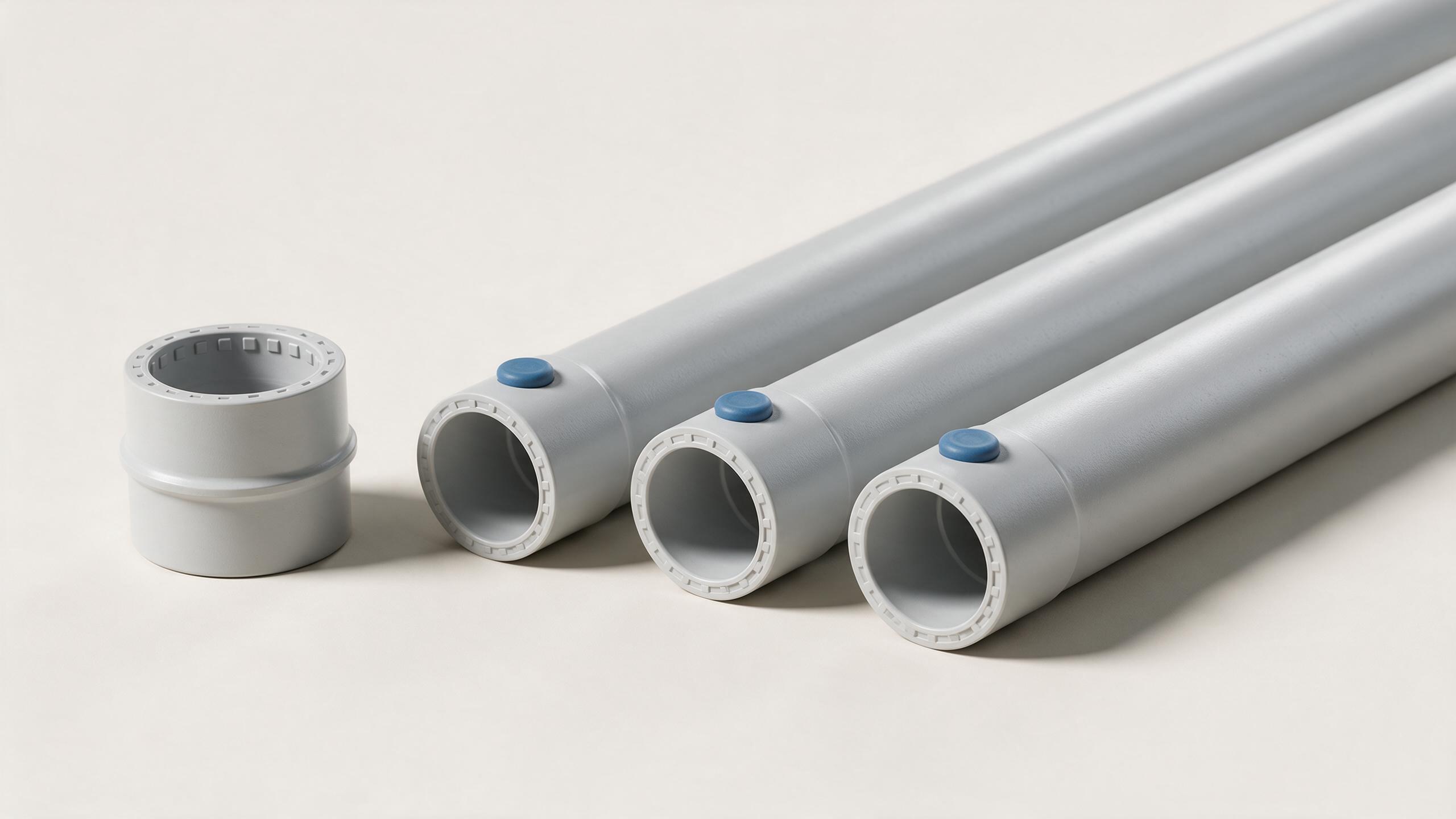
When reviewing high pressure pvc pipe sizes, separate nominal size from actual outside diameter, wall thickness and usable internal diameter. Different dimensional systems and pressure classes can have different interfaces and flow areas. Request the applicable dimensional standard and tolerances, then check compatibility with fittings, valves, existing pipework and installation tools.
Size is also a hydraulic decision. The project team should calculate flow velocity and head loss at the design flow using the actual internal diameter and an appropriate design method. A smaller bore may fit a connection but increase head loss or contribute to a more demanding surge analysis. Conversely, a larger bore must still fit the route, available fittings and handling plan. Compare alternatives at the same duty rather than treating the largest size as the automatic choice.
For example, if two candidate pipes have the same nominal diameter but different wall constructions, request their actual internal dimensions and pressure data before comparing pump requirements. This is a decision exercise, not a claim that either pipe will perform better on a particular project.
Check material and service compatibility
Define the conveyed medium, its composition and any expected changes over the service life. Drinking-water projects may require approvals covering the complete wetted system in the destination jurisdiction; industrial applications may require a chemical compatibility review at the actual concentration and temperature. Obtain the relevant evidence for the exact pipe, gasket and fitting materials instead of assuming one certificate covers an entire assembly.
Also describe exposure outside the pipe. Burial depth, soil properties, bedding, traffic loads, groundwater, sunlight and handling conditions can affect the installation design. Where low internal pressure is possible, ask the designer to assess external loading and any vacuum limit. For exposed runs, follow the supplier's instructions for support spacing, movement and protection from environmental exposure.
Evaluate joints and the whole system
The pressure capability of pvc high pressure pipes does not establish the capability of every joint. Check the pressure and temperature ratings of bends, tees, valves, adapters, gaskets and other components under the same service conditions. Confirm that joint dimensions and joining methods are compatible with the selected pipe system and the manufacturer's installation instructions.
At changes in direction and other points subject to unbalanced forces, the design may require thrust restraint or a suitable alternative. Specify who designs those details and how they will be inspected. Ask for handling, storage and field-testing instructions as well as the acceptance criteria. Testing is a controlled project activity; use the approved procedure, suitable safety precautions and the relevant local requirements rather than an improvised pressure test.
Ask for evidence before making a comparison
A useful supplier response identifies the exact product, material classification, size, pressure class and standard edition, supported by current documentation. For PVC-O, the ISO 16422 standard family addresses oriented unplasticized PVC pipes and joints; verify the applicable edition, scope and local adoption for the project. A reference to a standard alone is not proof that a particular product or installation conforms to it.
Request product markings, dimensional data, test documentation, installation guidance and any required third-party approvals. Confirm whether evidence applies to the proposed size and production batch, and agree on the records to be delivered at acceptance. If the project uses pvc high pressure pipes in a regulated water system, ask the owner or authority which approvals are mandatory before ordering.
Use a short acceptance checklist
- Duty: Document working pressure, surge cases, pressure cycles, temperature and intended service life.
- Hydraulics: Check flow, head loss, actual bore and the chosen high pressure pvc pipe sizes against the design.
- Compatibility: Verify the fluid, outside environment, pipe material, seals and fittings at the stated conditions.
- Installation: Confirm burial or support design, restraint, handling, joining and field-test responsibilities.
- Evidence: Match the product and batch documents to the specified standard, acceptance requirements and any required approvals.
For pipe manufacturers planning production, these same inputs also help define the manufacturing discussion: target material, diameter range, pressure class, applicable standard and the inspection records needed by customers. BECHTON focuses on PVC-O pipe production machinery; an equipment discussion should start with those project requirements rather than an assumed line configuration.
The practical decision is conditional: accept a candidate only when its documented limits, interfaces and installation plan satisfy the project design. Where data is missing, list the open item and obtain a written response before treating the comparison as complete.