
 EN
EN



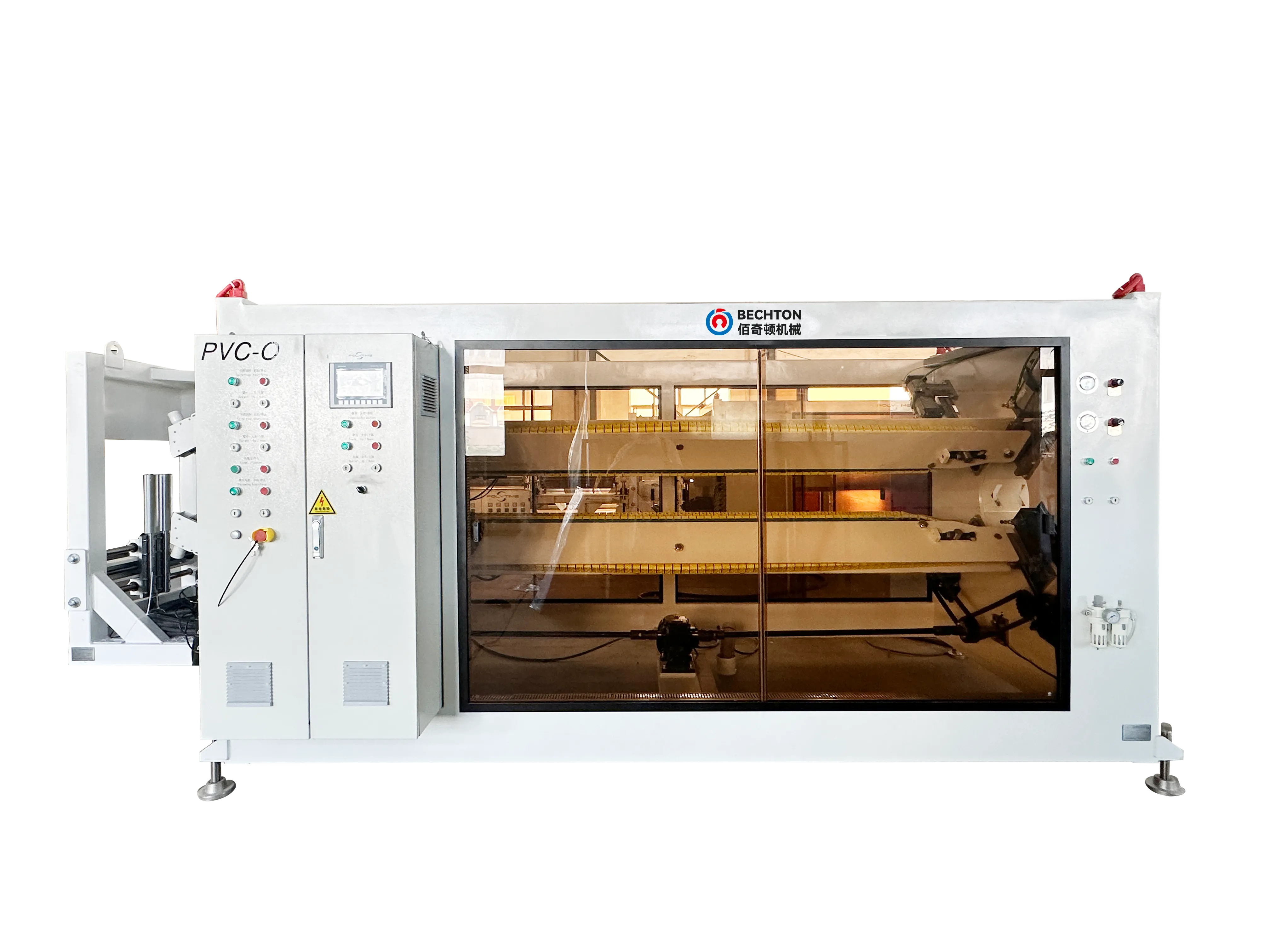
Why PVC-O Pipe Resists Corrosion: Molecular Stability and Structural Advantages
How Biaxial Orientation Enhances Crystallinity and Barrier Performance
PVC-O (Oriented Polyvinyl Chloride) pipes resist corrosion primarily through enhanced molecular stability achieved via biaxial orientation. During manufacturing, the polymer is stretched simultaneously in both circumferential and longitudinal directions—aligning amorphous chains and increasing crystalline content by up to 60% compared to standard PVC-U. This elevated crystallinity produces a denser, less permeable matrix that effectively blocks corrosive agents such as acids, alkalis, and sulfides from penetrating the pipe wall. Concurrently, the oriented structure improves stress distribution, eliminating localized weak points where corrosion often initiates in conventional pipes. The result is a material with demonstrably superior chemical resistance—especially critical in wastewater conveyance and industrial service.
Real-World Validation: 15-Year Buried PVC-O Sewer Line in Sulfide-Rich Wastewater (UK Thames Tideway)
The Thames Tideway Tunnel project in London offers compelling field evidence of PVC-O’s long-term corrosion resistance. A 400mm PVC-O sewer line installed in 2009 transports highly aggressive, sulfide-rich wastewater under tidal conditions. After 15 years, ultrasonic testing revealed less than 0.1mm wall thickness loss—negligible compared to adjacent concrete and iron pipes exhibiting up to 3mm degradation. With sustained sulfide concentrations exceeding 50mg/L, this installation confirms PVC-O’s resilience against microbially induced corrosion (MIC) and hydrolytic attack. Its performance validates the material’s suitability for demanding buried infrastructure where traditional materials fail prematurely.
PVC-O Pipe Performance Against Common Industrial Chemicals: Acids, Alkalis, and Salts
Superior Resistance vs. PVC-U in High-pH Irrigation Effluents (pH 12.3, 40°C)
In alkaline irrigation return flows—often reaching pH 12.3 at elevated temperatures—standard PVC-U suffers plasticizer leaching, swelling, and rapid tensile strength loss. PVC-O, however, maintains dimensional and mechanical integrity due to its denser, oriented surface layer, which impedes hydroxyl-ion diffusion. Accelerated immersion tests (1,000 hours at pH 12.3 and 40°C) show PVC-O retaining over 95% of its original hoop stress, while PVC-U loses approximately 30%. This robust performance extends service life by decades in high-pH agricultural and industrial effluent systems—making PVC-O the preferred specification for critical distribution lines.
Using ASTM D1600 and ISO 15877 Charts to Verify PVC-O Pipe Compatibility
Material selection for chemical service must be grounded in standardized, empirically derived data—not anecdote or extrapolation. ASTM D1600 and ISO 15877 provide authoritative compatibility guidance for thermoplastic piping, classifying exposure scenarios into “little or no effect,” “minor attack,” or “severe effect” based on weight-loss and strength-retention metrics. For example, ISO 15877 rates PVC-O as fully resistant to 25% caustic soda at 30°C—a benchmark widely referenced in design specifications. Early consultation of these charts prevents costly field failures and ensures installed PVC-O pipe meets real-world chemical demands.
Critical Operational Limits: Temperature and Concentration Thresholds for PVC-O Pipe
The 60°C + 10% HNO₃ Threshold: Understanding Arrhenius-Driven Hydrolysis Risk
PVC-O performs reliably within defined thermal and chemical boundaries—but exceeds them at its peril. A well-documented critical threshold occurs at 60°C combined with nitric acid concentrations above 10%. Under these conditions, Arrhenius-driven hydrolysis accelerates chain scission in the polymer backbone, progressively degrading the oriented structure. Reaction kinetics dictate that degradation rates roughly double with every 10°C temperature increase—making even short-term excursions risky. While hydrostatic stress testing (e.g., 20 MPa at 60°C for 1,000 hours) verifies baseline thermal-mechanical performance, it does not account for oxidative chemical attack. Engineers must therefore consult manufacturer-specific compatibility tables before specifying PVC-O for strong oxidizers like nitric acid.
Chemicals to Avoid: Ketones, Aromatics, and Chlorinated Solvents That Threaten PVC-O Pipe Integrity
PVC-O excels against inorganic acids, alkalis, and salts—but remains vulnerable to certain organic solvents. Ketones (e.g., acetone, MEK), aromatic hydrocarbons (e.g., toluene, xylene), and chlorinated solvents (e.g., chloroform, carbon tetrachloride) can penetrate the polymer’s amorphous regions, causing swelling, plasticization, and severe loss of tensile strength. These effects are especially hazardous under pressure or mechanical load, where compromised structural integrity may lead to sudden failure.
Solvent Stress Cracking in Toluene-Vapor Environments: When 'Chemical Resistance' Requires Context
Toluene vapor exposure illustrates why chemical resistance claims demand contextual evaluation. Even at ambient temperatures, toluene diffuses into PVC-O’s amorphous domains, lowering the effective glass transition temperature (Tg) and initiating solvent stress cracking (SSC). This brittle fracture mechanism is accelerated by residual processing stresses or external loads—causing failure at stress levels far below PVC-O’s rated capacity in clean environments. Laboratory studies confirm SSC onset under low-stress, low-concentration vapor conditions. Consequently, engineers must treat compatibility charts as starting points—not guarantees—and conduct site-specific assessments when PVC-O is deployed near solvents, including vapor-phase applications.
FAQ
What makes PVC-O pipes resist corrosion better than PVC-U?
PVC-O pipes resist corrosion better than PVC-U due to their enhanced molecular stability achieved via biaxial orientation, which increases crystalline content and blocks corrosive agents.
How have real-world applications validated PVC-O pipe's performance?
The Thames Tideway Tunnel project demonstrated PVC-O's long-term corrosion resistance with negligible wall thickness loss over 15 years in sulfide-rich environments, validating its suitability for demanding infrastructure.
What are the critical operational limits for using PVC-O pipes?
PVC-O should not be used beyond 60°C with nitric acid concentrations above 10%, as these conditions can accelerate degradation through Arrhenius-driven hydrolysis.
Which chemicals should be avoided to maintain the integrity of PVC-O pipes?
Chemicals such as ketones, aromatic hydrocarbons, and chlorinated solvents should be avoided, as they can compromise the structural integrity of PVC-O pipes.
Table of Contents
- Why PVC-O Pipe Resists Corrosion: Molecular Stability and Structural Advantages
- PVC-O Pipe Performance Against Common Industrial Chemicals: Acids, Alkalis, and Salts
- Critical Operational Limits: Temperature and Concentration Thresholds for PVC-O Pipe
- Chemicals to Avoid: Ketones, Aromatics, and Chlorinated Solvents That Threaten PVC-O Pipe Integrity
- FAQ