
 EN
EN



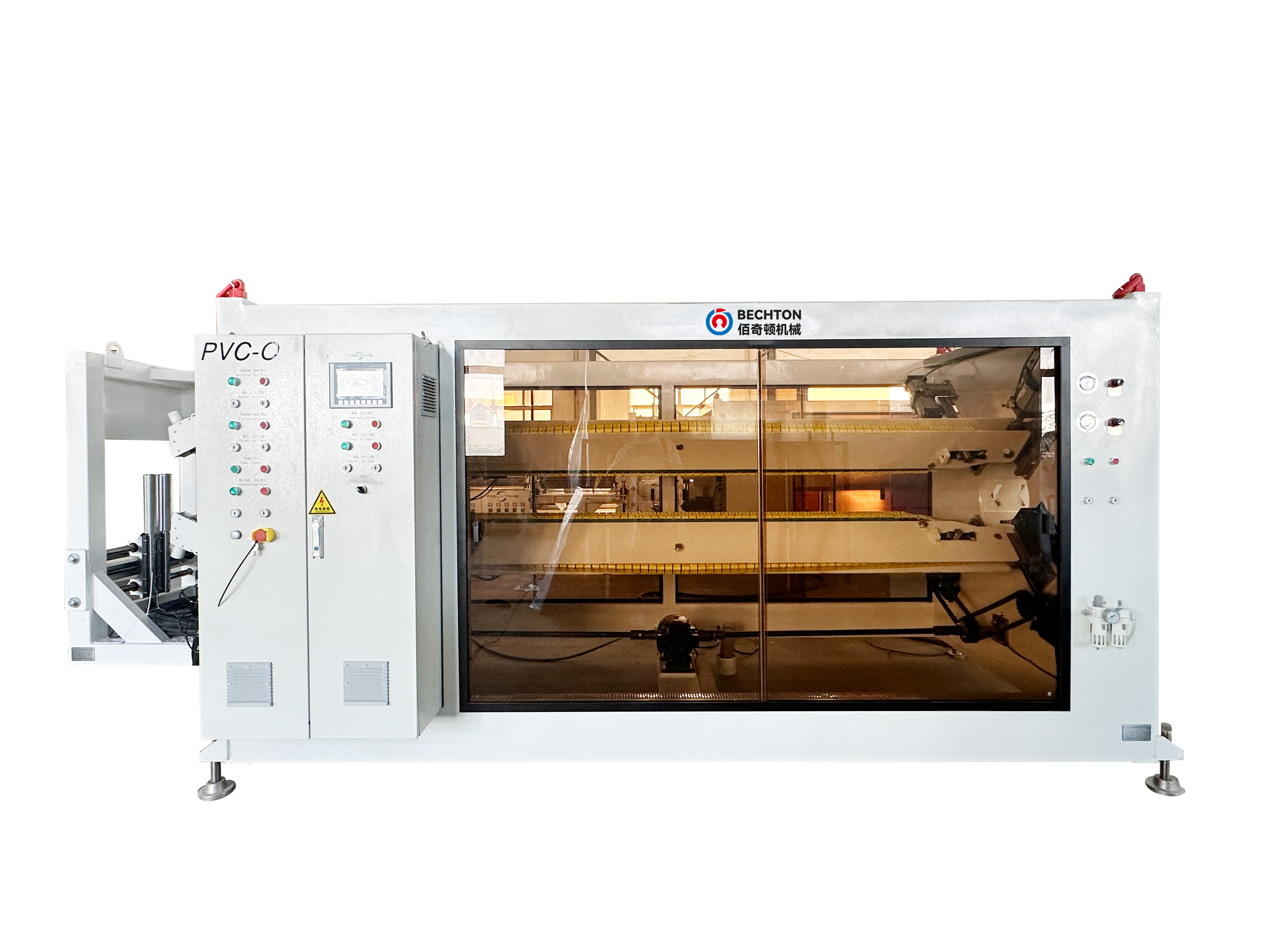
The Science Behind PVC-O’s Superior Hydrostatic Resistance
How Biaxial Molecular Orientation Enhances Burst Pressure Under Sustained Load
Biaxial orientation fundamentally transforms PVC-O’s molecular architecture. During manufacturing, the pipe is stretched simultaneously in axial and radial directions, aligning polymer chains into a highly ordered lamellar structure. This alignment dramatically improves resistance to stress cracking and long-term creep. Independent testing confirms a tensile strength of 31.5 MPa—26 % higher than standard PVC-U (Ponemon 2023). Crucially, this strength gain isn’t incremental: when diameter expands by 60 % during orientation, tensile strength rises from 25 MPa to 31.5 MPa—a direct result of controlled chain alignment. Under sustained hydrostatic loads, the oriented morphology suppresses micro-void formation and slows crack propagation, preserving burst-pressure integrity for decades. Long-term studies show PVC-O retains 98 % of its initial pressure rating after 50 years. It also delivers five times the impact resistance of PVC-U at –20 °C and enables wall thickness reductions of up to 40 % without compromising pressure class—making biaxial orientation the foundational driver of PVC-O’s exceptional hydrostatic performance.
Breaking the Pressure–Diameter Trade-off: Why PVC-O Defies Conventional PVC Limits
Traditional pipe design enforces a rigid trade-off: larger diameters demand thicker walls to maintain pressure ratings—increasing weight, material cost, and installation complexity. PVC-O eliminates this constraint. Thanks to biaxial orientation, pipes over 600 mm in diameter achieve pressure ratings up to 25 bar with walls 40 % thinner than equivalent PVC-U pipes. A 2023 lifecycle assessment confirmed that buried PVC-O systems retain 98 % of their original pressure rating after 50 years—empirically disproving the conventional inverse relationship between diameter and pressure capacity. This consistency stems from precision control in the pvc-o pipe extrusion line, which ensures uniform molecular orientation across the entire cross-section regardless of size. As a result, infrastructure projects report 40 % lower maintenance costs over 25-year cycles versus metal alternatives. With a Minimum Required Strength (MRS) class of 500—five times PE’s maximum of 100—PVC-O supports thinner, lighter pipes that deliver 34 % greater flow capacity than PE at the same nominal diameter. By decoupling pressure capability from diameter, PVC-O delivers both higher hydraulic performance and lower total lifecycle cost.
Material Properties Driving Hydrostatic Performance: Tensile Strength and Stiffness
Tensile Strength Gains from Controlled Molecular Alignment
The tensile strength of PVC-O is elevated not by adding material, but by engineering molecular order. Biaxial orientation aligns polymer chains along load-bearing axes, increasing tensile strength by up to 70 % compared to standard PVC—consistent with the 26 % gain measured against PVC-U (Ponemon 2023). This enhanced strength directly translates to superior resistance against internal pressure surges and hydraulic transients. Burst pressure ratings reflect this: PVC-O pipes reliably withstand pressures exceeding 100 bar. Critically, the aligned structure impedes crack initiation and propagation under sustained hydrostatic stress—ensuring structural integrity remains uncompromised even during decades of continuous operation.
E-Modulus Enhancement and Its Role in Long-Term Creep Resistance
Orientation also significantly increases stiffness, elevating the Elastic Modulus (E-modulus) to 4000–5000 MPa—nearly double that of conventional PVC. This heightened stiffness is essential for resisting long-term creep deformation under constant internal pressure. At 20°C and 10 MPa stress, creep rates are reduced by more than 50 % compared to non-oriented PVC. The result is exceptional dimensional stability: PVC-O maintains consistent internal diameter, flow capacity, and joint integrity throughout its service life. When combined with molecular alignment, this stiffness forms a dual-mechanism defense—resisting both immediate deformation and progressive strain—making PVC-O uniquely suited for high-pressure, long-duration applications.
Validated Real-World Performance: Hydrostatic Integrity from Lab to Infrastructure
ISO 1167-1 Long-Term Hydrostatic Strength (LTHS) Data and Field Deployment Evidence
ISO 1167-1 long-term hydrostatic strength (LTHS) testing provides rigorous scientific validation: PVC-O consistently demonstrates pressure resistance exceeding 50 years under accelerated conditions. This lab-confirmed durability maps directly to real-world performance. Across municipal water networks, industrial process lines, and irrigation systems on six continents, PVC-O pipelines have operated for decades without hydrostatic failure—even under cyclic pressure loading, ground settlement, and surge events. Industry data shows leak rates 30–50 % lower than conventional PVC-U and PE systems. The consistency of performance stems from the repeatability of the extrusion and orientation process: every meter meets identical molecular specifications, enabling predictable behavior across diverse geotechnical and hydraulic conditions. Decades of operational evidence confirm PVC-O’s resilience against external point loads, temperature fluctuations, and transient pressure spikes—solidifying its role as a trusted solution for mission-critical water infrastructure.
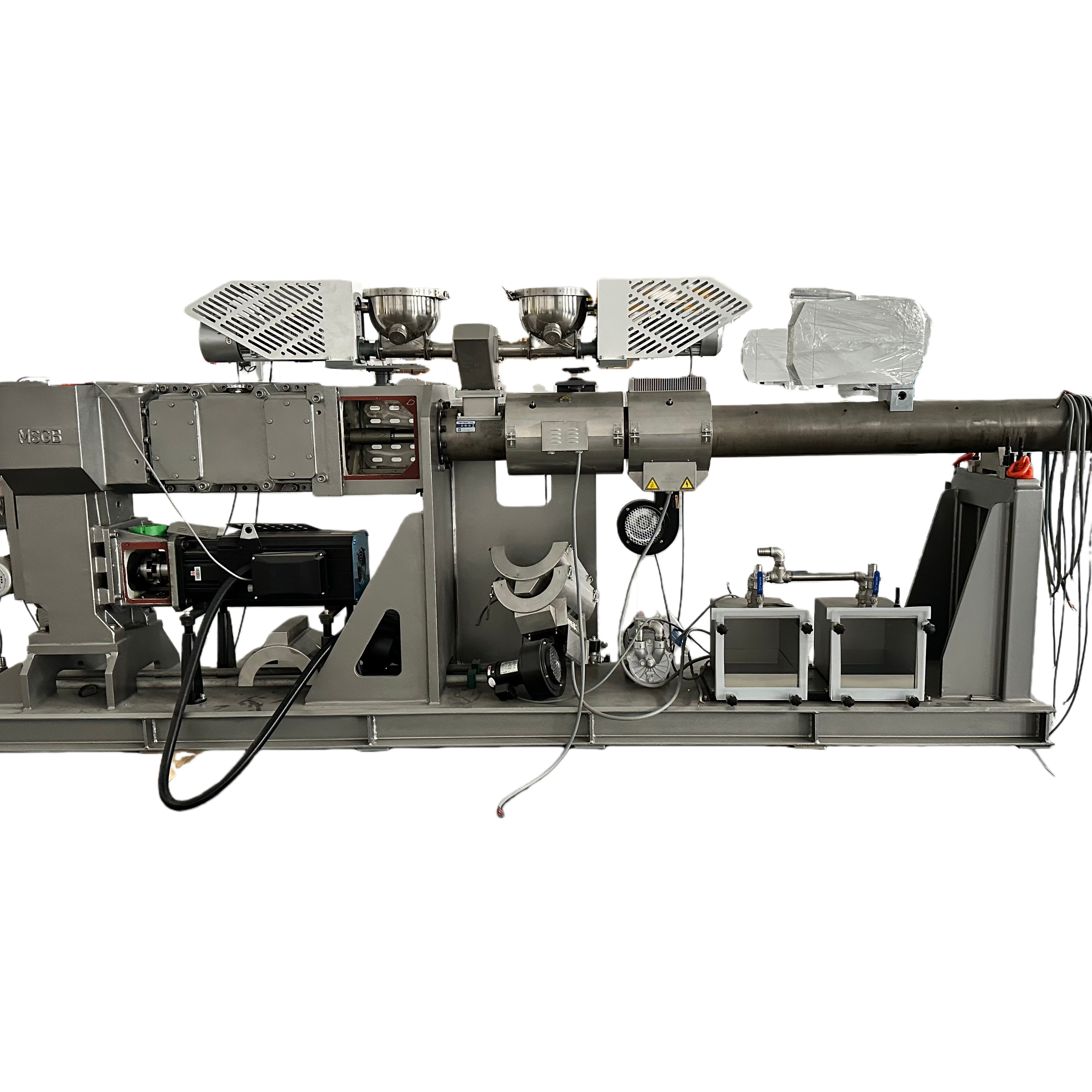
PVC-O Pipe Extrusion Line: Precision Manufacturing for Consistent Hydrostatic Reliability
Modern PVC-O production demands micron-level control to achieve the uniform molecular alignment that defines hydrostatic reliability.
Critical Process Controls Ensuring Uniform Orientation and Reproducible Burst Pressure
Advanced extrusion lines integrate conical twin-screw extruders, vacuum calibration tanks, and PLC-based control systems to govern melt temperature, draw speed, and stretching ratios within ±0.5 % tolerance. The biaxial orientation step—radial expansion followed by axial drawing—transforms the amorphous polymer melt into a cross-aligned lattice, boosting tensile strength by 40 % while reducing material usage by 15–20 %. Real-time monitoring of haul-off speed, die pressure, and cooling profiles ensures every pipe section experiences identical orientation conditions. This precision yields batch-to-batch consistency across millions of meters—and translates directly to field performance: PVC-O pipes withstand 2.5 times more hydraulic surge cycles than non-oriented alternatives. The link between manufacturing fidelity and hydrostatic reliability is not theoretical—it is empirically validated through decades of global deployment.
Frequently Asked Questions (FAQ)
What is biaxial molecular orientation, and how does it improve PVC-O pipe performance?
Biaxial molecular orientation is a manufacturing process where PVC-O pipes are stretched in both axial and radial directions to align polymer chains. This ordered molecular structure significantly enhances the pipe's tensile strength, resistance to stress cracking, and long-term hydrostatic reliability.
How does PVC-O perform under sustained hydrostatic loads?
Under sustained hydrostatic loads, the biaxially-oriented structure of PVC-O suppresses the formation of micro-voids and slows crack propagation. This ensures the pipe retains up to 98% of its initial pressure rating even after 50 years.
What are the key differences between PVC-O and traditional PVC-U pipes?
PVC-O pipes offer up to 70% higher tensile strength, 40% thinner walls, five times more impact resistance at low temperatures, and better long-term pressure retention, making them superior to traditional PVC-U pipes in performance.
What is the role of the E-modulus in PVC-O pipes?
The E-modulus (Elastic Modulus) represents stiffness. In PVC-O, it is nearly twice as high as in standard PVC, which helps resist long-term creep deformation and ensures dimensional stability over long service lives.
How reliable is PVC-O based on real-world testing?
Based on ISO 1167-1 long-term hydrostatic strength testing and decades of field deployment, PVC-O has proven hydrostatic reliability for over 50 years, with lower leak rates and superior performance compared to other pipe materials like PVC-U and PE.
Table of Contents
- The Science Behind PVC-O’s Superior Hydrostatic Resistance
- Material Properties Driving Hydrostatic Performance: Tensile Strength and Stiffness
- Validated Real-World Performance: Hydrostatic Integrity from Lab to Infrastructure
- PVC-O Pipe Extrusion Line: Precision Manufacturing for Consistent Hydrostatic Reliability
-
Frequently Asked Questions (FAQ)
- What is biaxial molecular orientation, and how does it improve PVC-O pipe performance?
- How does PVC-O perform under sustained hydrostatic loads?
- What are the key differences between PVC-O and traditional PVC-U pipes?
- What is the role of the E-modulus in PVC-O pipes?
- How reliable is PVC-O based on real-world testing?