
 EN
EN



Why PVC-O Pipe Extrusion Line Is Critical for Renewable Energy Infrastructure
Corrosion resistance and longevity in aggressive soil and chemical environments
PVC-O pipes made through precision extrusion offer outstanding protection against corrosion, which makes them great for renewable energy projects dealing with acidic soil, salty groundwater, and geothermal brine environments. What happens during the manufacturing process is pretty interesting too. The way molecules align creates a solid structure without defects that can resist electrochemical breakdown about 3.5 times better than regular PVC does. Tests show these pipes last over 50 years when buried underground, way longer than metal options that usually start breaking down after just 15 to 20 years in similar situations according to recent studies from 2024 on material longevity. Plus, because of how tightly controlled the dimensions are during production, the joints between sections stay completely leak proof, stopping any contamination issues from happening with heat transfer fluids or coolant leaks into surrounding areas.
Superior pressure rating and leak-free performance for pressurized solar thermal and geothermal loops
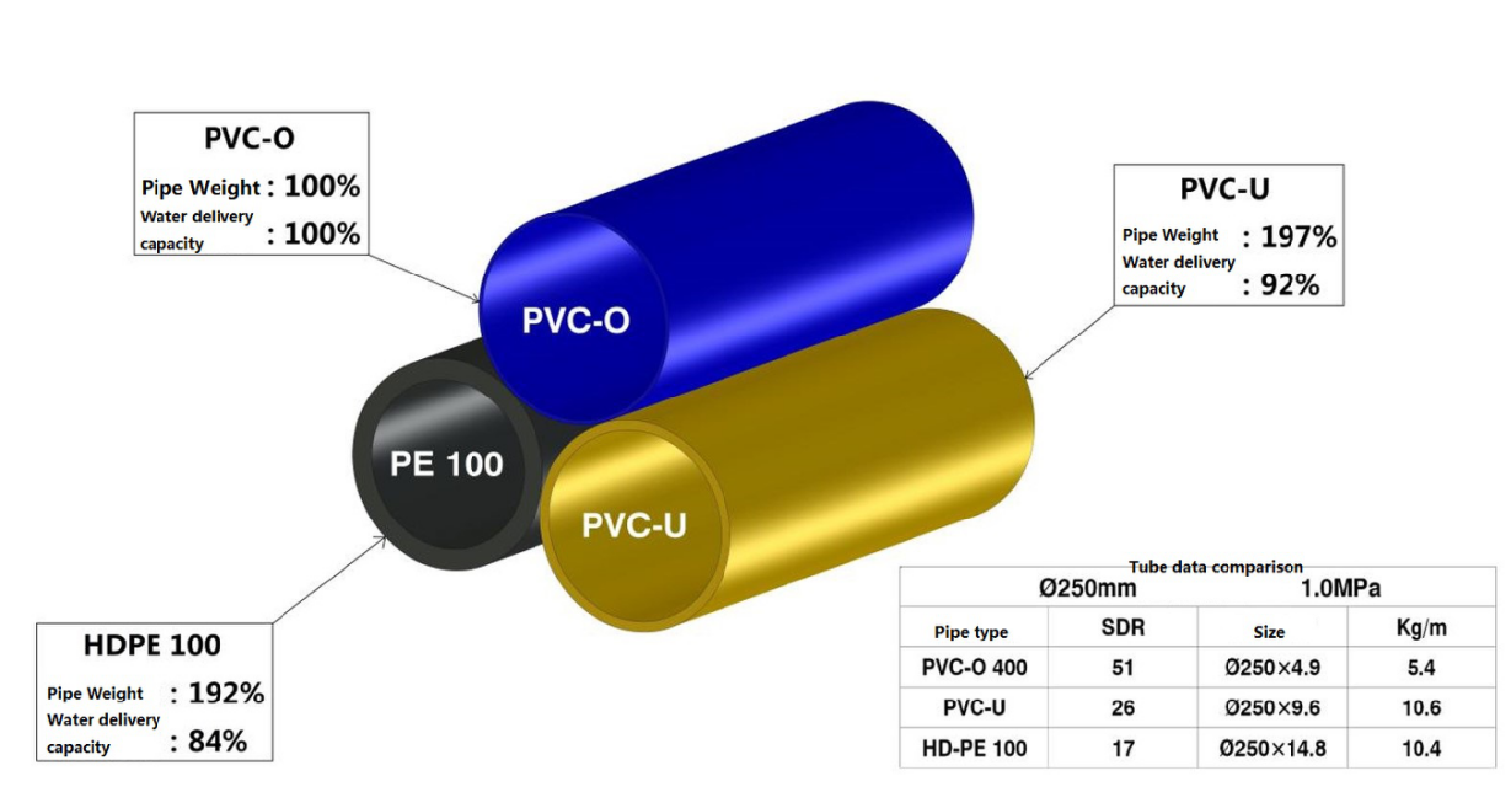
PVC-O extrusion technology creates pipes that can handle twice the pressure compared to regular PVC. These advanced pipes sustain around 25 bar of pressure when used in closed loop solar thermal systems or deep geothermal boreholes. The biaxial orientation process makes them stronger in all directions, so they can have walls that are 30% thinner. Thinner walls mean better fluid flow through the system and less energy needed for pumping, cutting down on power consumption by approximately 18%. What really stands out is how the material forms a uniform structure without any air pockets or gaps. This eliminates those tiny cracks that often lead to leaks in both plastic and metal piping systems. As a result, these pipes reliably carry hot thermal oils even at temperatures between 150 and 300 degrees Celsius. Looking at the bigger picture, studies indicate that over their lifetime, PVC-O systems save about 34% in maintenance costs compared to metal options in such challenging environments.
PVC-O Pipe Extrusion Line Applications Across Renewable Sectors
Solar farms: Conduit for DC cabling and thermal fluid transfer
At large scale solar installations, PVC-O pipes actually do two main things. They protect the DC cables running from those big solar panels to the inverters, acting as tough conduits against impacts. These same pipes also carry thermal fluids in concentrated solar power systems where heat is really important. The way molecules are arranged gives these pipes about 40 percent better impact resistance compared to regular PVC, which matters a lot when workers are filling in soil around them. Plus, they stay stable even when temps hit 60 degrees Celsius without warping or bending out of shape. With all these benefits, it's no surprise that experts predict the market for advanced solar piping solutions will grow to around 3.2 billion dollars by the end of this decade alone.
Wind farms: Subsurface cable protection and foundation drainage systems
Wind farms are starting to rely more on PVC-O pipes these days. These pipes do double duty protecting those medium voltage cables running between turbines and substations, plus they work great as drainage systems with holes in them around foundations. The way these pipes join together without leaks stops groundwater from getting in all over different kinds of ground surfaces. What really makes them stand out though is how resistant they are to rust and decay. This matters a lot near coasts where salt air eats away at metal pipes pretty fast. Studies show salt actually speeds up metal pipe breakdown by about two thirds according to research published last year in Offshore Durability Study.
EV charging networks and microgrids: Lightweight, non-conductive conduit for urban and roadside deployment
PVC-O extrusion lines are becoming increasingly important for growing electric vehicle charging stations and microgrid systems around cities. These conduits weigh about 30 percent less than HDPE alternatives, making them much easier to install in urban areas where space is limited. Plus they don't conduct electricity, so there's no risk of interference with the delicate electronics found in modern charging equipment. The manufacturing process achieves very tight tolerances of plus or minus 0.3 millimeters, which means technicians can pull cables through these pipes quickly during installations. City planners tend to favor PVC-O when connecting microgrids along roadways because it stands up better to vibrations. Traffic constantly shakes the ground beneath roads, and this actually accounts for roughly seven out of ten failures seen with traditional materials over time.
Energy and Resource Efficiency of Modern PVC-O Pipe Extrusion Line Systems
IoT-enabled process optimization: Real-time monitoring of orientation, cooling, and output consistency
The latest PVC-O extrusion systems now incorporate Industry 4.0 features that include real time monitoring of melt viscosity, uniform orientation across the product, and tracking cooling rates. These advanced controls allow automatic adjustments to both barrel and die temperatures during operation. What this means is about 12 to 15 degrees Celsius less thermal energy needed while still maintaining product quality standards. Energy consumption drops down to between 100 and 220 watt hours per kilogram, which is roughly 15 percent better than what traditional extrusion methods achieve. At the same time, dimensional accuracy stays within plus or minus 2 percent tolerance levels. By analyzing screw torque readings and pressure fluctuations through predictive algorithms, manufacturers can spot potential defects before they happen, resulting in around 9 percent less material going to waste. When combined with digital twin technology for simulation purposes, these systems cut down commissioning time significantly and reduce energy testing requirements by approximately 12 percent. Production lines equipped with these innovations typically operate at speeds approaching 1.2 meters per second.
Lifecycle advantage: 50% lower embodied energy vs. ductile iron, with 100-year design life
PVC-O pipes use about half the energy needed to manufacture ductile iron ones and they operate much more efficiently too. The production process itself only needs around 1,150 kWh per kilometer. Most of the energy savings happen when these pipes are actually in use though. Their smooth interior surface means less friction, there's no need for maintenance related to corrosion, and pumping requirements stay low throughout their lifespan. Over thirty years, this adds up to avoiding roughly 8,900 kWh per kilometer worth of energy costs. These pipes also come with a 100 year warranty on their design life, which is pretty impressive. Plus, because manufacturers blend raw materials automatically, carbon emissions drop by somewhere between 18 and 24 percent compared to traditional methods. All this makes PVC-O extrusion compatible with ISO 50001 standards for energy management, helping companies align with actual science based goals for reducing carbon footprints across the board.
FAQ
What are PVC-O pipes and why are they suitable for renewable energy projects?
PVC-O pipes are made using a biaxial orientation process that enhances their strength, corrosion resistance, and pressure handling abilities. They are suitable for renewable energy projects because they can withstand harsh chemical environments, have a long lifespan, and maintain leak-free performance in pressurized systems.
How do PVC-O pipes contribute to solar and wind farm infrastructure?
In solar farms, PVC-O pipes serve as conduits for DC cabling and carry thermal fluids, offering better impact resistance and stability at high temperatures. In wind farms, they protect subsurface cables and act as drainage systems, with excellent rust and decay resistance essential for coastal environments.
What advantages do PVC-O extrusion lines offer for EV charging networks?
PVC-O pipelines are lightweight and non-conductive, making them ideal for EV charging networks. Their tight manufacturing tolerances allow easy cable installations, reducing risks of electrical interference. They also withstand urban vibrations better than traditional materials.
How does Industry 4.0 impact PVC-O pipe extrusion line efficiency?
Industry 4.0 features like IoT-enabled monitoring enhance PVC-O extrusion efficiency by optimizing temperature controls and offering predictive defect analysis. This leads to reduced energy consumption and material waste.