
 EN
EN



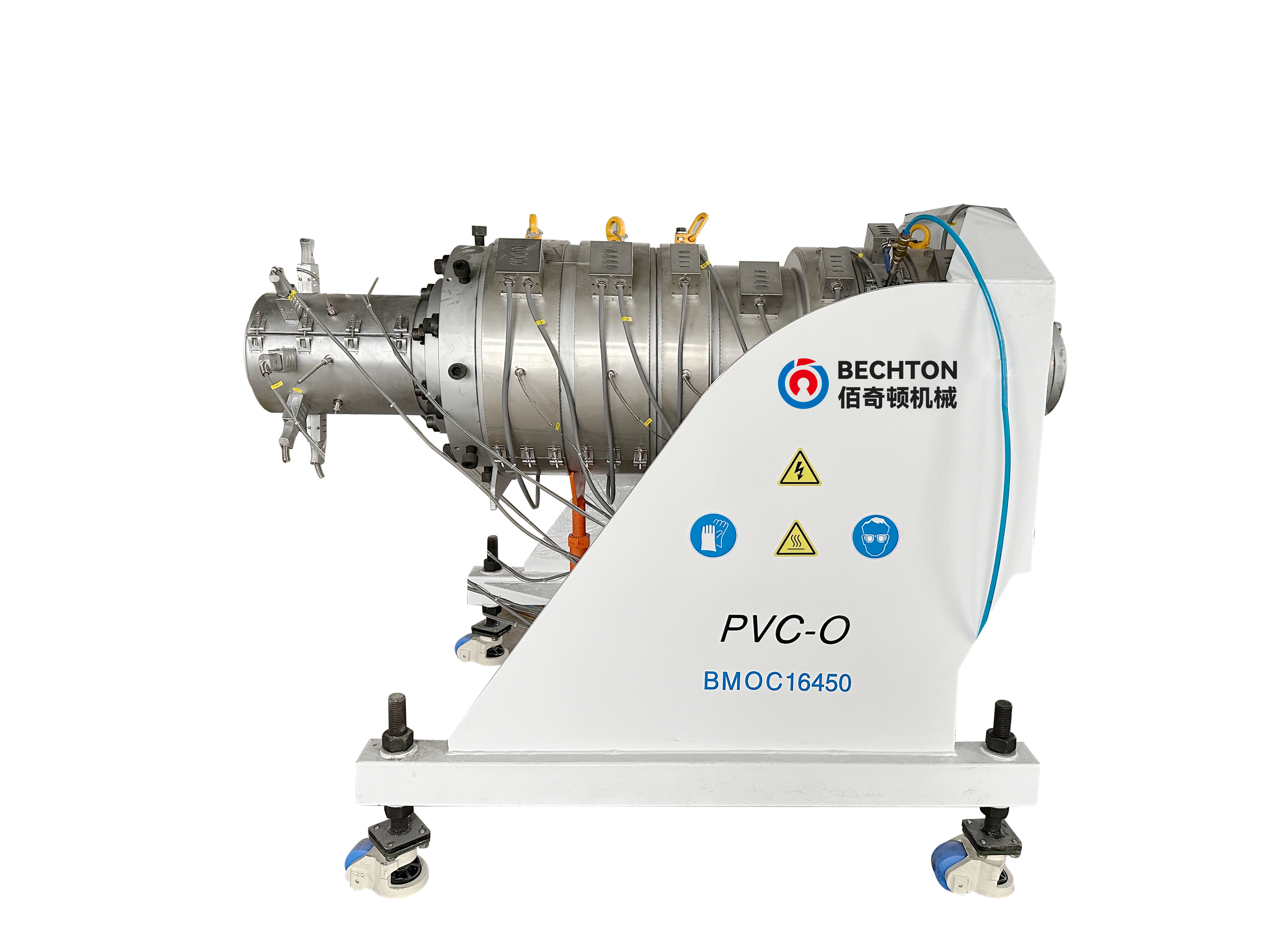
Why Uniform Wall Thickness Is Critical for PVC-O Pipe Performance
PVC-Oriented (PVC-O) pipes derive their enhanced strength from a controlled biaxial stretching process that molecularly aligns the PVC structure. This orientation improves toughness and pressure resistance while allowing wall thickness reductions of 35–40% compared to PVC-U pipes under equivalent pressure ratings. However, these performance gains are only realized when wall thickness remains strictly uniform—variations exceeding ±5% create localized stress concentrations that directly compromise structural integrity.
Thinner sections become initiation points for failure under cyclic pressure loading; thicker zones waste material without delivering proportional strength benefits. Industry studies confirm that eccentricity beyond tolerance reduces pressure-bearing capacity by 15–20% and accelerates fatigue cracking. Moreover, initial wall thickness non-uniformity predisposes pipes to ovalization during installation or operation—a key contributor to joint leakage and long-term system degradation.
Uniform walls also ensure even stress distribution during pressure surges and external loads such as soil compaction. This prevents localized yielding and sustains the leak-free, high-integrity performance expected from modern PVC-O systems. For this reason, wall thickness tolerance is the primary dimensional benchmark used in quality assurance protocols to validate structural adequacy.
Core Process Stages That Determine PVC-O Pipe Wall Consistency
Achieving uniform wall thickness in PVC-O pipe production depends on precise control across two interdependent stages: preform extrusion and biaxial stretching with cooling. Each introduces distinct variables that collectively determine final dimensional stability and layer distribution.
Preform Extrusion: Melt Homogeneity and Die Geometry as Foundational Controls
The preform extrusion stage sets the baseline for wall consistency. Melt homogeneity—achieved through tightly regulated temperature profiles and optimized screw design—ensures uniform viscosity entering the die. Temperature deviations exceeding 2°C across the melt stream cause flow inconsistencies that manifest as thickness variation in the preform. Die geometry plays an equally decisive role: multi-channel distribution dies with flow rate differences below 3% minimize initial eccentricity, while melt gear pumps stabilize pressure fluctuations to under 0.5 bar—eliminating pulsation-induced thickness irregularities. Together, these controls yield a preform with wall thickness tolerance of ±0.1 mm, a prerequisite for successful biaxial orientation.
Biaxial Stretching & Cooling: How Thermal Uniformity and Draw Balance Lock in Dimensional Stability
During biaxial stretching, simultaneous axial and hoop orientation transforms the preform into high-performance PVC-O pipe. Thermal uniformity around the circumference is essential—infrared heaters upstream of the mandrel dynamically adjust local temperatures to correct minor preform deviations. An imbalanced draw ratio amplifies existing thickness variations and introduces residual stress, undermining molecular alignment. Immediately after stretching, controlled cooling at 2–3°C per second locks in the oriented structure. Real-time ultrasonic or laser-based thickness measurement (±0.03 mm accuracy) provides continuous feedback, enabling immediate parameter adjustments. This integrated approach ensures final pipe wall thickness remains within ±0.5 mm over its full length.
Key Machine Parameters Influencing PVC-O Pipe Wall Thickness
Achieving consistent wall thickness hinges on tight control of several critical machine parameters—particularly those governing melt delivery, flow stability, and post-extrusion shaping.
Die Gap, Screw Speed, and Barrel Temperature Precision (Especially Zone 4)
Die gap must be set to within hundredths of a millimeter to produce a stable melt curtain. Screw speed must balance steady shear generation against excessive frictional heating. Most critically, barrel temperature precision—especially in Zone 4 (the metering section)—must stay within ±1°C: even minor deviations alter melt viscosity and trigger flow pulsation. Multi-channel distribution dies maintain flow rate consistency below 3%, while melt gear pumps limit pressure fluctuations to under 0.5 bar—ensuring the melt reaches the die undisturbed and ready for uniform shaping.
Cooling Uniformity and Vacuum Calibration Stability in Sizing Units
After exiting the die, the pipe enters a vacuum-calibrated sizing sleeve that fixes outer diameter and surface finish. Vacuum instability—even a 0.1 bar shift—causes uneven sleeve grip, resulting in ovality and inconsistent wall distribution. Simultaneously, non-uniform cooling induces internal thermal gradients that lead to warpage and residual stress. Temperature-controlled water baths and high-precision vacuum regulators eliminate these variables, preserving the dimensional fidelity required before biaxial stretching.
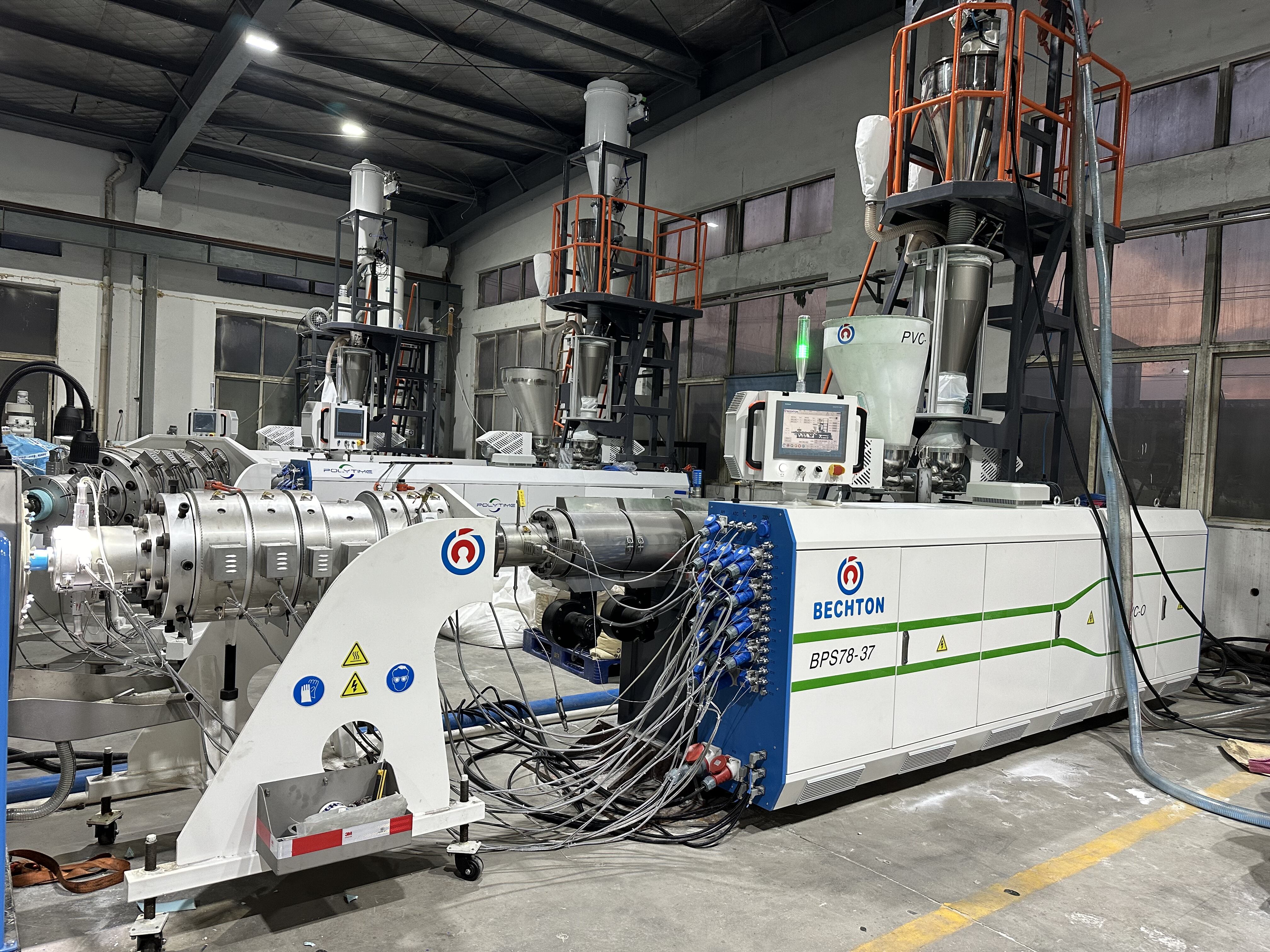
Advanced Monitoring and Control Strategies for Real-Time Wall Thickness Assurance
Real-time monitoring transforms wall thickness control from reactive inspection to proactive assurance—enabling corrections before defects form and significantly reducing scrap rates.
In-Line Laser Micrometry + IR Thermography Feedback Loops
Laser micrometers capture circumferential wall thickness at hundreds of points per second, while infrared thermography maps surface temperature gradients that could trigger uneven stretching or shrinkage. Integrated into a closed-loop controller, this dual-sensor system adjusts draw ratios, cooling airflow, or die gap in real time—preventing deviations from propagating and maintaining thickness within specification throughout production.
Predictive Maintenance Protocols to Prevent Tooling-Induced Eccentricity
Worn die rings, calibrators, or cooling sleeves are common sources of eccentric wall sections. Predictive maintenance leverages vibration sensors, torque trend analysis, and thermal imaging to detect early-stage tooling degradation. Algorithms compare live operational data against validated baselines, flagging components for service before they impact dimensional output. Scheduled replacement—not reactive repair—preserves die geometry and ensures consistent wall distribution across every PVC-O pipe batch.