
 EN
EN



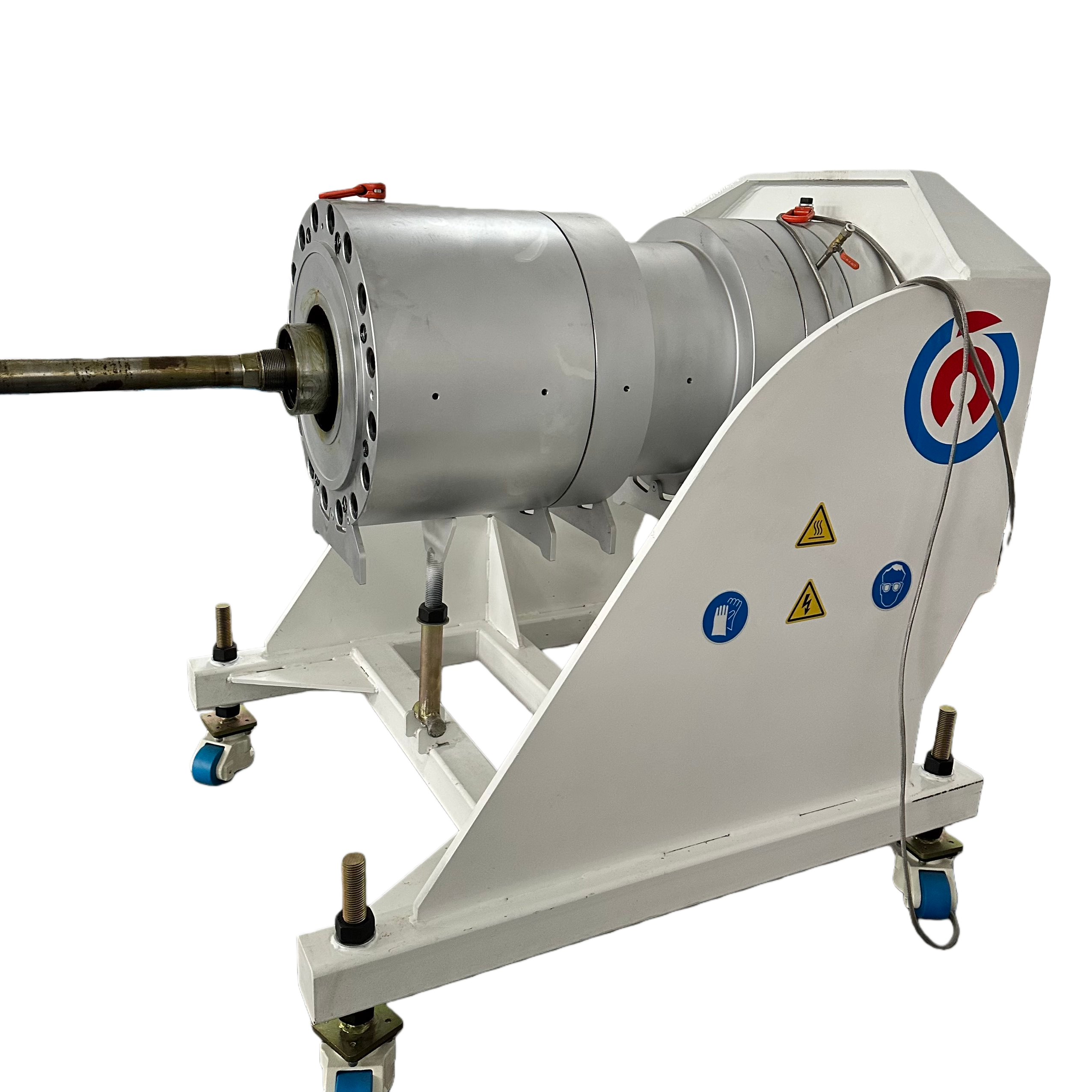
Precision Melt Processing: Foundation for PVC-O Pipe Dimensional Consistency
Achieving dimensional consistency in PVC-O pipe manufacturing starts with precision melt processing—a foundational step that directly governs structural integrity, wall uniformity, and final geometry.
Twin-screw extruder optimization for uniform PVC-O melt homogeneity
Optimizing twin-screw extruders is essential for achieving the uniform melt homogeneity required for high-performance PVC-O. Advanced screw designs maintain controlled shear rates (100–150 s⁻¹) and residence times (90–120 seconds), preventing thermal degradation while ensuring complete polymer fusion. Barrel temperature profiles across multiple heating zones must be tightly regulated to sustain consistent melt viscosity—critical for downstream orientation stability. Studies by the Plastics Pipe Institute confirm that optimized screw configurations reduce viscosity variation by up to 70%, directly improving wall thickness uniformity in the final product.
| Temperature Zone | Function | Optimal Range (°C) | Tolerance |
|---|---|---|---|
| Feed Zone | Material intake | 160–170 | ±2°C |
| Compression Zone | Melting & mixing | 175–185 | ±1.5°C |
| Metering Zone | Homogenization | 180–190 | ±1°C |
Real-time temperature and pressure monitoring to prevent melt fracture and ensure stable extrusion
Stable extrusion depends on continuous, high-fidelity monitoring of melt temperature (±0.5°C accuracy) and pressure (±0.3 bar precision). Integrated infrared pyrometers and piezoelectric sensors feed data into PLC systems that detect micro-fluctuations and trigger automatic adjustments within 50 milliseconds. This responsiveness maintains laminar flow conditions—key to holding diameter tolerances within ±0.15 mm. Sustained pressure stabilization below 450 bar eliminates surging, a primary cause of thickness variations exceeding 0.3 mm in conventional extrusion lines.
Controlled Biaxial Orientation: Achieving ISO-Compliant Strength and Dimensional Accuracy in PVC-O Pipe
Axial and radial stretch ratio control for precise wall thickness and diameter tolerance (±0.15–0.3 mm)
Dimensional accuracy in PVC-O hinges on precise, synchronized control of axial and radial stretch ratios. As the extruded pipe passes through an expansion mandrel and tensioning rollers, axial stretching (1.2–1.8×) and radial expansion (2.5–3.5×) are dynamically coordinated to achieve wall thickness and diameter tolerances within ±0.15–0.3 mm—fully compliant with ISO 16422 for geometry and joint compatibility. This level of control ensures reliable sealing and hydraulic efficiency while enabling molecular alignment that boosts tensile strength by 40% over non-oriented PVC-U and supports 15–20% material reduction.
Residual stress elimination and hoop strength enhancement through synchronized orientation
Synchronized axial and radial stretching does more than define dimensions—it eliminates internal residual stresses that otherwise lead to long-term creep or ovality. When stretch timing, speed, and temperature are precisely coordinated, polymer chains relax into a thermodynamically stable, oriented configuration rather than locking in strain energy. The result is a marked improvement in hoop strength: burst pressure ratings increase by 25–35% versus standard PVC-U, with superior fatigue resistance under cyclic loading. This synergy between dimensional fidelity and structural performance makes PVC-O uniquely suited for high-pressure water transmission.
Integrated Post-Orientation Stabilization: Vacuum Calibration, Haul-Off Synchronization, and Real-Time Gauging for PVC-O Pipe Quality Assurance
Vacuum calibration tank dynamics and their impact on pipe roundness and wall uniformity
Vacuum calibration tanks apply controlled negative pressure during water-cooling to enforce dimensional stability in the still-plastic PVC-O pipe. By counteracting natural shrinkage and inducing uniform radial compression, these tanks ensure consistent circularity and wall thickness distribution—both critical for pressure-bearing performance and gasketed joint integrity. Maintaining optimal vacuum levels prevents ovality defects that compromise sealing reliability across pipeline networks.
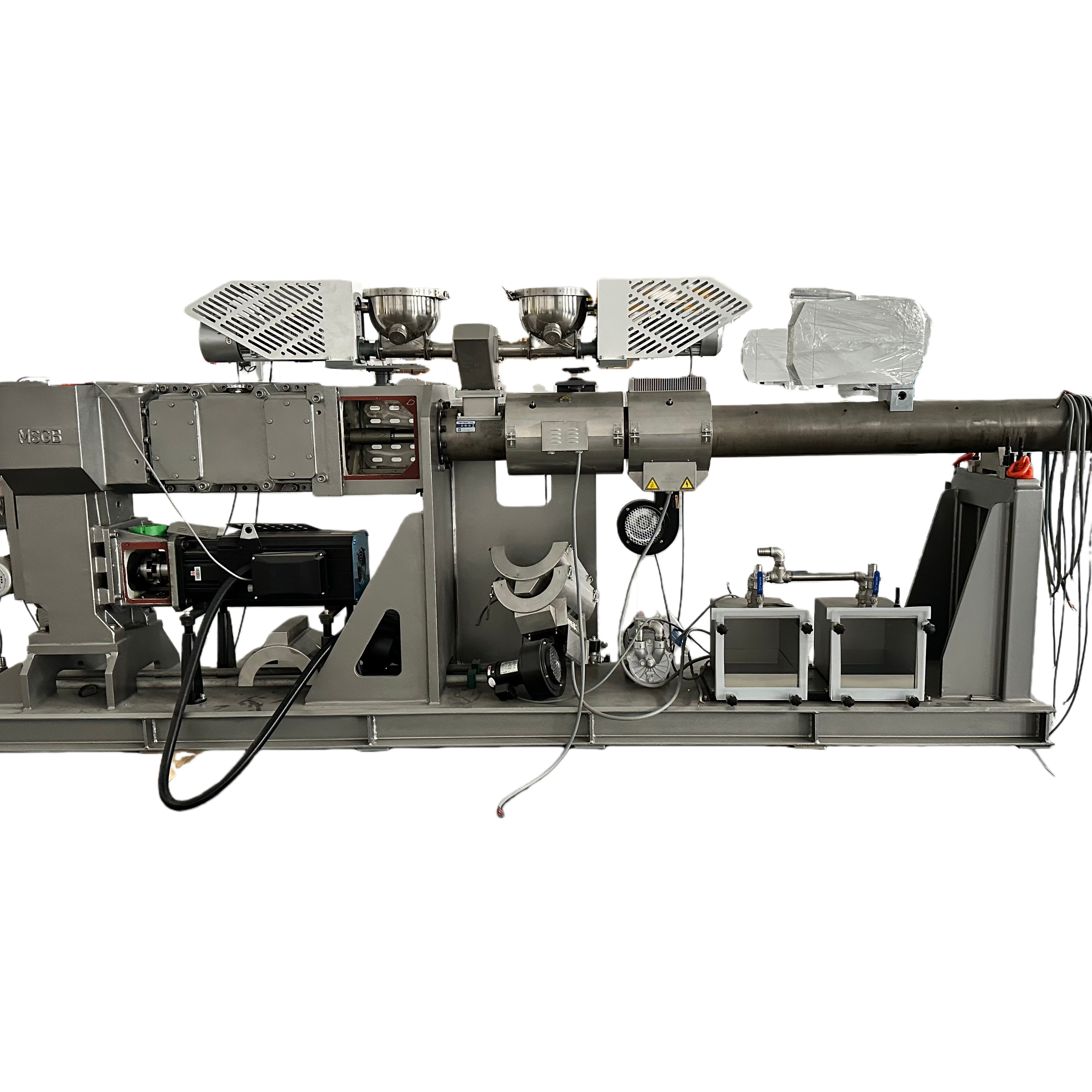
AI-driven haul-off speed synchronization with biaxial stretch rate for dimensional stability
Artificial intelligence continuously aligns haul-off velocity with real-time biaxial stretch dynamics. Machine learning models ingest live inputs—including extrusion torque, temperature gradients, and stretch ratios—to adjust line speed within a 0.5% tolerance window. This tight synchronization mitigates thermal expansion inconsistencies and prevents longitudinal dimensional drift, preserving uniform wall thickness along the full pipe length. The outcome is not only improved ISO compliance but also a 18–22% reduction in material waste.
Ultrasonic and laser gauging feedback loops enabling predictive process corrections
Dual-sensor non-destructive gauging delivers real-time metrology at production speeds: laser micrometers monitor outer diameter at 500 Hz, while ultrasonic transducers map wall thickness with 0.03 mm resolution. These measurements feed predictive analytics engines that anticipate deviations 3–5 seconds before solidification—well ahead of traditional detection windows. The system autonomously adjusts die lips, vacuum levels, or cooling parameters, preventing scrap generation and sustaining dimensional tolerances beyond the reach of manual intervention.
Table of Contents
- Precision Melt Processing: Foundation for PVC-O Pipe Dimensional Consistency
- Controlled Biaxial Orientation: Achieving ISO-Compliant Strength and Dimensional Accuracy in PVC-O Pipe
- Integrated Post-Orientation Stabilization: Vacuum Calibration, Haul-Off Synchronization, and Real-Time Gauging for PVC-O Pipe Quality Assurance