
 EN
EN



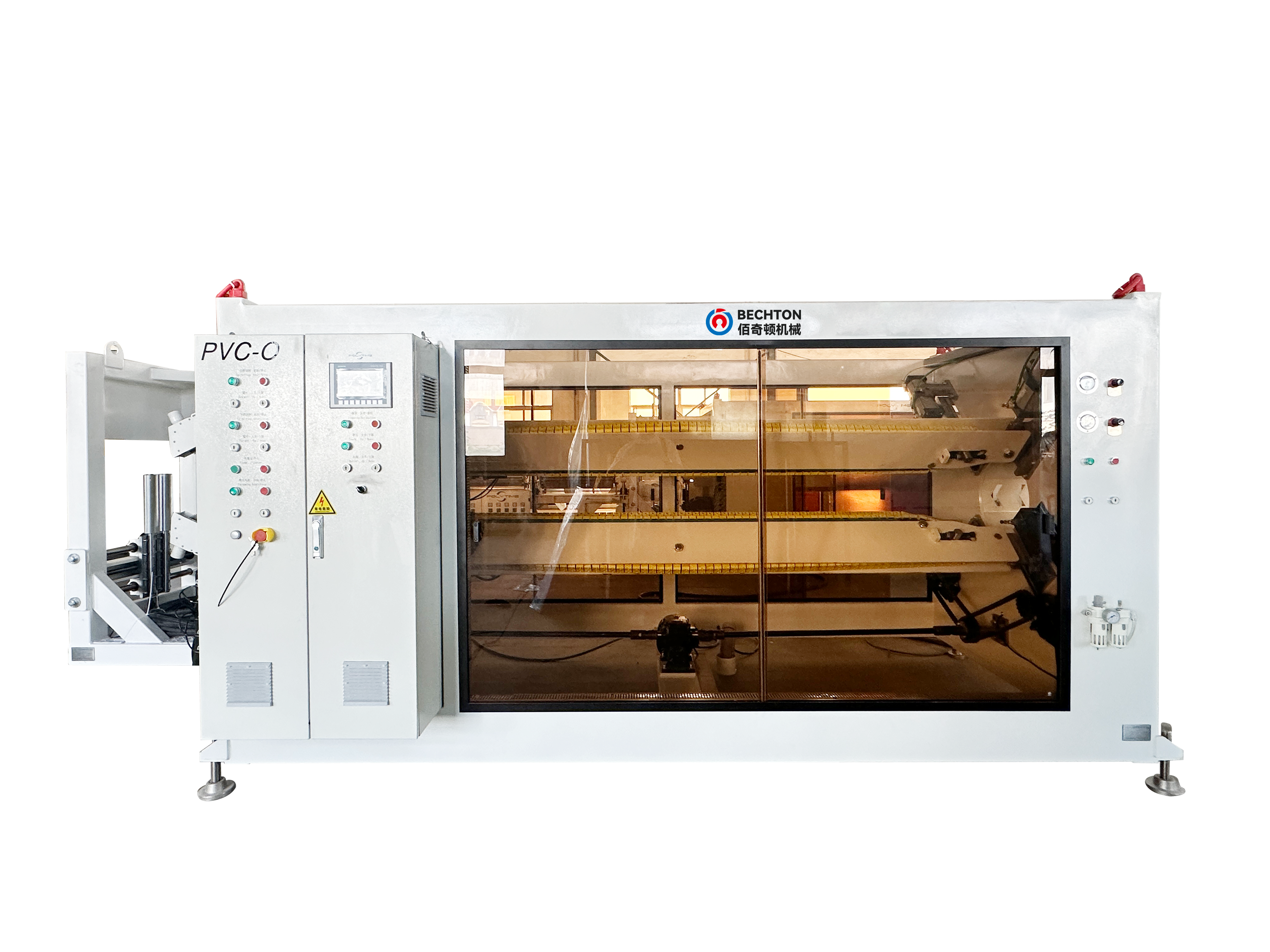
Mechanical Superiority of PVC-O Pipes in Demanding Applications
The molecular architecture of PVC-O (Oriented Polyvinyl Chloride) pipes drives their exceptional performance in high-stress environments. Through specialized manufacturing that aligns polymer chains, these pipes achieve superior strength-to-weight ratios while maintaining excellent hydraulic efficiency—making them ideal for demanding infrastructure and industrial applications.
How Biaxial Orientation Enhances Strength and Impact Resistance
When manufacturing PVC products, biaxial orientation works by stretching the molecules in two directions at once during extrusion, creating what looks like a stronger grid-like structure inside the material. Tests show that this method boosts tensile strength about 56 percent over regular PVC-U pipes, while impact resistance jumps anywhere from 2 to 3 times higher. Looking at real world applications from companies like Battenfeld-Cincinnati, we see that manufacturers can actually cut down on wall thickness by half without affecting the pressure rating capabilities of PN16 through PN25 systems. What makes this so valuable is the improved ability to bounce back after stress, with materials recovering four times more before showing signs of lasting damage.
Resistance to Crack Propagation and Deformation Under Stress
The special layered structure of PVC-O creates paths that help dissipate energy, making cracks grow much slower than regular plastics. Tests show that these oriented pipes can handle over 10 million stress cycles at room temperature before failing, which is about 15 times better than HDPE options on the market today. When put under constant pressure for decades, PVC-O only creeps less than 0.2% at 160 psi after 50 years. That beats ductile iron hands down since most iron pipes would deform between 0.5% to 1.0% under the same long term loads. These characteristics make PVC-O particularly valuable for applications where structural integrity needs to last through many years of service.
Comparative Analysis: PVC-O vs. Traditional PVC and Other Plastic Pipes
Third-party simulations highlight PVC-O’s advantages across key performance metrics:
| Property | PVC-O | PVC-U | HDPE | Ductile Iron |
|---|---|---|---|---|
| Tensile Strength (MPa) | 31.5 | 25 | 22 | 420 |
| Impact Resistance (kJ/m²) | 24 | 4.8 | 12 | N/A |
| Pressure Cycling Lifespan | 10M | 500k | 2M | 250k |
These results confirm that PVC-O delivers metal-like durability at a fraction of the weight, with 14% greater hydraulic capacity than same-diameter uPVC pipes.
Long-Term Performance in Infrastructure: Creep Resistance and Fatigue Endurance
Low Creep Rate and Sustained Pressure Resistance Over Time
PVC-O pipes have about 60 percent less creep compared to regular PVC-U materials. They stay within 0.5% deformation even when stressed continuously for more than seventy years, as various polymer research has shown. What makes this possible is the biaxial orientation process which aligns the polymer chains in such a way that they fight off both slow material movement and those unexpected pressure surges that can damage infrastructure. Field testing indicates these systems hold onto around 94% of their original burst strength after fifty years of operation. That kind of durability makes PVC-O an excellent option for municipal water systems built to last well into the next century, though actual performance may depend on installation quality and environmental conditions.
Durability Under Environmental Stress and Cyclic Loading
PVC-O holds up pretty well when temperatures swing wildly between -40 degrees Celsius and 60 degrees, plus it handles shifting ground conditions without issue. Most regular plastics would start showing cracks after just a few hundred thousand load cycles in fatigue tests, but PVC-O remains intact even after hitting the one million mark in accelerated testing scenarios. Because of this remarkable durability, engineers often specify it for installations where things get rough underground – think areas prone to pump surges, frost heaving soil, or fluctuating water table pressures. The material simply won't let go over time, which matters a lot when structural failures could mean expensive repairs down the road.
Reliability of PVC-O Pipes in Extreme and Harsh Conditions
Performance in Cold, Seismic, and Chemically Aggressive Environments
At temperatures as low as -25 degrees Celsius, PVC-O maintains around 90% of its impact resistance, which makes it work really well for pipelines in Arctic regions and other places with harsh winter conditions according to research from Kiwa Institute in 2023. The material stands up pretty well against chemical breakdown too, especially when exposed to things like sulfuric acid with pH levels below 3 and salty groundwater. Tests show that PVC-O lasts about four times longer than regular PVC under accelerated aging conditions. After the big earthquake in Christchurch back in 2011, engineers who checked out what happened found that PVC-O piping had about 30% fewer problems at the joints compared to HDPE pipes. This seems to be because PVC-O has better control over how much it bends and stretches, plus stronger connections between sections.
Impact Resistance and Structural Integrity in Challenging Installations
The laminated molecular design of PVC-O reduces crack propagation risk by 72% compared to homogeneous materials (Water Research Foundation 2024). This enables reliable performance under severe mechanical stresses such as:
- Rock impingement forces up to 2.8 kN during trenchless installation
- Repeated freeze-thaw cycles without microcracking
- Instantaneous pressure surges reaching 150% of nominal rating
Testing by the Dutch Institute for Materials Analysis confirms PVC-O recovers 94% of its original dimensions after severe crushing loads—a vital attribute for mining and directional drilling. Field data from mountainous regions indicate a 43% reduction in repair frequency compared to steel pipes over 15 years.
Advanced PVC-O Pipe Extrusion Line Technology for Consistent Quality
Modern PVC-O extrusion lines integrate automation and real-time monitoring to ensure uniform quality. Research shows PLC-controlled systems reduce wall thickness variation by 34% versus manual methods (Polymer Engineering Journal, 2023), directly enhancing consistency in molecular orientation and mechanical performance.
Role of PLC-Controlled Systems in Precision Extrusion
Programmable Logic Controllers (PLCs) manage all critical parameters—including melt temperature (±1°C accuracy) and die pressure (within 5-bar tolerance)—eliminating human error. This precision is especially crucial during biaxial stretching operations, where synchronized axial and radial stretching determines final strength and durability.
Extrusion Process Optimization for Uniform Molecular Orientation
Advanced screw designs with segmented heating zones create optimal conditions for polymer chain alignment. Dual-stage vacuum calibration tanks control cooling rates precisely (2–3°C/sec), minimizing internal stresses that could compromise impact resistance and long-term performance.
Quality Control in PVC-O Pipe Production for Maximum Durability
| Test Parameter | Industry Standard | PVC-O Performance |
|---|---|---|
| Hydrostatic Strength | ISO 1167 | 150% of requirement |
| Crack Propagation | ASTM F1473 | 0.12 mm/hr |
Automated laser gauges and ultrasonic scanners reject any pipe with dimensional deviations exceeding 0.5 mm. Meanwhile, real-time spectral analysis detects molecular inconsistencies undetectable through conventional inspection, ensuring only fully compliant products reach the field.
FAQ
What is the main advantage of PVC-O pipes over traditional PVC pipes?
PVC-O pipes have superior strength and impact resistance due to their biaxial orientation process, providing better performance under stress compared to traditional PVC pipes.
How does PVC-O perform in extreme temperature conditions?
PVC-O maintains 90% of its impact resistance even in extreme cold temperatures as low as -25 degrees Celsius, making it suitable for harsh winter conditions.
What testing is conducted to ensure the quality of PVC-O pipes?
PVC-O pipes undergo rigorous testing, including hydrostatic strength tests, crack propagation assessments, and real-time spectral analysis to ensure compliance with industry standards.