
 EN
EN



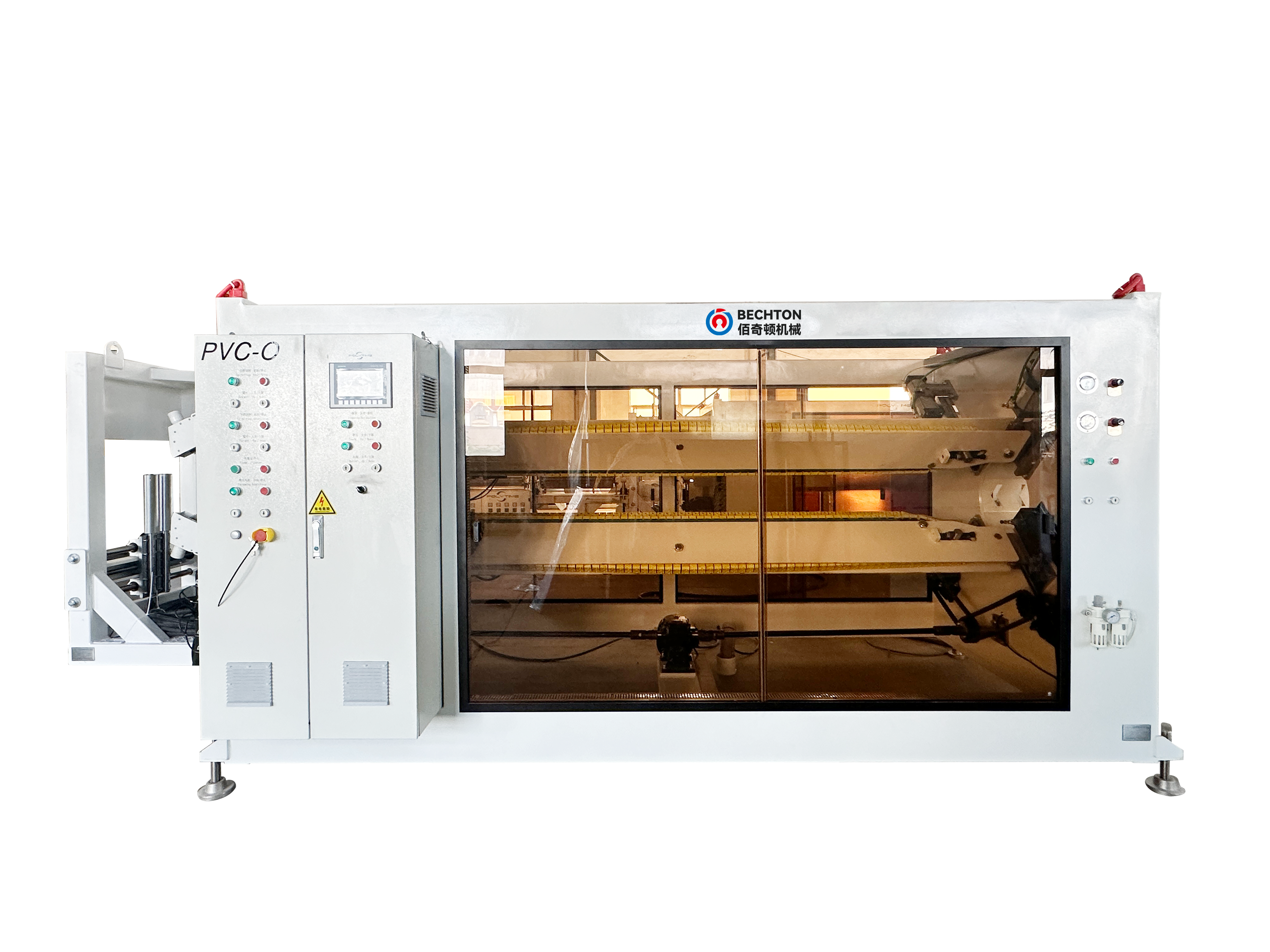
Understanding PVC-O Pipes and Their Performance Advantages
Mechanical Properties of PVC-O Pipes: Strength, Impact Resistance, and Durability
PVC-O (Oriented Polyvinyl Chloride) pipes deliver superior mechanical performance through biaxial orientation technology. Independent studies show a 31.5 MPa tensile strength–26% higher than standard PVC-U pipes (Ponemon 2023). This allows wall thickness reductions of up to 40% without compromising pressure ratings. Key advantages include:
- 5x higher impact resistance compared to PVC-U, even at subzero temperatures.
- 20% lighter weight, simplifying transportation and installation.
- Long-term durability with a 50-year lifespan in water distribution systems.
How Molecular Orientation Enhances PVC Performance
When we stretch polymers in two directions during processing, it actually lines up those long chain molecules both across and along the material, which creates a much stronger internal structure. During the extrusion phase, when the diameter expands by around 60%, this helps organize the crystals within the material better. According to research from Faygoplas in 2024, this improved organization makes the material stand up better against things like pressure from inside and forces pushing on it from outside. What's really interesting is how this change in structure cuts down on areas where stress builds up. As a result, these special PVC-O pipes are about 35 percent less likely to break down over time compared to regular PVC-M versions that haven't gone through this extra strengthening process.
Why PVC-O Outperforms Conventional PVC-U and PVC-M Pipes
PVC-O brings together the best features of both worlds really combining the stiffness of PVC-U with the bendiness of PVC-M to hit that sweet spot at around 3,200 MPa modulus. Regular old PVC-U tends to crack when there's a sudden spike in pressure, but PVC-O has this special oriented structure that actually soaks up the shock, cutting down on fractures by about two thirds according to field tests. The folks at PVC4Pipes did some analysis showing that PVC-O can handle roughly double the number of pressure spikes compared to PVC-M before giving way. All these advantages mean engineers love using it in earthquake-prone areas where pipes need extra resilience, plus it works great in those intense irrigation systems where water hammer is always a concern.
The PVC-O Extrusion Process: From Preform to Finished Pipe
The production of PVC-O pipes involves a sophisticated sequence that transforms raw material into high-performance piping. This multi-stage process ensures optimal molecular alignment while maintaining tight dimensional tolerances across all phases.
Step-by-step overview of the PVC-O extrusion and orientation process
The manufacturing process typically starts with creating preforms through what's called precision extrusion. For this step, twin screw extruders do the job of melting down and mixing those PVC compounds until they form these thick walled tube shapes. According to industry data from the latest Pipe Manufacturing Report released in 2024, manufacturers heat these preforms between around 90 to 110 degrees Celsius. This brings them to what's known as the glass transition temperature where molecules start rearranging themselves. What happens next is pretty interesting too. The pipes go through controlled stretching processes that expand them both lengthwise and outward at the same time. We're talking expansion rates somewhere between double and triple their original size, yet somehow the walls stay evenly thick throughout the whole operation.
Critical stages: Preform extrusion, heating, biaxial stretching, and cooling
Getting good results really hinges on getting those four main steps just right. For preform extrusion, we need about half a millimeter accuracy if we want consistent stretching later on. Next up are those infrared heating systems which give us tight temperature control. Then comes the mechanical stretching part where pressures between five and fifteen megapascals get applied along the length while air pressure pushes outward at the same time. Finally, quick water spray cooling is critical because it freezes the material's orientation in place and stops any unwanted stress from building up inside the structure.
Role of preform quality, temperature control, and cooling dynamics
High-quality preforms with uniform walls enable defect-free orientation, while ±2°C temperature stability prevents crystalline misalignment. Advanced cooling tunnels achieve quenching rates of 30–40°C/min, crucial for preserving enhanced mechanical properties. Studies show optimized cooling retains up to 98% of achieved orientation strength compared to conventional methods (Material Science Bulletin 2023).
Biaxial Orientation Technology: The Core of PVC-O Superiority
How Biaxial Stretching Aligns Polymer Chains for Enhanced Strength
When we talk about biaxial orientation, what we're really looking at is how this process changes the way PVC molecules are arranged. The technique involves stretching those plastic preforms at the same time both along their length and around their circumference. What happens next is pretty interesting - those long polymer chains get organized into these neat layers that look almost like a lattice pattern. And this organization makes all the difference. Tests show that oriented PVC can handle tension forces about 50 to 70 percent better than regular PVC according to Pipeline International from last year. But there's another benefit too. Because of this multi-directional reinforcement, cracks don't just spread through the material so easily. When a fracture tries to move across these oriented layers, it actually loses some of its energy in the process. This means products made with this method can withstand impacts roughly ten times better than standard PVC-U materials as noted by Rollepaal's research back in 2023.
Axial vs. Circumferential Orientation: Balancing Mechanical Performance
Optimal performance requires balanced orientation ratios:
- Circumferential stretching (2:1–3:1) enhances hoop strength for pressure containment
- Axial stretching (1.5:1–2:1) improves longitudinal stress resistance during installation
Overemphasis on either direction compromises overall integrity. Excessive circumferential stretching, for example, reduces axial fatigue resistance by 25–30% (Journal of Materials Science 2022), underscoring the need for precision.
| Orientation Type | Key Benefit | Typical Stretch Ratio | Contribution to Burst Pressure |
|---|---|---|---|
| Circumferential | Hoop strength enhancement | 2.5:1 | 60–65% |
| Axial | Longitudinal stress tolerance | 1.8:1 | 35–40% |
Uniaxial vs. Biaxial Stretching: Efficiency and Structural Outcomes
Uniaxial stretching improves strength in one direction by 40–50% but creates anisotropic weaknesses–impact resistance perpendicular to the stretch drops by 60% (Plastics Engineering 2023). Biaxial orientation eliminates this vulnerability through multidirectional reinforcement, achieving:
- 28–32 MPa design stress (MRS50 classification)
- 30% thinner walls than PVC-U at equivalent pressure ratings
- 15–20% lower material consumption per meter
Continuous inline stretching systems from leading manufacturers enable precise control over both axes, ensuring consistent mechanical properties along the entire pipe length–making PVC-O indispensable for high-pressure water networks requiring 50+ year service life with minimal maintenance.
Key Components and Automation in PVC-O Extrusion Lines
Essential components: Extruder, die, vacuum calibration, and haul-off systems
Modern PVC-O lines integrate four core subsystems:
- Twin-screw extruders melt and homogenize PVC compound while minimizing thermal degradation
- Annular die assemblies shape molten polymer into precise preform geometries
- Vacuum calibration tanks rapidly cool the outer surface to stabilize dimensions
- Programmable haul-offs maintain controlled stretching speeds during orientation
Studies of industrial systems show optimized integration reduces material waste by 18–22% compared to conventional setups.
Die design and melt homogeneity for consistent preform quality
Advanced die geometries feature:
- Streamlined flow channels eliminating stagnation zones
- Computer-optimized lip adjustments ensuring wall thickness uniformity (±0.3mm tolerance)
- Real-time rheological sensors monitoring melt viscosity and pressure
PLC-based automation, real-time monitoring, and predictive maintenance
Modern lines use:
- Centralized PLCs synchronizing extrusion rates with downstream stretching
- Infrared thermography mapping temperature gradients across 50–100 measurement points
- Vibration analysis algorithms predicting screw wear 300–500 hours before failure
Integration of data systems for quality control and production efficiency
Leading manufacturers implement:
| System | Function | Impact |
|---|---|---|
| MES (Manufacturing Execution) | Tracks OEE (Overall Equipment Effectiveness) | Improves line uptime by 12–15% |
| SPC (Statistical Process Control) | Analyzes dimensional stability | Reduces rejection rates by 40% |
| AI-driven optimization | Adjusts parameters dynamically | Cuts energy use by 20–25% |
Automated thickness gauges and laser micrometers now achieve 99.7% measurement accuracy across production runs, as validated in 2024 polymer processing trials.
Innovations and Industry Applications of PVC-O Pipe Technology
Advancements by Leading Manufacturers in PVC-O Extrusion Machinery
Recent breakthroughs enable production of PVC-O pipes with 35% higher burst pressure ratings than conventional PVC-U. Real-time thickness monitoring and AI-driven adjustments achieve ±0.1 mm dimensional accuracy across diameters from 110mm to 630mm. These innovations reduce material waste by up to 18% while maintaining structural integrity at operating pressures exceeding 25 bar.
Case Study: High-Efficiency PVC-O Line Deployment in Southeast Asia
A 16 km network installed in Indonesia’s capital region has operated leak-free for 18 months. The project achieved 40% faster installation versus ductile iron systems, with total lifecycle costs 28% below initial projections.
Global Market Trends and Future Outlook for PVC-O Pipe Solutions
Growth estimates suggest the global PVC-O pipe market will expand at around 8.2% annually until 2030, mainly because cities are upgrading their water systems and farmers want better irrigation solutions. More than half of all new water network installations across Asia Pacific regions are specifying PVC-O these days thanks to how resistant it is against corrosion plus the fact that these pipes last about fifty years before needing replacement. Smart manufacturing methods coming online could cut down on energy usage by somewhere between 15 to 20 percent according to recent studies from Verified Market Research in 2024. At the same time researchers are working on improved polymer blends that should make these pipes perform even better when installed in soils where chemical activity might otherwise cause problems.
FAQ
What does PVC-O stand for?
PVC-O stands for Oriented Polyvinyl Chloride, which is a type of pipe known for its high-performance attributes due to biaxial orientation technology.
How do PVC-O pipes compare to standard PVC-U pipes?
PVC-O pipes offer higher impact resistance, lighter weight, and longer durability compared to PVC-U pipes owing to enhanced molecular orientation.
What are the benefits of using PVC-O pipes in water distribution systems?
PVC-O pipes boast of a 50-year lifespan, superior resistance to pressure spikes, and reduced material consumption, making them suitable for modern water distribution systems.
Can PVC-O pipes handle high-pressure applications?
Yes, due to the biaxial orientation that strengthens the polymer chains, PVC-O pipes can handle high-pressure environments effectively.
Table of Contents
- Understanding PVC-O Pipes and Their Performance Advantages
- The PVC-O Extrusion Process: From Preform to Finished Pipe
- Biaxial Orientation Technology: The Core of PVC-O Superiority
- Key Components and Automation in PVC-O Extrusion Lines
- Innovations and Industry Applications of PVC-O Pipe Technology
- FAQ