
 EN
EN



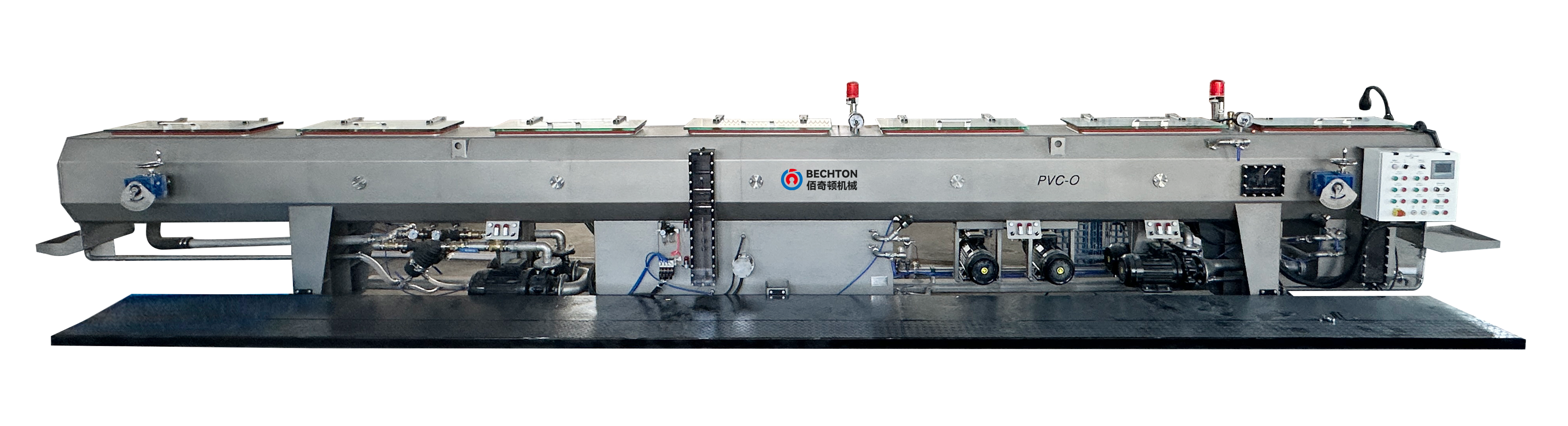
How Energy-Efficient PVC-O Pipe Extrusion Line Reduces Specific Energy Consumption
Modern PVC-O (Polyvinyl Chloride Oriented) pipe extrusion lines achieve energy efficiency through optimized screw designs, advanced drive systems, and data-driven process controls. Industry leaders now prioritize reducing specific energy consumption (SEC) – measured in watt-hours per kilogram (Wh/kg) – as a key metric for sustainable manufacturing.
Energy-Efficient Extrusion Processes in PVC-O Pipe Manufacturing
Advanced single-screw extruders with barrier flight technology reduce melt temperature variations, lowering energy waste by 12–18% compared to conventional systems. Modern configurations achieve SEC values as low as 100 Wh/kg for the extruder stage, nearing the theoretical minimum of 80 Wh/kg.
Lowering Specific Energy Consumption (Wh/kg) Through Optimized Screw Design
Screw geometry innovations like variable-depth compression zones decrease mechanical heat generation while maintaining throughput. A 2023 study showed tapered mixing sections reduce drive energy consumption by 22% in PVC-O production, directly lowering SEC without compromising melt homogeneity.
Increasing Extruder Output Without Compromising Energy Efficiency
New-generation extrusion lines demonstrate 15–20% higher output capacities through torque-optimized gearboxes, predictive pressure control systems, and precision temperature zoning. This allows manufacturers to reduce energy-per-unit costs by 30% while scaling production, as validated in large-scale pipe manufacturing trials comparing legacy vs. modern systems.
Balancing High Throughput With Genuine Energy Savings: A Critical Analysis
While increasing line speeds can theoretically improve efficiency, uncontrolled acceleration raises SEC through excessive shear heating (+8–12°C per 15% speed increase), cooling system overcompensation, and motor overload conditions. Smart process controls now maintain optimal SEC thresholds (±5 Wh/kg) even at 95% maximum throughput through real-time viscosity adjustments and adaptive cooling.
Advanced Drive Systems and High-Efficiency Motors in Modern Extrusion Lines
Servo-driven extruders with permanent magnet synchronous motors (PMSMs) achieve 92–95% energy conversion efficiency, compared to 82–85% in traditional AC induction systems. When combined with regenerative braking technology, these systems recover up to 40% of deceleration energy for reuse in the production cycle.
Material and Resource Efficiency Through Biaxial Orientation in PVC-O Pipes
Modern PVCO pipe extrusion lines achieve material efficiency through biaxial orientation, a process that rearranges polymer molecules to enhance strength while reducing raw material consumption. This technology enables thinner pipe walls without sacrificing pressure resistance, making it a cornerstone of sustainable manufacturing.
Biaxial Oriented PVC (PVC-O) Enabling Thinner Pipe Walls and Material Savings
When manufacturers stretch PVC during processing both radially and axially, they end up with a kind of layered molecular arrangement throughout the material. What makes this technique so valuable is that it lets them reduce wall thickness by around 40 to maybe even 50 percent when compared against regular PVC-U pipes, all while keeping the same pressure resistance levels intact. Take a 200mm diameter pipe as an example case study. The savings here amount to approximately 1.2 tons per kilometer of material needed. That means real money saved on manufacturing expenses plus reduced carbon footprint from transporting lighter products across distances.
Molecular Orientation Techniques That Maximize Raw Material Efficiency
Advanced extrusion systems optimize molecular alignment through radial expansion (up to 100% diameter increase), axial stretching (controlled elongation ratios of 1.5–2:1), and crystallinity enhancement (30% increased molecular packing density). These techniques improve Minimum Required Strength (MRS) by 250%, enabling manufacturers to meet ISO 16422 standards with 34% less material per linear meter.
Case Study: 30% Material Reduction in Municipal Water Pipelines Using PVC-O
A 2023 Lisbon water infrastructure upgrade demonstrates PVCO’s real-world impact:
| Metric | Traditional PVC-U | PVCO System | Improvement |
|---|---|---|---|
| Wall thickness | 12.3 mm | 8.1 mm | 34% thinner |
| Material usage/km | 28.4 tons | 19.9 tons | 30% savings |
| Installation speed | 85 m/day | 120 m/day | 41% faster |
The project saved €210,000 in material costs across 15 km of pipeline while reducing embodied carbon by 22%. These results validate PVCO’s role in meeting EU circular economy targets for water infrastructure.
Sustainability Advantages of PVC-O Pipe Extrusion Lines
Environmental Benefits of PVC-O Pipes in Long-Term Infrastructure Projects
PVC-O pipes last really long time, often over 50 years when used in city water systems according to what we know so far. What makes them so tough is their special molecular structure that basically fights off corrosion and wear and tear. This means these pipes don't need replacing as often as regular ones do, cutting down on all that wasted material from broken pipes which accounts for about 18% of total pipeline waste. Another plus point is the inside of these pipes stays pretty smooth, which actually saves energy during pumping operations. Tests done on 12 different water networks throughout Europe showed pumping costs dropped between 6 to 8 percent compared with standard materials.
Incorporating Recycled Materials Into PVC-O Pipe Production
Today's PVCO pipe extrusion equipment can handle around 30% post-industrial PVC regrind material without affecting the pressure rating specifications. The secret lies in these advanced filtration systems that keep everything dimensionally stable during processing while significantly reducing the need for new polymer materials something that cuts down on virgin polymer usage by about 24 kilograms for every ton produced. Big name manufacturers have cracked this code using closed loop granulate recycling setups. These systems aren't just good for business they're doing planet earth a favor too, slashing annual landfill waste contributions by approximately 740 metric tons from each production line alone according to industry reports.
Eco-Design Principles and Circular Economy Potential
There are basically three main approaches that help create circular systems in this industry. First, we have these modular extrusion parts which let about 92% of materials get recovered when it's time to upgrade equipment. Then there's the standardization of pipe sizes that makes it much easier to process old pipes into brand new construction materials. And finally, the solvent free joints keep the materials clean and pure so they can be recycled again later on. When looking at how well these methods work against the standards set by the Ellen MacArthur Foundation for circular economies, the results speak volumes. The carbon footprint from start to finish is around 34% less compared to regular pipe manufacturing methods. That kind of reduction really matters when trying to build sustainable infrastructure for tomorrow.
Life Cycle Assessment and Environmental Product Declaration (EPD) for PVC-O Products
A recent EPD for PVC-O pipes verifies 22.1 MJ/kg embodied energy – 18% below ductile iron alternatives. The assessment covers:
| Phase | Impact Reduction |
|---|---|
| Raw material extraction | 27% less fossil fuel usage |
| Manufacturing | 32% lower GHG emissions through energy-efficient extrusion |
| Installation | 41% reduced transportation emissions due to lightweight design |
Third-party verified LCA data confirms PVC-O systems meet EN 15804 sustainability benchmarks, with 86% of producers now pursuing EPD certification to meet EU taxonomy requirements.
Reducing Carbon Footprint with Smart and Connected PVC-O Extrusion Technology
How energy recovery and heat reuse lower emissions in extrusion
Today's PVCO pipe extrusion equipment comes equipped with closed loop thermal management systems that actually capture around 60 to 70 percent of the waste heat generated during barrel heating operations. What happens next? Well, this captured energy gets put back to work, either warming up raw materials before processing or even heating parts of the facility itself. The result? A significant drop in fresh energy requirements by roughly 28% for each production run when compared against older system designs. Speaking of improvements, advanced induction heating technology manages to transfer heat about 35% quicker than traditional resistive methods do. And let's not forget about precision here too - these systems maintain temperature within just half a degree Celsius throughout operation, which makes all the difference in producing consistently high quality pipes without defects.
Smart sensors and AI-driven monitoring for real-time energy optimization
Modern extrusion systems typically install around 50 IoT sensors on each machine to monitor critical parameters such as melt pressure with an accuracy of about 0.2 bar and screw torque measured down to 1 Newton meter. Smart software crunches all this sensor data and makes automatic tweaks to things like screw speed variations kept within a 1.5 RPM range, temperature settings for heating zones controlled to within 0.8 degrees Celsius, plus vacuum calibration that responds every 5 milliseconds. These continuous adjustments happen in real time and cut down on wasted energy when switching between different materials by approximately 22 percent. At the same time, the system keeps production quality high with over 99 percent consistency in pipe dimensions across batches, which is pretty impressive given the complexity involved in plastic extrusion processes.
Integrating Industry 4.0 for sustainable, data-driven extrusion processes
Industry 4.0 integration enables extrusion lines to achieve 18–24% lower carbon intensity through three mechanisms:
| Technology | Energy Impact | Material Savings |
|---|---|---|
| Digital twin simulation | 12% reduced energy trials | 9% less scrap |
| Predictive maintenance | 30% fewer downtime events | 15% less lubricant |
| Automated material blending | 20% faster grade changes | 8% lower regrind |
Plants adopting these connected technologies report 19% improvement in energy-per-kg metrics while meeting ISO 50001 standards.
Cost Savings and ROI of Upgrading to an Energy-Efficient PVC-O Pipe Extrusion Line
Long-term operational cost reductions through energy-efficient extrusion
PVCO pipe extrusion lines today cut down on energy usage somewhere around 15 to maybe even 25 percent when compared to older models. Some big name manufacturers have actually seen their electric bills drop by over seventy five thousand dollars each year just from running one production line. The reason for these savings? Better motor technology that brings down the amount of power needed per kilogram of material processed below twenty two watt hours. At the same time, they're still able to keep production speeds well above eleven hundred kilograms per hour. What else makes a difference? Automated temperature regulation systems work alongside specially designed screws inside the machines to reduce wasted heat. This means less energy has to go into cooling things down afterwards, which cuts those costs by about eighteen percent overall.
ROI analysis: Financial benefits of adopting advanced PVC-O technology
Most companies find that their return on investment when switching to energy efficient PVCO extrusion tech takes anywhere between 2 years and just over 3 years. Over a 15 year lifespan, these upgrades cut overall costs by about 30%. The savings come mainly from parts that last longer, which cuts maintenance expenses by around 40%. Manufacturers also see less waste because the machines are so precise, saving roughly 12 to 15% of materials. Throughput goes up too, sometimes as much as 8 to 12% more production without needing extra power. With these improvements, plants can churn out nearly 7 kilometers of piping each day while keeping energy bills under 18 cents per meter. This kind of performance makes all the difference in today's market where green building practices are becoming standard requirements for many construction projects.
FAQ
What is specific energy consumption (SEC) in PVC-O pipe extrusion?
Specific energy consumption (SEC) is a key metric for sustainable manufacturing, measured in watt-hours per kilogram (Wh/kg). It indicates the energy efficiency of the pipe extrusion process.
How do advanced extrusion lines increase output without compromising energy efficiency?
They employ torque-optimized gearboxes, predictive pressure control systems, and precision temperature zoning to achieve higher output capacities while reducing energy-per-unit costs.
What are the sustainability advantages of PVC-O pipes?
PVCO pipes offer durability, reduced waste, and energy savings due to their enhanced molecular structure and smoother interiors. They also support circular economy goals through recycling and eco-design principles.
Table of Contents
-
How Energy-Efficient PVC-O Pipe Extrusion Line Reduces Specific Energy Consumption
- Energy-Efficient Extrusion Processes in PVC-O Pipe Manufacturing
- Lowering Specific Energy Consumption (Wh/kg) Through Optimized Screw Design
- Increasing Extruder Output Without Compromising Energy Efficiency
- Balancing High Throughput With Genuine Energy Savings: A Critical Analysis
- Advanced Drive Systems and High-Efficiency Motors in Modern Extrusion Lines
- Material and Resource Efficiency Through Biaxial Orientation in PVC-O Pipes
- Sustainability Advantages of PVC-O Pipe Extrusion Lines
- Reducing Carbon Footprint with Smart and Connected PVC-O Extrusion Technology
- Cost Savings and ROI of Upgrading to an Energy-Efficient PVC-O Pipe Extrusion Line
- FAQ