
 EN
EN



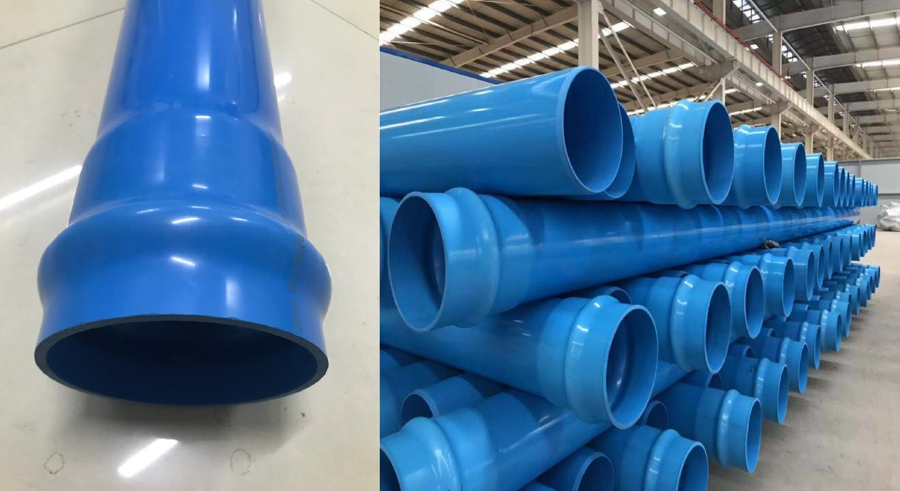
How PVC-O Pipe Technology Enables Superior High-Pressure Performance
Molecular Orientation: Transforming Amorphous PVC into a Highly Aligned, Crystalline Structure
What makes PVC-O (Oriented Polyvinyl Chloride) pipe so special is basically how they orient the molecules during manufacturing. When making these pipes, regular PVC-U gets stretched out carefully in two directions at once - lengthwise and around the circumference. This stretching aligns all those long polymer chains into something resembling a neat crystal pattern instead of just floating around randomly. The end result? A denser material that actually handles stress better because it can absorb energy when cracks start forming. Tests show these oriented pipes have tensile strength around 31.5 MPa, which beats standard PVC-U by about 26%. That means manufacturers can make thinner walls without sacrificing pressure performance. Another big plus comes from this crystal structure too. These pipes stand up to impacts much better when temps drop below freezing point. Some tests indicate they're roughly five times tougher in cold conditions compared to normal pipes. Pretty important stuff for any infrastructure dealing with harsh weather or extreme temperature changes over time.
Cold Drawing vs. Hot Stretching: Process Selection Impact on PVC-O Pipe Strength and Scalability
Manufacturers employ two primary orientation techniques with distinct performance trade-offs:
- Cold drawing stretches pipes below the glass transition temperature (Tg), preserving molecular alignment through rapid quenching. This yields superior dimensional stability and fatigue resistance—ideal for high-pressure systems requiring precise tolerances. However, elongation limitations restrict scalability for large-diameter pipes.
- Hot stretching, conducted above Tg, allows greater radial expansion (up to 60% diameter increase) before crystallization. While this facilitates production of larger diameters (315–630 mm), excessive heat exposure risks reducing crystallinity uniformity. Recent Polymer Engineering research shows hot-stretched pipes achieve three times the tensile strength of standard PVC but require advanced tension-control systems to maintain structural consistency. Process selection ultimately hinges on balancing strength requirements against production scalability needs.
Key Components of a High-Efficiency PVC-O Pipe Extrusion Line
Twin-Screw Extruder Optimization for Uniform PVC-O Melt and Thermal Stability
PVC-O pipe manufacturing today depends heavily on twin screw extruders designed specifically to handle material consistency and temperature management. The equipment comes equipped with specially shaped screws that create even shear throughout the process, which helps prevent those annoying temperature swings that can mess up the polymer structure. Most modern setups use advanced AC drives that keep rotation speeds pretty steady, usually within about half a percent variance. This kind of precision matters because it maintains that stable melt flow needed for proper orientation during production. Without those pesky material degradation spots, manufacturers can actually make pipes with thinner walls without sacrificing structural strength. This has become a big deal in the industry since it typically cuts down on energy consumption somewhere between 20% to maybe 30% compared to older methods. Plus there are these heat recovery systems built right into many machines now, taking what would otherwise be wasted heat and putting it back into the extrusion process for better efficiency all around.
Precision Orientation Unit: Synchronization, Tension Control, and Dimensional Consistency
During the molecular orientation stage, getting those expansion and stretching components to work together at the nanometer level is absolutely critical. The PLC controlled tension sensors constantly tweak the haul off forces as they go, working around those pesky material memory issues all while keeping everything within about plus or minus 0.15 mm tolerance. What this feedback system does is stop those crystal structures from going out of whack when we stretch materials in their solid state. Tests following ASTM D1598 standards show this actually boosts hoop strength somewhere between 1.8 and 2.2 times what it was before. These days most advanced setups come equipped with laser micrometers that handle die gap calibration automatically. Back in the day with early PVC-O production, people had to do this manually and it led to output differences sometimes over 7%. Automatic calibration has really cut down on those inconsistencies across batches.
Why PVC-O Pipe Outperforms PVC-U and PE in High-Pressure Infrastructure
Hydrostatic Strength & Fatigue Resistance: Real-World Data from ISO 1167 and ASTM D1598 Testing
Tests by independent experts have shown that PVC-O piping performs exceptionally well in tough conditions. When put through standardized ISO 1167 hydrostatic testing, these pipes can handle pressures over 25 bar, which is way better than regular PVC-U at around 16 bar or HDPE at only 12 bar. The reason? The molecules in PVC-O are aligned differently, giving it a tensile strength range between 55 to 75 MPa compared to HDPE's much lower 20 to 30 MPa. Fatigue resistance matters too. According to ASTM D1598 cycling tests, PVC-O can take about double the number of pressure surges before breaking down when compared to other materials. Cities building infrastructure in earthquake-prone areas like subway systems report absolutely no pipe breaks even after 15 years or more thanks to how PVC-O handles stress distribution. Looking at field data, there's also about 70 percent less creep deformation seen in PVC-O pipes compared to polyethylene ones when they're under constant load for long periods. This explains why these pipes maintain around 98% of their original pressure capacity even after being buried for half a century. When dealing with infrastructure projects where pipe failure could be disastrous, the proven durability of PVC-O provides something truly special in terms of safety margins.
Designing for Reliability: Critical Considerations When Specifying a PVC-O Pipe Extrusion Line
When setting up a PVC-O pipe extrusion line, it's really important to look closely at all the technical specs if we want these pipes to last for years. Let's start with temperature control systems that can hit plus or minus 1 degree Celsius accuracy. This matters because when making those stretched out pipes, any fluctuations in heat can mess up the molecular structure and actually cut down on pipe strength by about 30%. Next up, the barrels and screws need to be made from tough stuff like tungsten carbide alloys. Regular materials just don't stand up to the rough PVC compounds used in production runs, so going for something durable makes sense for keeping machines running longer when producing large volumes. We also need haul-off units that work together perfectly, maintaining tension within half a percent tolerance. If this isn't right during the orientation process, the walls end up uneven which means lower pressure ratings overall. And let's not forget about quality checks. Adding things like laser micrometers and ultrasonic scanners helps spot tiny flaws before they become big problems later on. These little imperfections might seem insignificant now but could lead to pipe failures down the road when pressure builds up over time. Putting all these elements together helps avoid unexpected shutdowns and ensures that PVC-O pipes perform reliably for many years in tough infrastructure projects.
FAQ
What is PVC-O pipe?
PVC-O (Oriented Polyvinyl Chloride) pipe is a type of pipe manufactured by stretching PVC-U in two directions, which aligns the polymer chains into a crystalline structure for better strength and durability.
How does molecular orientation improve PVC-O pipes?
Molecular orientation turns regular PVC-U into PVC-O by aligning polymer chains in a crystalline format, enhancing tensile strength, impact resistance, and stress handling capabilities.
What are the differences between cold drawing and hot stretching in PVC-O pipe manufacturing?
Cold drawing involves stretching pipes below their glass transition temperature for better dimensional stability, while hot stretching above this temperature allows larger pipe diameters, though balancing strength and scalability is necessary.
Why does PVC-O pipe outperform PVC-U and HDPE in high-pressure applications?
PVC-O pipes outperform others due to their superior hydrostatic strength, tensile strength, and fatigue resistance, making them highly reliable for infrastructure projects with high-pressure requirements.
Table of Contents
- How PVC-O Pipe Technology Enables Superior High-Pressure Performance
- Key Components of a High-Efficiency PVC-O Pipe Extrusion Line
- Why PVC-O Pipe Outperforms PVC-U and PE in High-Pressure Infrastructure
- Designing for Reliability: Critical Considerations When Specifying a PVC-O Pipe Extrusion Line
- FAQ