
 EN
EN



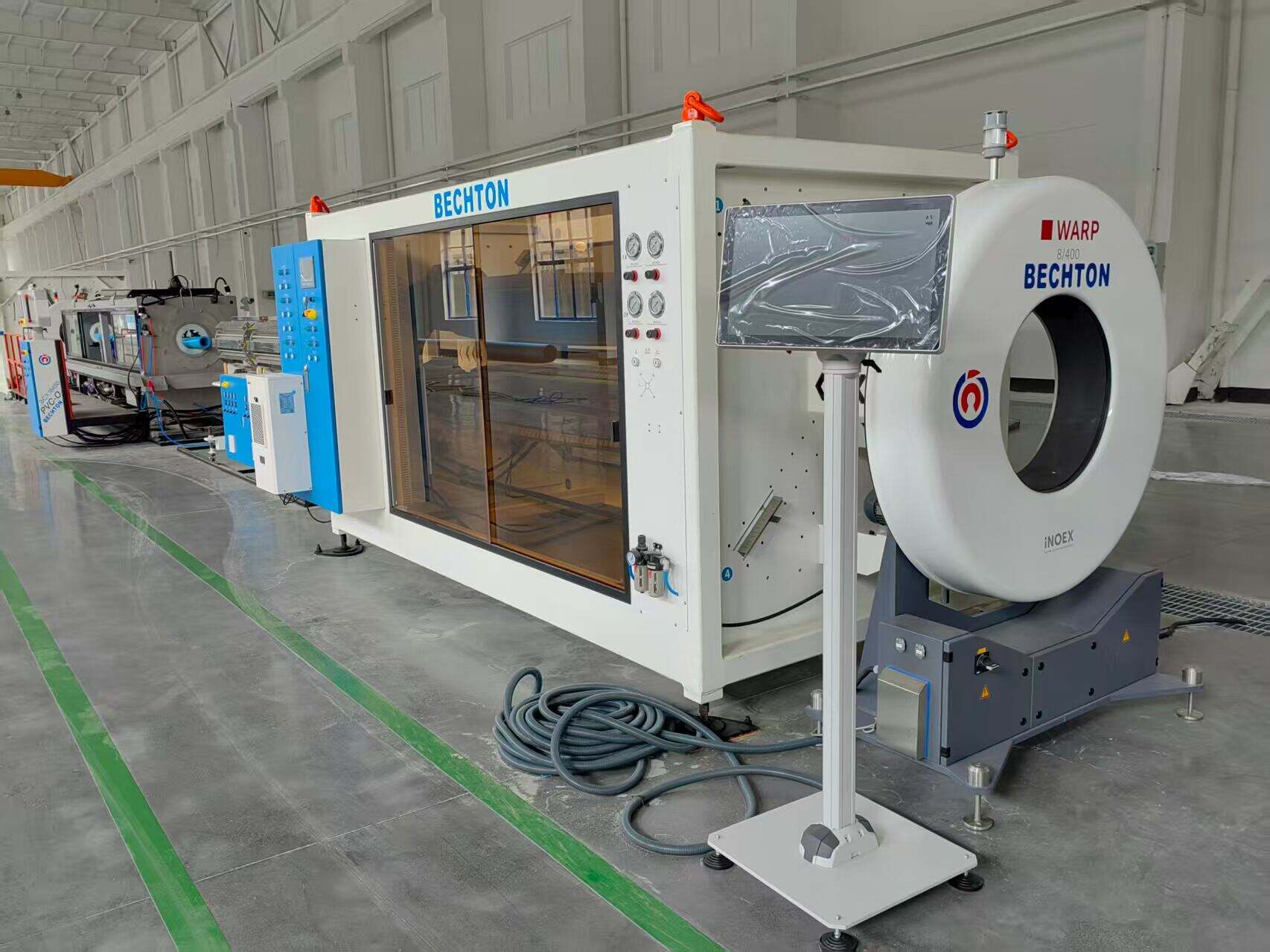
Understanding PVC-O Pipe Extrusion Line Technology and Core Components
PVC-O (Biaxially Oriented Polyvinyl Chloride) pipe extrusion lines are advanced manufacturing systems that produce high-strength pipes through molecular alignment. By transforming PVC resin into pressure-rated piping with enhanced mechanical properties, these systems support modern water infrastructure with durable, efficient solutions.
What Is a PVC-O Pipe Extrusion Line?
The PVC-O pipe extrusion process uses special extruders along with orientation tech to make pipes where molecules are arranged in two directions. What makes this different from regular PVC manufacturing is that it stretches material both lengthwise and around the circumference while forming the product. Looking at data from the latest Material Science findings published in 2024, we see these methods actually rearrange the polymer structure into something resembling a net-like pattern. This results in significantly stronger pipes too about 40 to 50 percent stronger than what comes out of standard PVC lines. Manufacturers who have switched over report fewer failures and longer lasting installations in their projects.
Core Components of the PVC-O Extrusion Line
Modern PVC-O lines consist of four key subsystems:
- High-torque twin-screw extruders for uniform melt processing
- Biaxial stretching modules with precision temperature control
- Vacuum calibration tanks ensuring dimensional accuracy
- Automated haul-off units maintaining consistent orientation
Leading systems, such as those described in the Industrial Extrusion Guide, feature AC frequency-controlled drives and real-time thickness monitoring, reducing energy use by up to 25% while maintaining ±0.3mm tolerance.
How Molecular Orientation Enhances PVC Performance
The biaxial stretching process alters PVC’s crystalline structure by aligning polymer chains under controlled radial expansion (110–130°C) and axial tension. This dual orientation delivers:
- 360° impact resistance (18–23 kJ/m² vs. 4–8 kJ/m² for standard PVC)
- 5–7x longer fatigue life under cyclic pressure
- Over 300% improvement in crack propagation resistance
These enhancements enable PVC-O pipes to handle 25–35% higher operating pressures while using 15–20% less material than traditional alternatives.
Key Advantages of PVC-O Pipes in Modern Infrastructure Applications
Superior Strength and Impact Resistance of PVC-O Pipes
When subjected to biaxial orientation during manufacturing, PVC-O reaches around three times the tensile strength of regular PVC according to recent research published in Polymer Engineering in 2024. This makes the material capable of handling pressures exceeding 25 bar while standing up better against ground shifts and physical impacts. Take the case of Seville Metro in Spain for instance. After making the switch to PVC-O pipes, they haven't experienced any system failures even though the region faces frequent earthquakes. Their performance actually beats traditional ductile iron systems by quite a margin, which is impressive considering how expensive those alternatives can be to install and maintain.
Material Savings and Sustainability in PVC-O Extrusion
PVC-O pipes can have walls that are around 30% thinner than regular uPVC, which means companies use way less raw materials while still getting good performance from their products. According to some industry numbers we've seen, these pipes cut down on carbon dioxide emissions by about 15 to 20% per km when installed next to HDPE options, as noted in the Vynova Group's latest report from 2023. A lot of pipe makers are starting to mix old PVC-O material back into their new production runs too. This recycling process gets pretty impressive results, with most operations hitting over 90% recyclability rates in their closed loop systems.
Longer Service Life and Reduced Maintenance Costs
Tests show that PVC-O keeps about 98% of its pressure strength even after half a century, which is way better than regular PVC pipes that only hold around 65 to 70%. The inside of these pipes is really smooth too, cutting down on those pesky biofilms by almost half compared to old fashioned cement lined iron pipes according to some research from Water Research Foundation back in 2023. And this matters because it means fewer contaminants getting into our water systems. Take Rotterdam for instance. Since they started using PVC-O throughout their sewer system, city officials report maintenance expenses dropped roughly 60% over ten years. Makes sense when you think about how much time and money goes into fixing older pipe materials.
Comparative Analysis: PVC-O vs. Traditional PVC and PE Pipes
| Property | PVC-O | uPVC | HDPE |
|---|---|---|---|
| Pressure Resistance | 25 bar | 16 bar | 12 bar |
| Impact Strength | 75 kJ/m² | 15 kJ/m² | 35 kJ/m² |
| Installation Speed | 40m/hr | 35m/hr | 25m/hr |
| Lifetime Cost/km | $220k | $310k | $285k |
Data from the 2024 Plastic Pipe Institute Benchmark indicates PVC-O outperforms alternatives in demanding applications, delivering 18–25% total project cost savings.
The PVC-O Production Process: From Resin to High-Performance Oriented Pipe
Step-by-Step Breakdown of the PVC-O Extrusion Process
Starting off, manufacturers mix together PVC resin with various additives like stabilizers and lubricants to make sure everything stays stable when heated. This mixture goes into what's called a high torque twin screw extruder. The special design of these screws helps melt everything evenly throughout the process. Temperature control is really important here too. Most systems keep things within about 1.5 degrees Celsius difference across the barrels so nothing gets damaged during processing according to recent studies from Faygoplas in 2024. Once melted down, the PVC moves through a precisely shaped opening to create what we call a preform. Then comes rapid cooling to set the shape properly before any further shaping happens. When done right, this cooling step actually makes the final product 18 percent more dimensionally stable than older manufacturing techniques.
Axial and Biaxial Orientation Techniques in PVC-O Production
Biaxial orientation involves simultaneous radial and longitudinal stretching, realigning polymer chains to increase impact resistance by 250% and pressure ratings by 30%. Axial-only orientation is typically reserved for smaller-diameter pipes. Advanced systems use computerized tension control during radial expansion to maintain wall thickness within ±0.2 mm, meeting ISO 16422 standards.
Role of Temperature and Pressure Control in Melt Uniformity
Precise temperature gradients (40–60°C/meter along the barrel) prevent uneven crystallization, while extrusion pressures between 250–400 bar ensure homogeneous flow. Deviations beyond ±2°C in cooling zones can raise residual stress by 15%, increasing the risk of cracking in buried installations.
Challenges in Scaling Biaxial Orientation Consistently
Producing pipes above 500 mm introduces flow instabilities during radial expansion. Inconsistent stretching causes anisotropic strength variations; thickness fluctuations exceeding 8% reduce pressure ratings by 22%. Automated mold-adjustment systems now counteract thermal shrinkage in real time, improving consistency in large-diameter output.
Innovations in PVC-O Extrusion Technology for Enhanced Efficiency
Advancements in Screw Design and Its Impact on Pipe Quality
Modern extruders use high-torque screws with optimized compression ratios, minimizing material stress and gas entrapment. These designs improve melt uniformity by 40%, directly enhancing burst resistance and dimensional stability.
Energy-Efficient Extrusion Equipment Design for Sustainable Output
New extrusion systems integrate energy recovery mechanisms that capture waste heat from barrel zones, reducing energy consumption by 20–30%. Combined with high-torque screw geometries that reduce shear-induced degradation, these innovations allow lower processing temperatures while sustaining output rates of 550–600 kg/hour.
Automation and Real-Time Monitoring in Modern PVCO Pipe Extrusion Lines
PLC-based automation synchronizes biaxial stretching with extrusion speed, achieving wall thickness tolerances of ±0.15 mm across all diameters. Predictive maintenance algorithms analyze motor vibration patterns, reducing unplanned downtime by 65% in critical water supply projects.
Smart Sensors and AI Integration Trends in PVC Pipe Extrusion
Hyperspectral vision systems detect microcracks during orientation, triggering automatic die adjustments to correct defects. Facilities combining AI-driven process optimization with IoT-enabled inventory tracking report 22% fewer quality rejections.
Maximizing Output Stability and Economic Value in PVC-O Pipe Production
Achieving Melt Uniformity and Process Stability in Extrusion
Stable extrusion relies on precision components: high-torque screws and multi-zone temperature controls maintain melt viscosity within ±2°C. A 2024 Pipe Production Analysis found that advanced spiral mold designs reduce flow irregularities by 34%, minimizing recalibration stops and boosting uptime.
Minimizing Downtime Through Predictive Maintenance Systems
Integrated monitoring tracks vibration, motor load, and barrel temperatures, identifying anomalies up to 72 hours before failure. Municipal operators using these systems report 22% less unplanned downtime (Water Infrastructure Journal, 2023)—a crucial advantage for facilities producing over 50 km of pipe monthly.
Optimizing Output Rates Without Compromising Quality
Manufacturers boost throughput via:
- Dynamic screw speed control, enabling outputs up to 1,100 kg/h with <0.1% dimensional error
- AI-driven recipe management, cutting grade changeover times from 90 to under 25 minutes
These advancements help meet rising demand for PVC-O in water networks without expanding plant footprints.
Lifecycle Cost Benefits for Municipal Water Projects
Cities investing in PVC-O pipelines experience 40-year maintenance costs that are 63% lower than traditional systems. The double-layer molecular orientation produces pipes capable of withstanding water hammer pressures up to PN25, reducing leak rates by 91% in smart water grid deployments.
FAQ
What are the main components of a PVC-O pipe extrusion line?
The main components include high-torque twin-screw extruders, biaxial stretching modules, vacuum calibration tanks, and automated haul-off units.
How does molecular orientation enhance PVC pipe performance?
Molecular orientation strengthens pipes by aligning polymer chains under biaxial expansion, improving impact resistance, fatigue life, and crack propagation resistance.
How do PVC-O pipes compare to traditional PVC and PE pipes?
PVC-O pipes offer higher pressure resistance, impact strength, and installation speed, with cost savings of 18–25% over traditional options.
What are the environmental benefits of using PVC-O pipes?
PVC-O pipes require less material and offer higher recyclability rates, leading to reduced carbon emissions and resource use.
What innovations are present in modern PVC-O extrusion technology?
Innovations include advancements in screw design, energy-efficient systems, automation, AI integration, and real-time monitoring.
Table of Contents
- Understanding PVC-O Pipe Extrusion Line Technology and Core Components
- Key Advantages of PVC-O Pipes in Modern Infrastructure Applications
- The PVC-O Production Process: From Resin to High-Performance Oriented Pipe
- Innovations in PVC-O Extrusion Technology for Enhanced Efficiency
- Maximizing Output Stability and Economic Value in PVC-O Pipe Production
-
FAQ
- What are the main components of a PVC-O pipe extrusion line?
- How does molecular orientation enhance PVC pipe performance?
- How do PVC-O pipes compare to traditional PVC and PE pipes?
- What are the environmental benefits of using PVC-O pipes?
- What innovations are present in modern PVC-O extrusion technology?