
 EN
EN



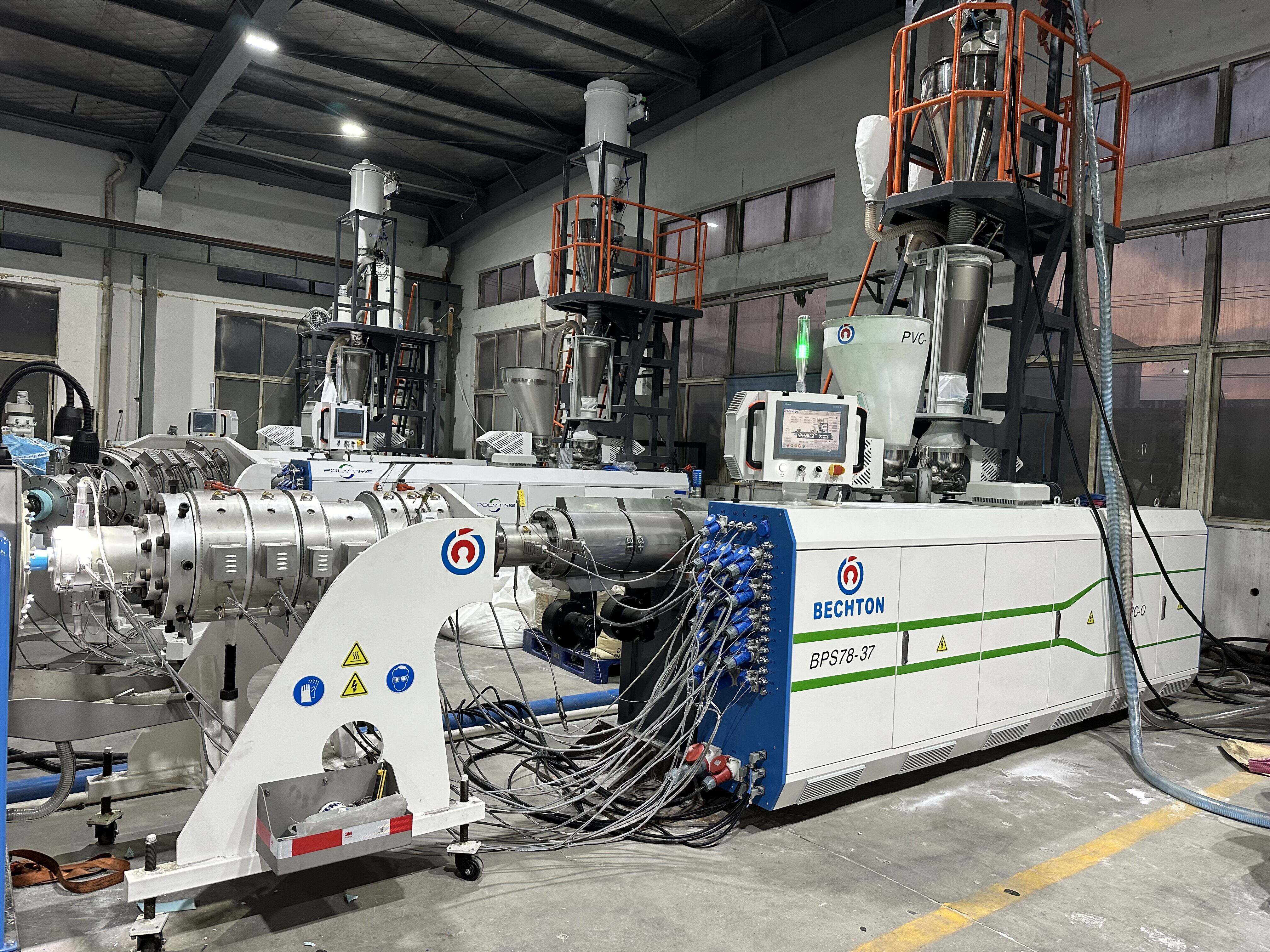
Energy-Efficient Design of PVC-O Pipe Extrusion Lines
Modern PVC-O pipe extrusion lines achieve 180–220 Wh/kg specific energy consumption through optimized system design—15% lower than conventional methods according to extrusion efficiency studies (Rollepaal 2025). This section explores five critical energy-saving approaches reshaping pipe manufacturing economics.
Specific Energy Consumption (Wh/kg) in Extrusion Processes and Its Optimization
Advanced screw geometries reduce shear heating by 18%, while dual-stage vacuum calibration systems cut cooling energy requirements. Process parameter optimization using real-time viscosity monitoring systems enables 12–15°C temperature reductions without compromising pipe quality.
Energy-Efficient Plastic Extruder Design and Operation Principles
Fourth-generation extruders feature hybrid barrel heating (70% induction + 30% resistance), active cooling recovery loops, and pressure-adaptive drive systems. These innovations reduce motor load fluctuations by 25% compared to traditional designs.
Selection of Energy-Efficient Motors in PVCO Pipe Extrusion Line
IE4-class permanent magnet motors now dominate modern lines, achieving 94–96% efficiency across variable loads. A 2024 motor performance comparison showed IE4 units consume 9.2% less energy than IE3 equivalents during typical production cycles.
Barrel Insulation and Thermal Efficiency in Extruders
Multi-layer ceramic-fiber insulation maintains barrel temperatures within ±1.5°C of setpoints, reducing heat loss by 40% compared to conventional mineral wool wraps. This directly decreases resistance heater runtime by 18–22 hours monthly.
Variable-Speed Drives (VSDs) for Energy Savings in PVC-O Pipe Extrusion Line
Intelligent VSD systems automatically match motor output to real-time process demands. Field data from high-efficiency extrusion installations shows 20–30% energy savings in extrusion drives through adaptive speed control during material transitions and shutdown sequences.
Optimized Screw Design for Lower Energy Consumption
Advanced screw engineering reduces energy demands in PVC-O pipe extrusion lines while maintaining production quality. Modern extruders achieve 15–25% energy savings through optimized component geometry and operational strategies.
Screw Combination Design for Energy Efficiency in PVC-O Pipe Extrusion Line
Barrier screw designs with specialized mixing sections improve polymer melting efficiency, reducing specific energy consumption by 12–18% compared to conventional screws. Engineers use computational modeling to create staged compression zones that minimize shear heating while maintaining output consistency.
Impact of Screw Elements on Motor Energy Consumption
Aggressive kneading blocks increase amperage draw by 8–15% compared to low-shear conveying elements. Strategic placement of mixing elements maintains material homogeneity while keeping motor load below 85% capacity, as shown in torque monitoring studies across 14 production facilities.
Relationship Between Screw Speed, Output, and Unit Energy Consumption
Operators face a critical balance between speed and efficiency. While increasing screw speed boosts output, it escalates energy consumption per unit due to heightened shear forces and cooling demands. Industry studies show optimal energy efficiency occurs at 85–90% of maximum rated throughput, where motor loading remains below critical wear thresholds.
Case Study: Reducing Specific Energy Use by 18% Through Optimized Screw Configuration
According to a recent study published in Plastics Engineering in 2025, when manufacturers combine better designed screw geometry with more accurate speed controls, they can cut down on energy usage by around 18% during PVC-O pipe production. Researchers found this out by testing special barrier screws which helped improve how polymers flow through the system when running at about 50 RPM. Some pretty cool advances in computer fluid dynamics modeling have also shown that newer screw designs actually bring down melt temperatures between 15 and 20 degrees Celsius. This temperature reduction leads to even greater energy savings across the whole extrusion process, making these improvements worth considering for any plant looking to reduce costs while maintaining quality output.
Process Parameter Optimization to Minimize Power Usage
Optimize Extrusion Process Parameters for Minimal Power Draw
Tweaking process parameters during PVC-O pipe extrusion can cut down on wasted energy by around 12 to 18 percent without slowing down production speeds. Modern monitoring equipment keeps an eye on things like pressure levels, screw torque readings, and how viscous the melted plastic becomes throughout the operation. This real time data helps plant workers spot problems such as when there's too much backpressure building up or if motors are working harder than they should. Many top performing plants take this approach even further by pairing manual adjustments with smart computer programs that optimize settings automatically. The result? Some operations report saving over 2.1 kilowatt hours for every ton of material they process through their machines.
Optimizing Extruder Speed and Motor Settings in PVC-O Pipe Extrusion Line
Today's PVC-O production lines make good use of variable frequency drives or VFDs for short. These devices adjust motor speeds according to how much resin is flowing through the system, so they don't run at full speed all the time like older machines did. When the temperature zones in the barrel match up properly with how fast the screw is turning, it cuts down on something called viscous drag. This drag accounts for about a quarter of wasted energy in those outdated extrusion setups from years back. Industry experts recommend keeping screw speeds somewhere around 85 to 92 percent of what the equipment is rated for. Also worth considering are soft start motor controllers which help bring down those sudden spikes in power demand when starting up operations.
Lowering Extrusion Temperatures to Save Energy Without Compromising Quality
PVC-O processing temperatures can be safely lowered by 8–12°C through optimized screw geometry and advanced polymer stabilization packages. Trials show each 5°C reduction decreases barrel heater energy consumption by 17% (2024 Polymer Processing Report). This thermal efficiency gain requires precise melt-pressure balancing to maintain molecular orientation critical for pipe strength.
Smart Sensors and AI-Driven Parameter Control in Extrusion Trends
Viscosity sensors that work in real time along with adaptive control systems can tweak process settings every half second or so, keeping energy usage at its best even when materials change up. According to a study from 2023, factories saw about 31 percent less sudden jumps in motor loads and around 19 percent fewer times heaters had to cycle on and off compared to when operators did things manually. What these automated systems do really well is handle unexpected changes in room temperature and variations in recycled materials, which means those energy savings stick around for the whole production run instead of disappearing halfway through like they sometimes do with older methods.
Ancillary System Efficiency and Standby Energy Reduction
Efficiency of Cooling, Compressed Air, and Vacuum Systems in Energy Savings
In PVC-O pipe extrusion operations, peripheral equipment typically eats up between 15 and 30 percent of all the energy consumed during production. When manufacturers tweak their cooling systems with those variable speed pumps, they tend to cut down on power usage somewhere around 12 to 18 percent without sacrificing temperature accuracy. A big problem area is compressed air leakage, which wastes roughly 20 to 30 percent of energy in these secondary systems. Installing automatic pressure sensors along with ultrasonic detectors goes a long way toward fixing this issue. And interestingly enough, vacuum pumps become significantly more efficient too. Studies show that implementing demand based controls that match up with actual extrusion rates can boost vacuum pump performance by as much as 24 percent in many cases.
Reducing Reliance on Heavy Cooling Through Improved Heat Management
Better insulation on industrial barrels can cut down heat loss by around 40 percent, which means factories need about 7.2 kilowatt hours less cooling for every hour they run production. Looking at what's happening in the field right now, companies adjusting their extrusion processes have seen some impressive results. When they tweak things like keeping melt temps between 175 and 185 degrees Celsius and implement smarter cooling strategies for screws, water chillers end up working about 220 cubic meters less each month. Thermal imaging tech has become pretty standard these days too. These systems let plant managers watch how heat spreads across equipment in real time, so they can stop wasting energy on unnecessary cooling that just burns through resources without actually improving output quality.
Standby Energy Consumption Reduction Strategies in Extrusion Lines
The latest PVC-O extrusion lines are cutting standby energy usage by around 15 to 20 percent thanks to several clever features. When production stops, the system automatically powers down non-essential equipment. Smart power managers cut idle motor consumption by nearly two thirds, and some models even use AI predictions to avoid wasting energy on unnecessary warm-ups. According to research published last year looking at how factories consume power, companies adopting these energy saving measures saw their annual standby costs drop about $14,600 per line without affecting how quickly they could get back into production when needed. These savings add up over time, making them worth considering for any facility looking to trim expenses without sacrificing efficiency.
Operational Energy Savings from PVC-O Pipes in Water Transportation
Energy Savings in Water Transportation Due to Smooth Inner Surface of PVC-O Pipes
PVC-O (Polyvinyl Chloride-Oriented) pipes achieve up to 28% lower pumping energy demand compared to traditional materials due to their ultra-smooth inner walls. Research from the Water Infrastructure Journal (2023) shows laminar flow improvements reduce friction losses by 15–20%, directly lowering electricity costs for municipal water systems.
Case Study: Municipal Water Project Reduces Pumping Costs by 22%
A 2023 upgrade in Barcelona’s water network replaced 8 km of aged ductile iron pipes with PVC-O equivalents. Results included a 22% reduction in monthly pumping costs ($4,200 saved), an 18% increase in flow capacity at peak demand, and elimination of biofouling-related maintenance.
Lifecycle Energy Analysis: Manufacturing Efficiency vs. Operational Savings
| Phase | Energy Consumption (kWh/km) | Cost Impact (% of Total) |
|---|---|---|
| Manufacturing | 1,150 | 12% |
| Transportation | 320 | 3% |
| 30-Year Operation | 8,900 | 85% |
While PVC-O pipe extrusion lines require precise energy optimization during production, operational savings account for 85% of total lifecycle energy reduction. This justifies investments in advanced extrusion technologies for long-term ROI.
FAQ
What is the specific energy consumption in modern PVC-O pipe extrusion lines?
Modern PVC-O pipe extrusion lines achieve a specific energy consumption of 180–220 Wh/kg, which is about 15% lower than conventional methods.
How do advanced screw geometries affect energy consumption?
Advanced screw geometries help reduce shear heating by 18% and improve polymer melting efficiency, resulting in up to 18% lower specific energy consumption compared to conventional screws.
What role do energy-efficient motors play in pipe extrusion lines?
IE4-class permanent magnet motors dominate modern pipe extrusion lines, achieving 94–96% efficiency and consuming significantly less energy than their IE3 equivalents.
How can extrusion temperature reduction save energy?
Optimizing extrusion temperatures can lead to energy savings, with trials showing each 5°C reduction in processing temperature decreases barrel heater energy consumption by 17%.
What are the benefits of using PVC-O pipes in water transportation?
PVC-O pipes offer a 28% reduction in pumping energy demands due to their smooth inner walls, leading to lower electricity costs for municipal water systems and reduced friction losses.
Table of Contents
-
Energy-Efficient Design of PVC-O Pipe Extrusion Lines
- Specific Energy Consumption (Wh/kg) in Extrusion Processes and Its Optimization
- Energy-Efficient Plastic Extruder Design and Operation Principles
- Selection of Energy-Efficient Motors in PVCO Pipe Extrusion Line
- Barrel Insulation and Thermal Efficiency in Extruders
- Variable-Speed Drives (VSDs) for Energy Savings in PVC-O Pipe Extrusion Line
- Optimized Screw Design for Lower Energy Consumption
- Process Parameter Optimization to Minimize Power Usage
- Ancillary System Efficiency and Standby Energy Reduction
- Operational Energy Savings from PVC-O Pipes in Water Transportation
-
FAQ
- What is the specific energy consumption in modern PVC-O pipe extrusion lines?
- How do advanced screw geometries affect energy consumption?
- What role do energy-efficient motors play in pipe extrusion lines?
- How can extrusion temperature reduction save energy?
- What are the benefits of using PVC-O pipes in water transportation?